Updated on Tuesday, October 20, 2026
We are heartbroken by the recent tree removals at East Potomac Park and by newly released plans and renderings showing further tree loss extending to Hains Point and across the peninsula. Casey Trees strongly opposes these removals and any redevelopment that would sacrifice additional healthy trees or diminish public access. This public landscape belongs to everyone. Its future must protect mature trees, preserve public access, and be shaped by a transparent process that gives the community a meaningful voice.
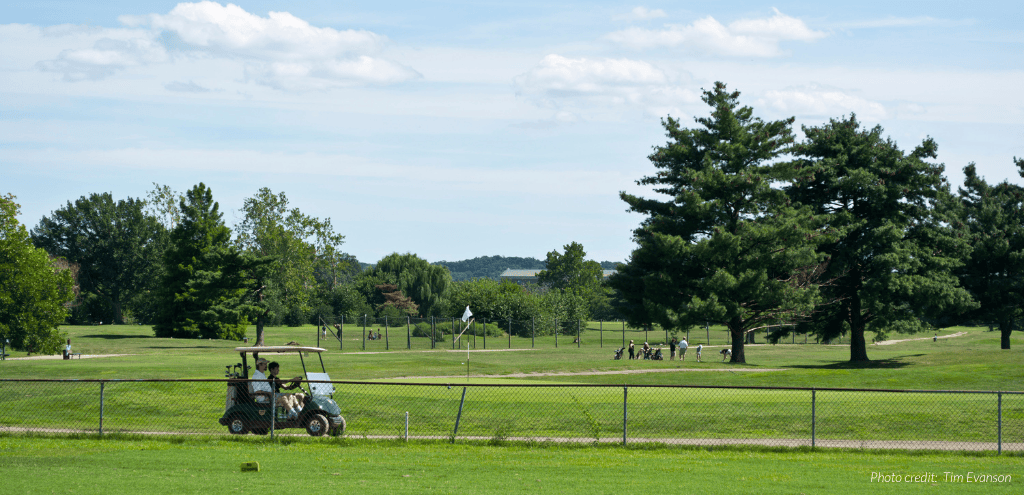
This park is personal to us. Our staff and their families have played its public golf course, run and biked its loop, and brought their children to its mini golf course and playground. Over the past 25 years, Casey Trees has planted trees throughout the park – oaks, bald cypresses, and cherry blossoms – that are at risk of removal, along with many other historic, mature, healthy trees. We know how much this landscape means to the people who visit it – and how much stands to be lost.
Protecting trees and shared green spaces is central to our mission. That commitment extends to the people who rely on these places for recreation, connection, health, and a sense of belonging. It guides our work at East Potomac Park just as it guides our advocacy, planting, tree care, education, and land conservation across the region, year-round.
We stand with the community members and organizations working to protect East Potomac Park and Hains Point through legal action, public organizing, and advocacy. We will continue to advocate for the park’s healthy trees and public access, press for transparency, and explore all the ways we can contribute and be effective. We will share more as the situation develops.
Original Post Published on Tuesday, October 13, 2026
Trees are under threat at East Potomac Park, where the National Park Service removed up to 529 trees over the weekend. That number reflects the potential scope of the work, not the number already cut down, and many reports say this is just one phase of tree removals, with another 300 more slated to be taken down. Courtroom hearings continue in this case, and a court order issued today by a federal judge halted any further tree removals through Monday, October 26, 2026.
However, the trees already removed, along with apparent plans to remove more, raise serious questions about the future of this public space.
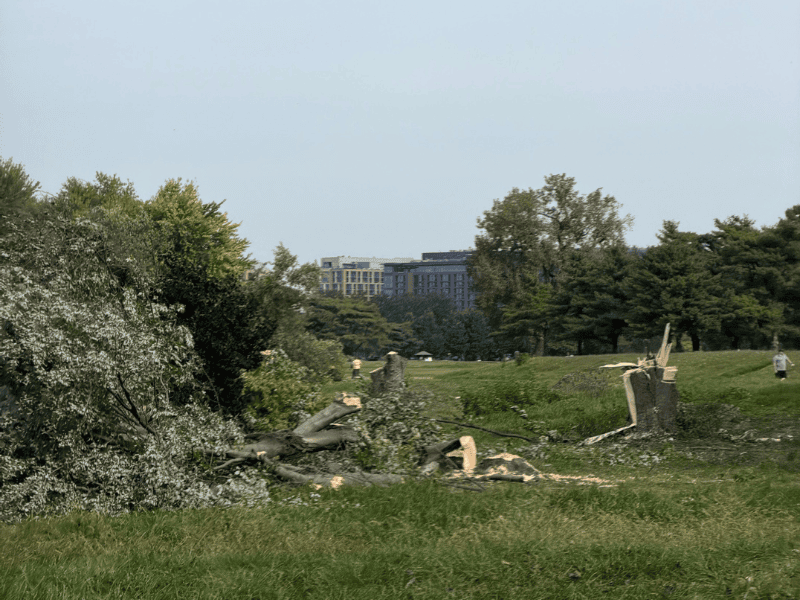
Photo courtesy of Save East Po.
The scale and stated purpose of these tree removals suggest work that goes well beyond routine maintenance of dead, dying, or hazardous trees. The Park Service’s recent court filing describes removing trees that “do not contribute to the historic landscape.” Though the agency has said it will preserve healthy trees that contribute to the historic golf course, that assurance needs clear criteria and public reporting so residents can understand how those decisions are made.
At Casey Trees, we are especially concerned about the potential loss of healthy, mature, and native trees. On-the-ground reports suggest that many apparently healthy, mature trees have already been removed. Historically, DC residents and the American public have been given the opportunity to comment on development plans and see why trees are being removed, rather than having to piece together answers from court filings, social posts, and community observations.
That is why transparency matters. A publicly available accounting of species, size, condition, and reasons for removal would help the community understand what is happening and evaluate the alternatives.
This is about more than a golf course. It is about trees, public health, wildlife habitat, and whether Washingtonians – and the American people – have a meaningful voice in decisions affecting public lands and our nation’s capital.
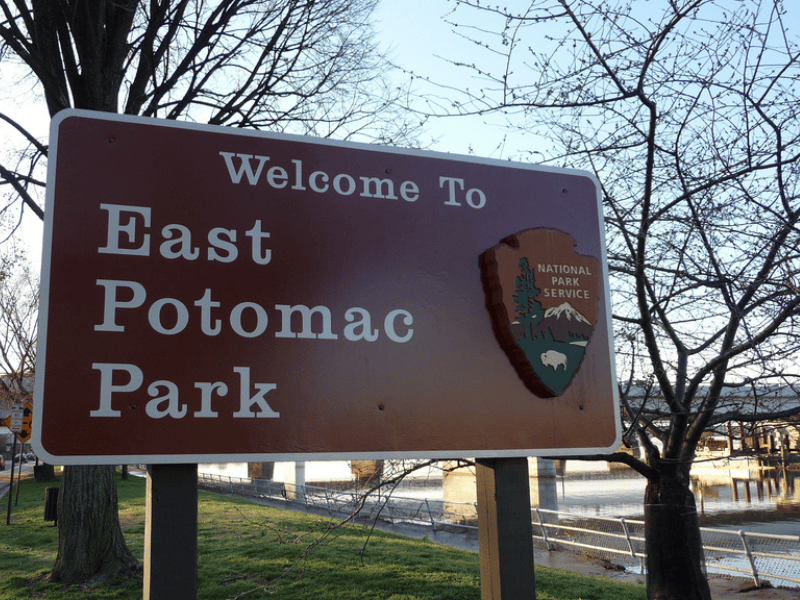
Photo by Trailvoice.
A Public Landscape Deserves a Public Conversation
The National Park Service says the removals are part of a tree-management and cultural-landscape rehabilitation project rooted in a 2019 plan. Officials say the work will restore the golf course’s historic character and reopen views of nearby landmarks while preserving healthy trees that contribute to the historic landscape, including historic cherry trees. NPS describes this work as separate from the president’s proposed championship-level golf course renovation.
Those explanations provide some context, but they do not resolve the community’s concerns. The court filing outlining the tree removals was submitted Friday, October 9, with work beginning the next day. That timing leaves little room for meaningful public involvement or accountability. And once trees are removed, the loss cannot be undone.
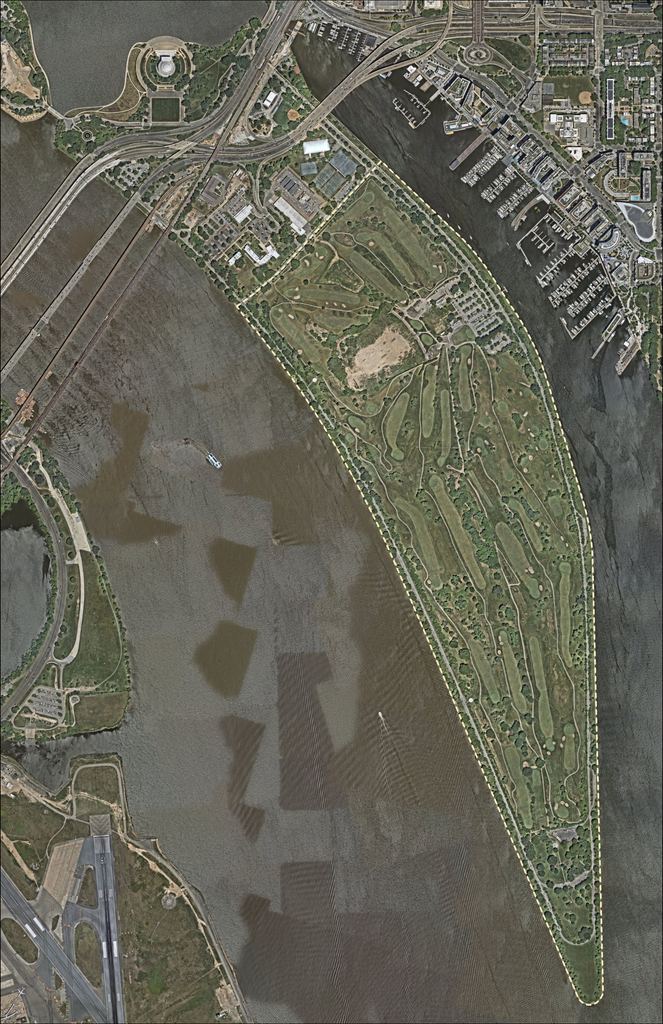
Losing Trees Means Losing Benefits
Trees are working parts of our city’s infrastructure. They cool outdoor spaces, filter air, support mental well-being, and help make neighborhoods healthier places to live. Even trees along golf courses are not just decorative landscaping; they are an essential part of our city’s health, human, and ecological benefits.
Using tree canopy mapping data, Casey Trees estimates that the tree canopy coverage in the southern section of East Potomac Park – the golf course and Hains Point – is about 23%, or roughly 63 acres. That’s nearly 50 football fields of tree canopy. If removed, this would be a significant canopy loss for the area and our city.
Likewise, even removing more than 500 trees would significantly diminish the benefits our local tree canopy provides at East Potomac Park and across DC. The extent of the loss depends on which trees are removed, their condition, and the canopy they provide. Without a clear account, the public cannot fully understand the trade-offs.
Not every tree can or should remain forever. Safety, disease, invasive species, and other management needs sometimes require removal. But responsible stewardship should explain those needs, evaluate alternatives, and account for what the community stands to lose.
We Have Faced This Before
Casey Trees raised similar concerns three years ago during the planning process for the Rock Creek Park Golf Course rehabilitation. We encouraged residents to comment on a proposal that initially called for removing more than 1,200 trees. The later proposal the National Capital Planning Commission reviewed still included substantial removals, along with a canopy-replacement plan.
That process did not eliminate tree loss or our concerns. However, it did include a published environmental assessment, a public comment period, and a plan people could examine and respond to.
That distinction matters. Public participation does not guarantee agreement, but it gives residents an opportunity to question assumptions, propose alternatives, and hold decision-makers accountable. At East Potomac Park, the community deserves that same opportunity before – not after – the landscape changes.
A Different Future for a Former Golf Course
Golf course landscapes can also offer opportunities to grow forests.
In Prince George’s County, Casey Trees is partnering with the Maryland-National Capital Park and Planning Commission’s Department of Parks and Recreation to restore a forest at the former Lake Arbor Golf Course. The project will plant more than 10,000 native trees across approximately 70 acres.
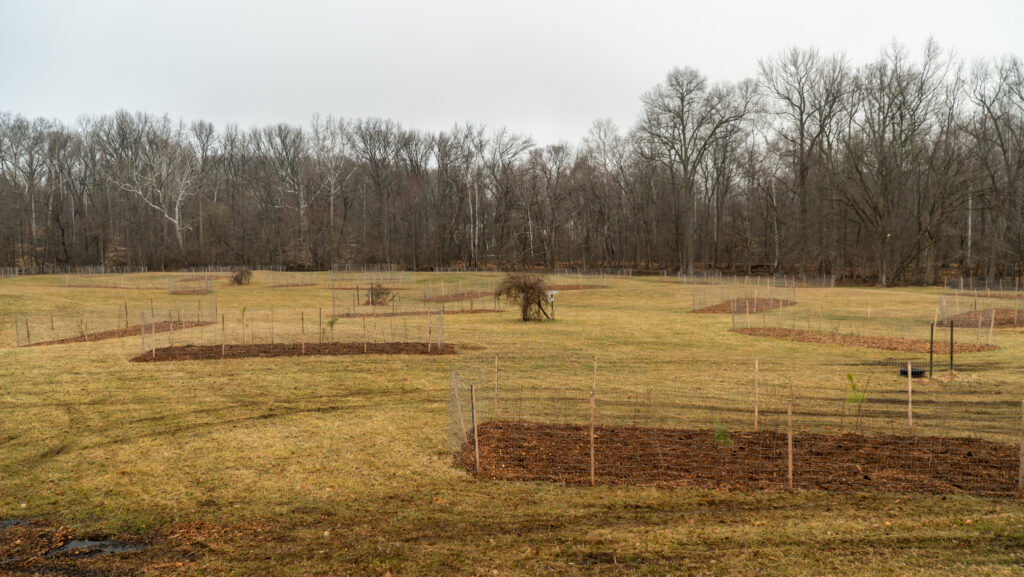
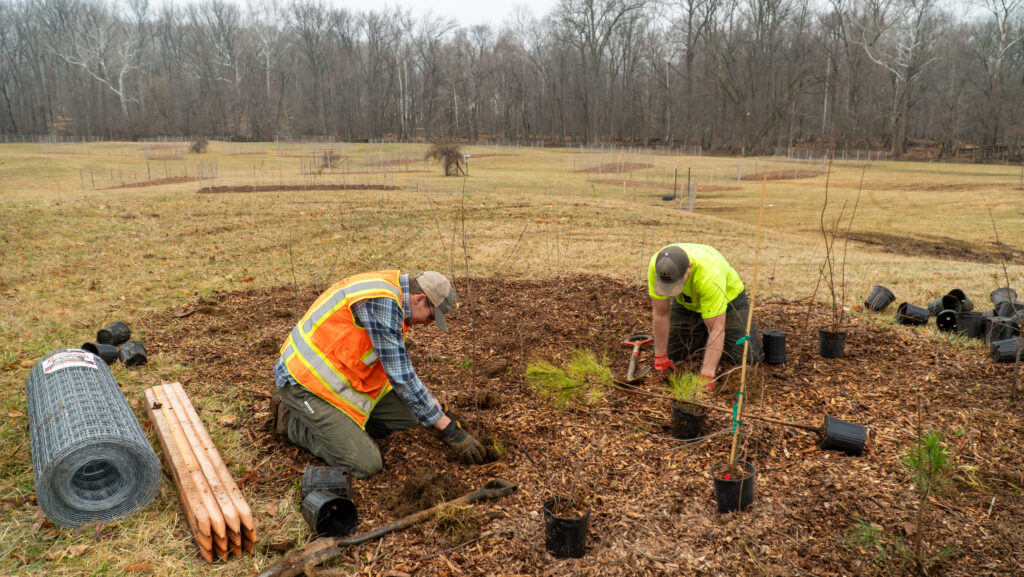
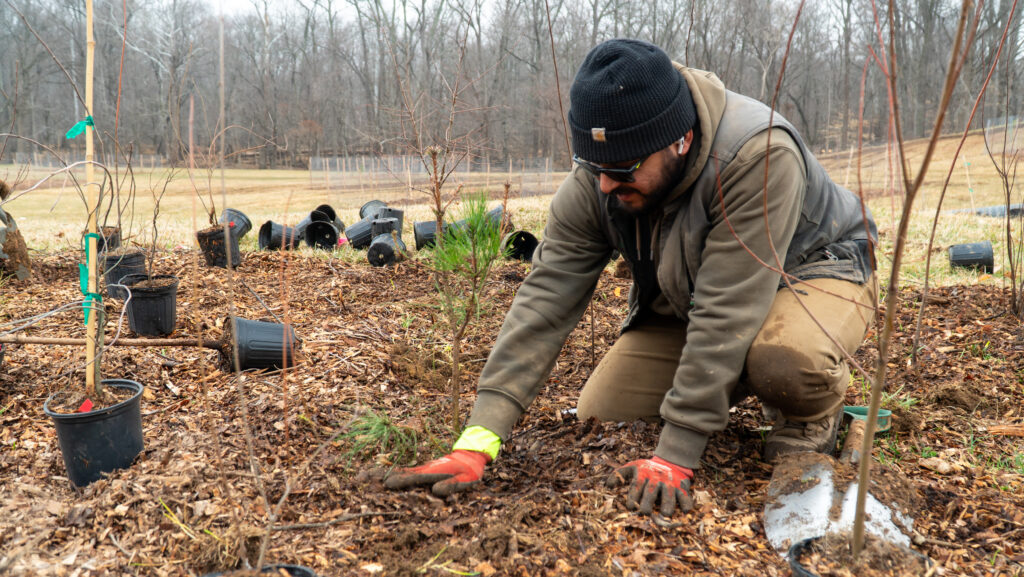
Our team developed a planting and care plan to help transform former fairways and the driving range into a connected forest landscape. This restoration is part of a broader effort to create a community park, with work unfolding in stages through 2030.
Lake Arbor and East Potomac Park are different places with different needs. But the contrast offers a useful lesson: collaboration and long-term planning can help public landscapes deliver more ecological value and environmental protections, while still serving their communities.
DC’s Trees Have a Bigger Problem: Representation
The federal government’s influence over DC land is substantial. About one-third of the District’s land is federally owned, with roughly 90% of DC’s parkland federally owned or managed, leaving much of our city beyond local control. That matters for tree protection: trees on federal land are exempt from the District’s tree-preservation laws.
DC residents also lack voting representation in Congress. Together, these conditions leave a persistent gap between the people who live here and the elected officials and federal institutions making decisions about many of our green spaces.
“The removal of 529 trees from East Potomac Park is a permanent loss to a treasured public space that belongs to the people,” said Congresswoman Eleanor Holmes Norton, the District of Columbia’s non-voting delegate in the U.S. House of Representatives. “A federal judge has now intervened to halt further damage while the court examines the circumstances. The public deserves transparency and accountability, and the Trump Administration must follow the law and respect the historic character of the park, which is shared and used primarily by local residents. In addition to harming enjoyment of the park, this is an irreversible loss for DC’s ecology and local environment. I’ll continue to press for answers and for the protection of this public resource.”
Conflicts like this will continue to happen without full representation, respect for the goals of DC’s tree protections, and federal stewardship that gives real weight to residents’ needs. Federal ownership should bring a responsibility to care for local communities, not a reason to leave them out.
Protect What We Have. Grow What We Can.
We should continue calling for clear information and meaningful public involvement at East Potomac Park. At the same time, we can strengthen the places where residents, local agencies, and community partners can make a difference.
Here are a few ways to get involved:
- Protect existing trees and green space on DC land. Preserving forested land and caring for established trees are central to our land-conservation work. Educate yourself about DC’s tree laws here.
- Support tree maintenance efforts near you. Many local parks have volunteer groups or “friends of” park groups that help maintain public spaces and trees. Click here to see a list of our upcoming tree planting and maintenance events.
- Reforest where opportunities exist. Projects like Lake Arbor show how partnerships can turn underused land into a growing community forest. Help us by identifying areas around DC to plant trees, or donate to our tree-planting and protection efforts.
- Plant at home – for free. Through Casey Trees’ free-tree program, DC residents can receive professional guidance on selecting suitable trees and have them planted in their yards at no cost. Applications are available on our Free Trees page.
Planting elsewhere does not erase the loss of trees at East Potomac Park. But it does give us a practical way to keep building a healthier, more resilient city while advocating for better decisions.