For more than two decades, DC has been trying to answer a big question: how do we grow and protect a healthy, equitable tree canopy in a fast-growing city? In response, DC has enacted some of the most effective tree preservation legislation in the country, and the newly passed Tree Preservation Enhancement Amendment Act of 2025 is the latest chapter in that story. This law expands protections for large trees, updates penalties to deter cutting down healthy trees, and strengthens the fund that pays for new plantings and supports residents.
To understand why this matters, it helps to look back at where DC’s tree laws started—and why they needed an update.
Over 20 Years of Strong Tree Laws
From the 1950s to the 1990s, DC’s tree cover declined sharply due to increased development, road expansion, and disinvestment. That wake-up call not only led to the founding of Casey Trees in 2001 but also prompted the DC Council to pass the Urban Forest Preservation Act of 2002, the first law to give special legal protections to large trees in DC. The idea was simple but powerful: when a big tree stands in a park, a street corner, or even someone’s yard, it provides shade, cleaner air, and cooler streets for the whole neighborhood, making it a valuable public asset.
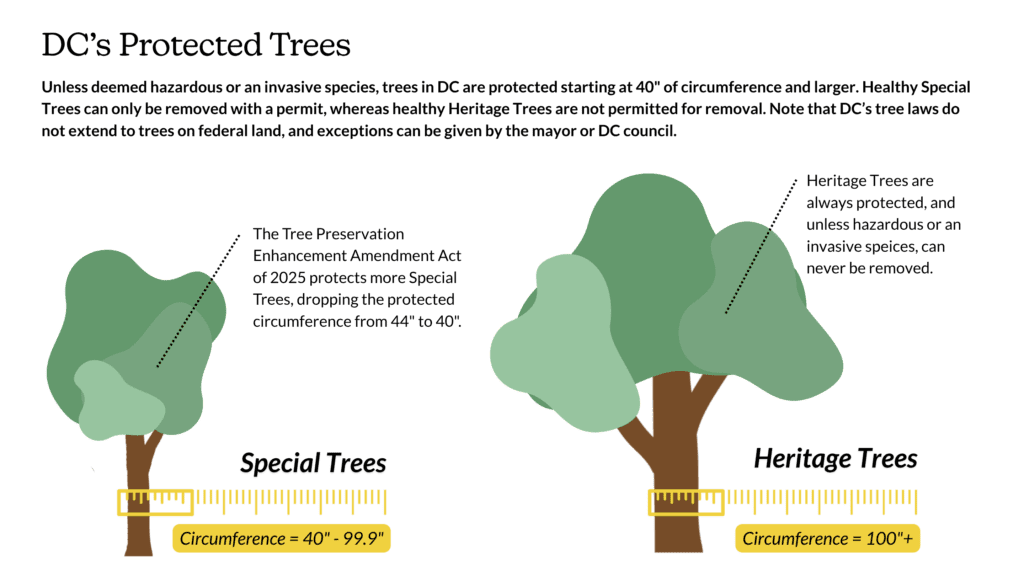
DC’s tree laws set protections for two categories of protected trees: Special Trees—large trees that receive added protection but can sometimes be removed if specific conditions are met; and Heritage Trees—the largest and oldest trees in the city, which generally cannot be removed at all.
Since the law was established in 2002, there have been a few updates to DC’s tree laws. In 2016, the District passed the Tree Canopy Protection Amendment Act, which lowered the Special Tree designation to protect more trees and set the fee and fine structure for tree removal. And in 2022, the Urban Forest Preservation Authority Amendment Act (UFPAAA) extended tree law protections to DC government properties and allowed the District to issue “stop work orders” to shut down a job site when trees were being illegally removed or damaged.
However, despite these strong tree laws and exceeding annual planting targets, DC continues to lose mature tree canopy. Between 2015 and 2020, our city lost 565 acres of canopy—roughly the size of the National Mall—largely because older, larger trees were removed for new development. Our tree report card reflects that reality: stellar grades for planting, but more work is needed to care for and protect our mature trees.
What the new law changes
The Tree Preservation Enhancement Amendment Act of 2025 makes three important updates:
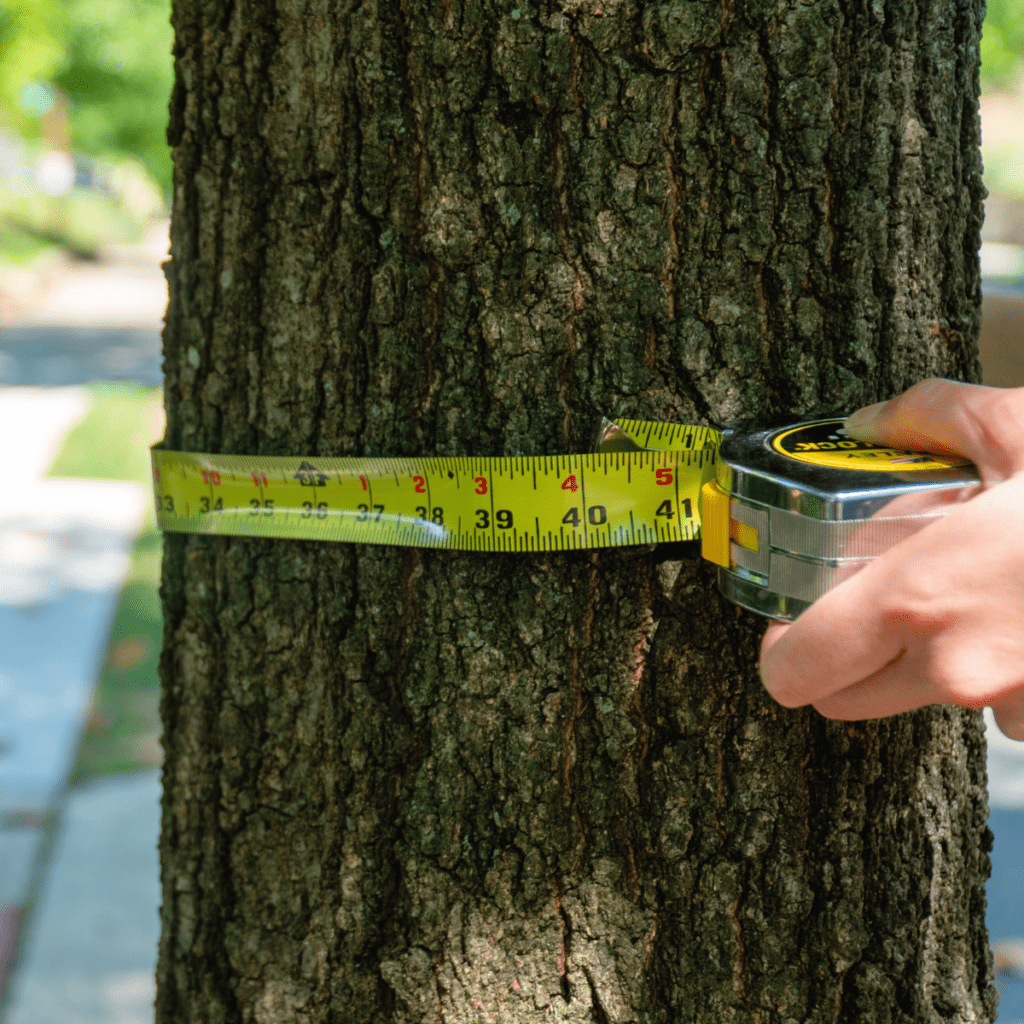
1) More trees now qualify as “Special Trees”
Previously, a tree had to be at least 44 inches in trunk circumference to count as a Special Tree. The new law lowers that threshold to 40 inches. That may sound small, but it means thousands more medium-to-large trees now have stronger protections. Many of these are the “up-and-coming” generation of future Heritage Trees.
The DC Council’s Office of Racial Equity (CORE) performed a racial equity impact assessment of this new classification and determined that the “provision to protect trees with a circumference of 40 inches to 100 inches will likely improve health and environmental outcomes for Black residents, Indigenous residents, and residents of color – but only if the District implements actual protection of these classified trees.” Protecting trees is directly linked to healthier air, cooler neighborhoods, and better quality of life—especially in communities that have historically had less canopy and greater exposure to pollution and extreme heat.
DDOT’s Urban Forestry Division (UFD) estimates that this policy change will increase the special tree population by nearly 43,000 trees. This will result in DDOT reviewing an additional 300 to 400 permits annually, for which the DC Council has increased DDOT’s new fiscal year budget for additional staff for permit review, tree care, and tree protection activities.
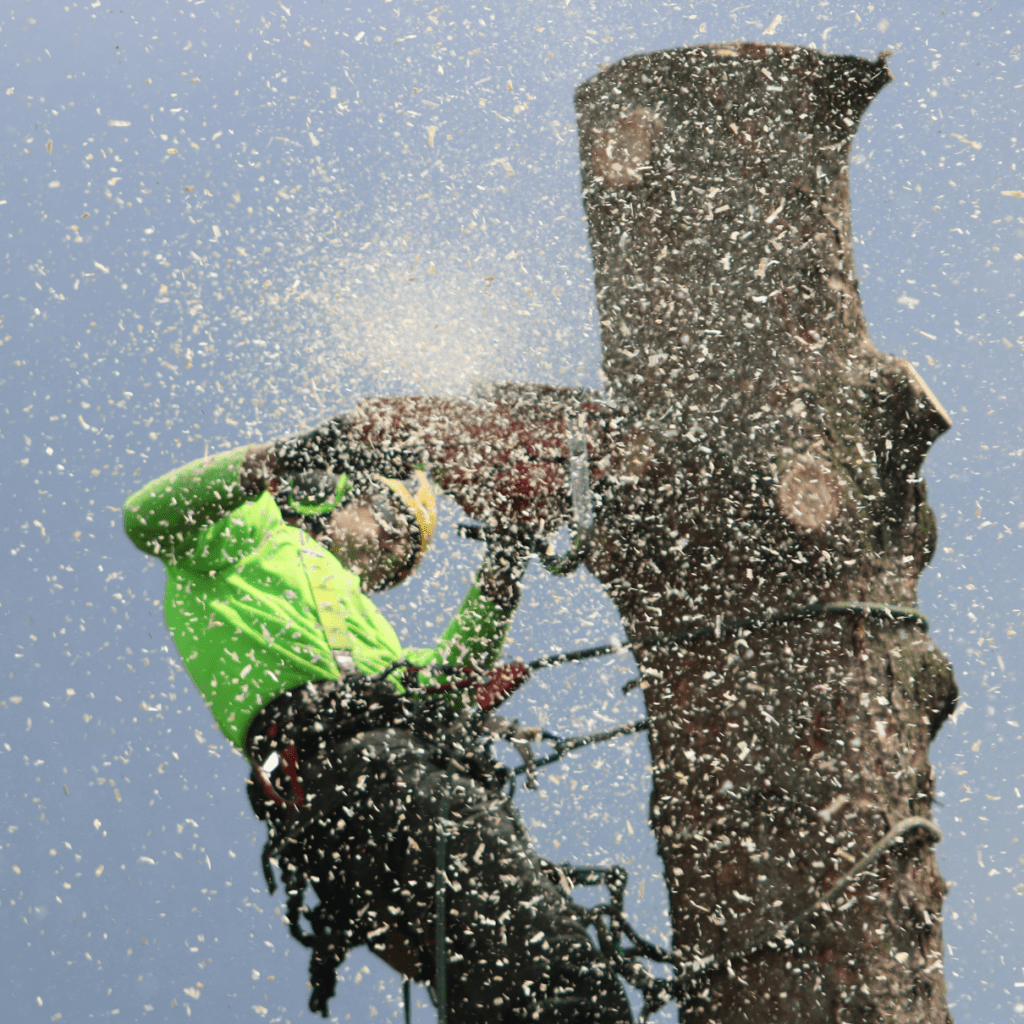
2) Fines and fees will keep up with inflation
The law doesn’t create new penalties, but it prevents existing fees and fines from quietly eroding in real value. The fees and fines for Special and Heritage Trees were set in 2015, more than a decade ago, and have remained unchanged since then. That’s critical because when penalties do not keep pace with inflation, it becomes harder for the fees to keep pace with the cost of replacement tree plantings.
Starting in 2029 and every three years thereafter, the mayor must adjust the dollar amounts for Special and Heritage Tree removal fees and fines using a standard inflation measure. It’s important to note that these increases are only inflation adjustments, so there are no new fines or fees that will be unduly felt by DC residents. The intent is to keep our healthy Special and Heritage Trees, and have strong enough fees for illegal removals so they don’t become meaningless to wealthy developers.
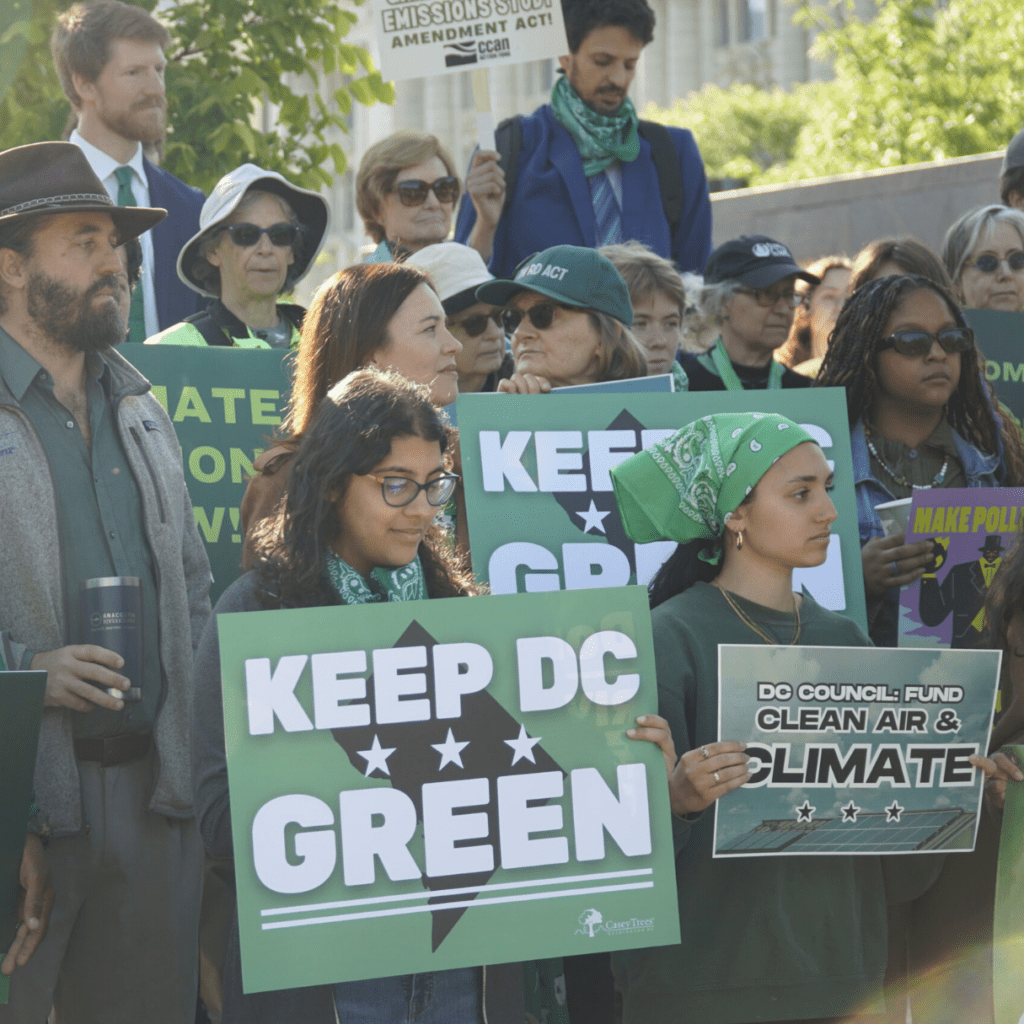
3) The Tree Fund is strengthened and protected
Money from tree-related fees and fines are directed into DC’s Tree Fund to support planting, protection, and long-term care of the District’s urban forest. In the past, advocates have had to push back against efforts to sweep these funds into the general budget for unrelated uses. A similar challenge exists with DC’s bag tax, where revenue intended for river cleanups has required ongoing advocacy to ensure it is used as promised. When residents pay these fees, they reasonably expect their contributions to support environmental improvements—not be redirected elsewhere.
The new law strengthens safeguards to ensure that these funds are used for their intended purpose. It increases transparency and accountability while explicitly requiring that Tree Fund dollars be invested in tree planting on public and private land, tree care and survivability efforts, and income-based support for the removal and replacement of hazardous trees. By protecting these resources from diversion, the law helps build public trust and ensures that city investments directly benefit the health and resilience of DC’s tree canopy.
In short, the law protects more trees today, keeps penalties meaningful tomorrow, and ensures that when fees are paid, they translate into real trees and tangible benefits for neighborhoods across DC.
Why big trees are central to health and equity
The Racial Equity Impact Assessment prepared for this bill makes it clear: trees are not a luxury—they are core infrastructure for health, safety, and climate resilience. All trees provide benefits, but older, larger trees do far more work. Their broad canopies cast deep shade, cool homes and sidewalks, and their larger biomass stores more carbon and pulls more pollution out of the air. DC’s Special and Heritage Trees provide the greatest ecosystem services, and it takes decades for a newly planted sapling to match what a single mature tree is doing right now.
Those benefits are not evenly distributed. Many lower-income neighborhoods in DC have less tree canopy and more exposure to extreme heat and air pollution. At the same time, Black residents in DC have higher rates of asthma and other chronic lung diseases. Protecting existing big trees in these communities is one of the fastest, most cost-effective ways to improve air quality, reduce dangerous heat, and make streets more livable.
Where DC’s tree story goes next
Looked at over time, DC’s tree story has moved from reacting to canopy loss, to investing in planting, to wrestling with how to truly protect the large trees that anchor our neighborhoods. The Tree Preservation Enhancement Amendment Act of 2025 is another important step—expanding the circle of protected trees, stabilizing the tools we use to deter bad behavior, and strengthening the fund that pays for more trees and provides direct support for residents.
However, there continue to be gaps in DC tree law, and areas where laws can be strengthened. Most notably, trees located on federal land are not subject to DC’s tree laws. Additionally, the Mayor or the DC Council can grant special exemptions that exempt projects or development sites from complying with the tree laws or from paying fines. Casey Trees and local advocates continue to push to close these loopholes.
For Casey Trees and our partners, the work now is twofold: continue pushing for strong, fair enforcement that prioritizes the preservation of big trees, and continue to ensure that our tree-planting and care efforts reach the communities that need them most.
If you suspect that Special and/or Heritage Trees are being removed illegally, the DDOT’s Urban Forestry Division requests that you contact their office immediately at 202-673-6813 to report the incident.