DC summers are certainly not for the weak, but this one’s been especially tough.
The past few months have been hot and dry for the greater DC area, and while we have enjoyed some relief from intermittent showers, DC is still experiencing a moderate-to-severe drought. And it’s not just humans that are sweating through the heat—the trees are feeling it, too.
While many tree species are hardy and can tolerate moderately dry conditions, these trees stand out for their particular resilience against drought once established. However, like other trees, they should still be watered for the first three years after planting.
From mighty oaks to sleeper-hit hackberries, here are five of our favorite tree species that can handle the heat.
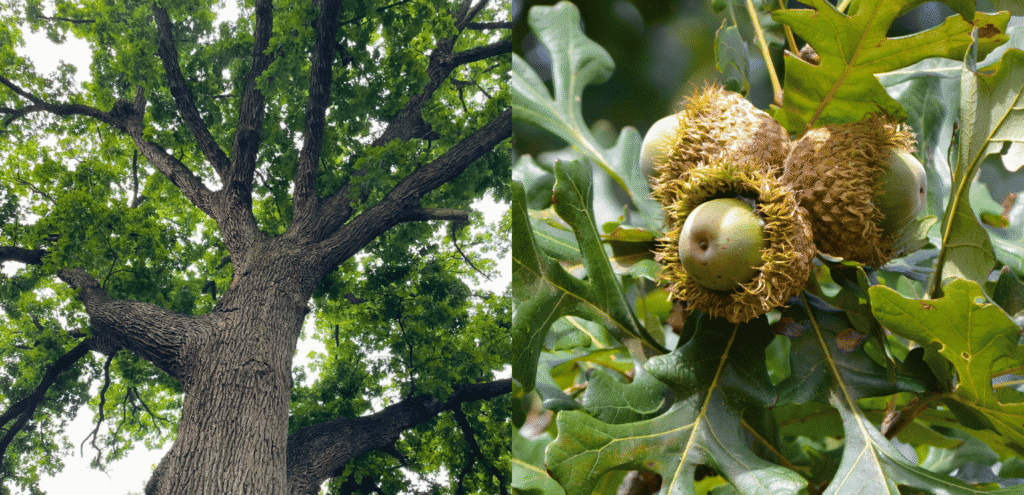
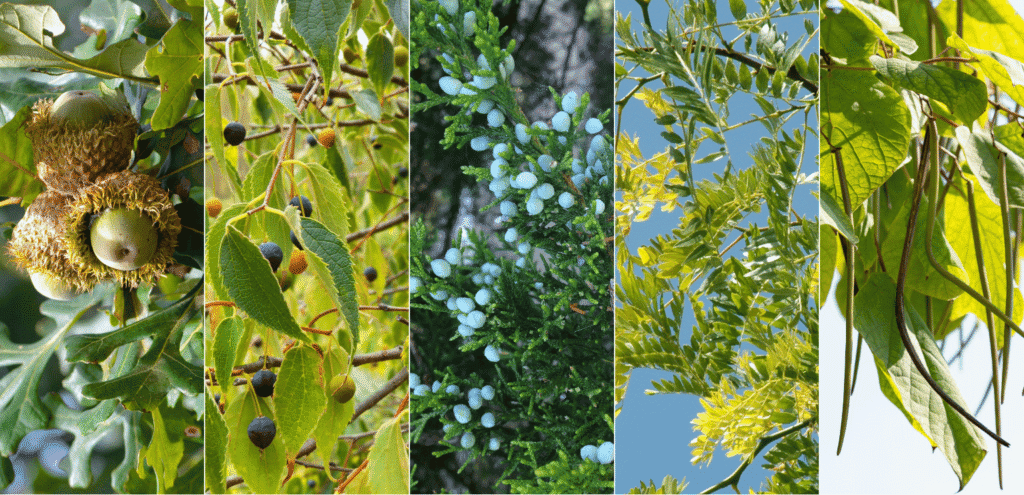
Bur Oak – Quercus macrocarpa
The bur oak is a tough, distinctive tree, known for its large, wild-looking fringed acorns and dark, ornate bark. While it can be found in wooded areas across the eastern U.S., the bur oak notably grows well in the drier prairies of the Great Plains, where it endures long summers with little rain and can even resist prairie fires. The bur oak is also known for its strong, rapid, and deep root development, giving the tree a leg-up in drier environments. The westernmost of the eastern oaks (try saying that five times fast!), the bur oak thrives in sunny conditions, and its tolerance of poor air and soil conditions makes it an excellent pick for city landscapes.
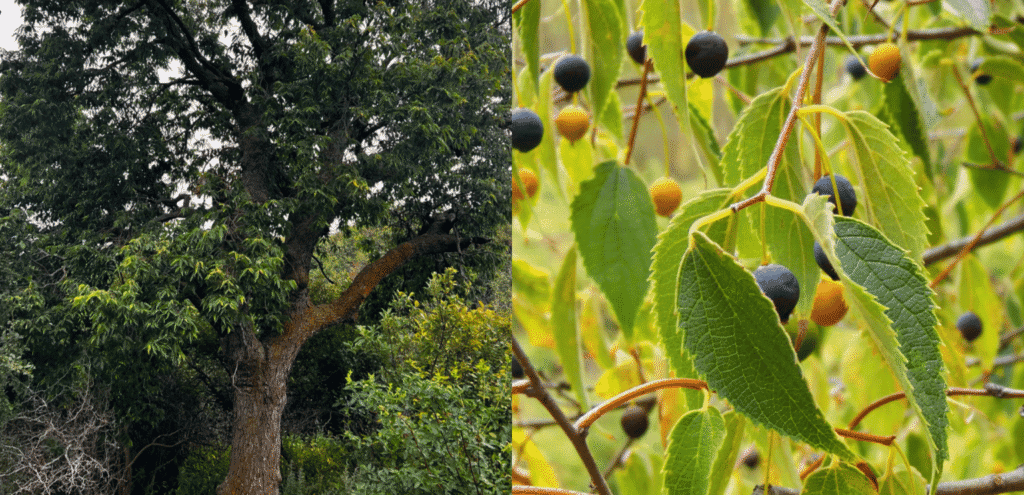
Hackberry – Celtis occidentalis
Overlooked and underappreciated, it’s time we give the hackberry its flowers. Found across the eastern U.S. and Midwest, the hackberry is a medium-sized tree with light gray, raised corky bark, whose rough appearance is balanced by green, delicate leaves that resemble those of an American Elm. The hackberry is a hardy tree—it can grow in a variety of soil types, from wooded areas to dry prairies and even off the side of busy roadways, where the tree can withstand drought, salts, and other pollutants. Valued by birds for its dark-red fruits and as a host tree for many species of caterpillars, the hackberry is a great way to create a lively pocket of nature that’s built to last in an urban environment.
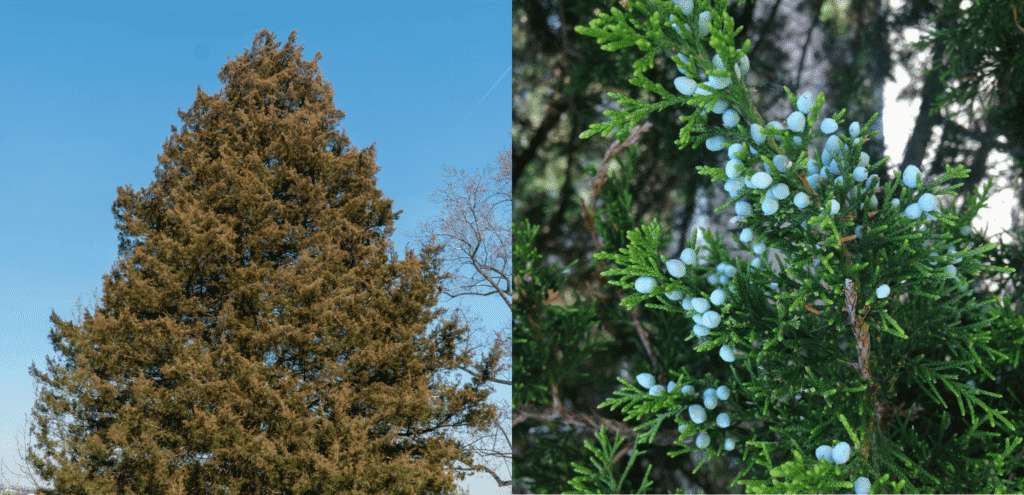
Eastern Red Cedar – Juniperus virginiana
While its name suggests otherwise, the eastern red cedar is a type of juniper that can be found spreading across abandoned farm fields or dotting the lawns of famous DC homes. Considered the most drought-resistant of any conifer native to the eastern U.S., the eastern red cedar thrives in full sunlight and can reach heights upward of 30 feet within 40 years. This mighty evergreen can also withstand a wide range of soil types and pH levels, making it a suitable tree for tough urban environments. While it can endure a blazing DC summer, the eastern red cedar is also a delight through the winter, serving as a windbreak to help warm homes and attracting wildlife with its blue, berry-like cones.
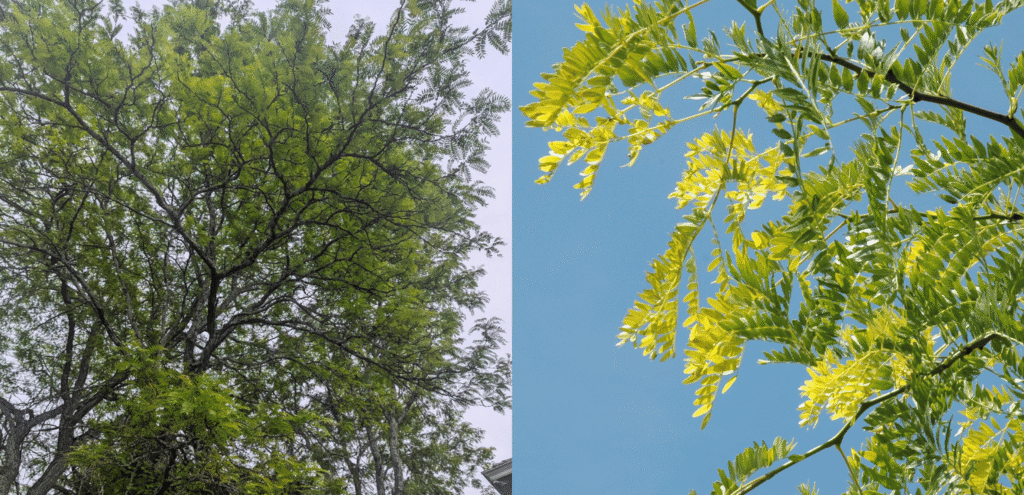
Honey Locust – Gleditsia triacanthos
The honey locust is a sun-loving, medium-to-large shade tree, originating in central and eastern North America and distinctive for its rows of compound leaves that turn a brilliant gold in the fall. Appearances aside, the honey locust is a tough tree with a deep, strong, and wide-spreading root system that supports its growth across a variety of soil types and climatic challenges. Tolerant of drought, salts, and other pollutants, the honey locust can be used as an effective windbreak and way to manage soil erosion in harsh city landscapes. Bonus—the tree’s sweet, honey-like pulp attracts a range of wildlife, and it acts as a host plant for pollinators like the Silver-spotted Skipper!
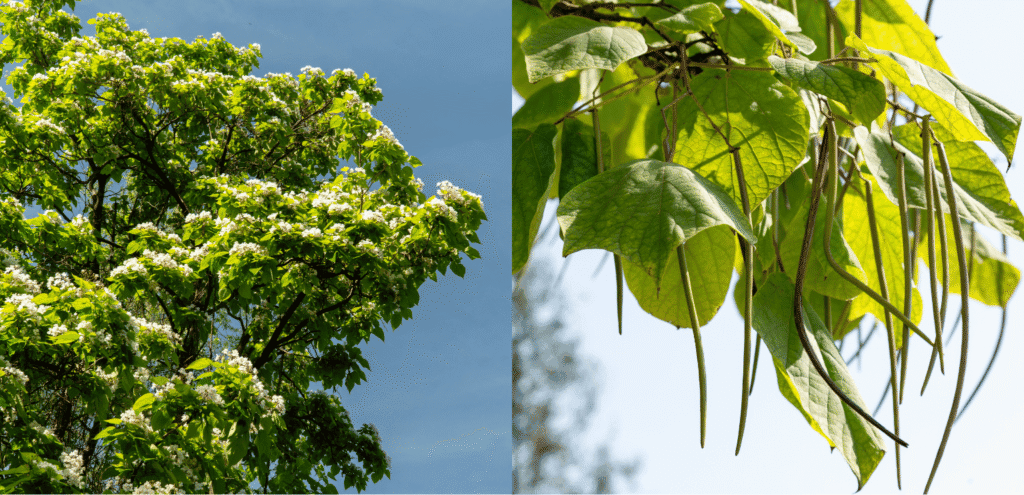
Northern Catalpa – Catalpa speciosa
A big tree with an even bigger personality, chances are you’ve found a northern catalpa growing in an interesting part of DC—either along Metro tracks, in alleyways, or even patios at beloved neighborhood bars. Fast-growing with large leaves, bell-shaped white flowers, and cigar-like seed pods, the northern catalpa is attractive to humans and pollinators alike, providing refuges of food and shade in the early summer months. While catalpas prefer moist environments, they do well in a plethora of soil and climatic conditions, making them extremely adaptable to places often found on challenging city streets.
Planting trees is a simple yet effective way to address our warming climate, especially in city landscapes that are subject to the urban heat island effect. However, it’s important to pause and recognize which trees are best suited for each environment—just as you wouldn’t want to force a jigsaw piece into the wrong place, you wouldn’t want to plant a drought-sensitive tree in a hot, sunny spot.
When we work with our environment—rather than against it—we can ensure that a tree has a better chance of survival.
Want to toughen up your yard with one of these stellar drought-resistant trees? We plant these trees (and more!) free of charge for DC residents! Apply today at caseytrees.org/free. Or, plant one of these trees yourself and receive a rebate of up to $100! Learn more at caseytrees.org/rebate.
And remember, drought-tolerant does not mean drought-proof. Young trees still need to be watered! Check out caseytrees.org/water for all our expert watering tips and sign up for our newsletter to receive weekly watering alerts.