We wrote about cicadas way back in March, but now that their arrival is imminent, we wanted to share some of our thoughts and resources again.
Overall:
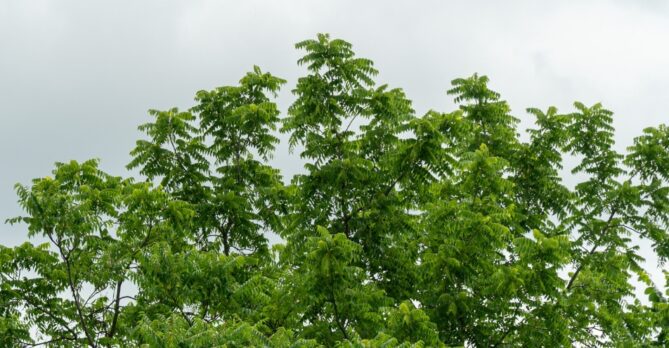
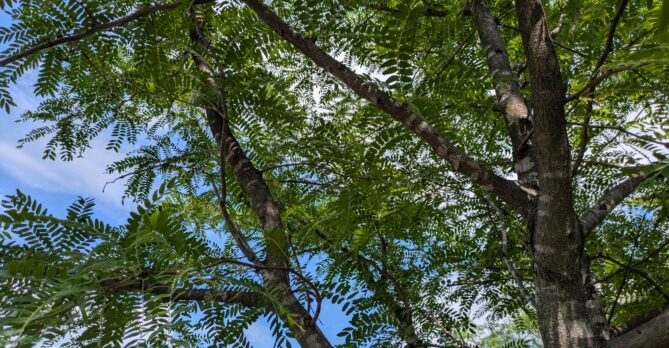
- Trees are far more resilient than we think! Establishing and growing in a city is a tough job. Many trees survive and thrive in less-than-ideal conditions (compacted soil, sporadic watering, damage from bikes, pets, cars, and humans, disruption from construction). While cicadas aren’t a usual occurrence, trees are tough.
- We do not recommend netting. Bird deaths and more non-recyclable plastic are worse than any minor damage cicadas may cause.
- Post cicadas, most trees will be fine. But if your young tree looks rough, some minor pruning can set it right. Call us for a consult through our Consultation program and we’ll take a look.
What they are:
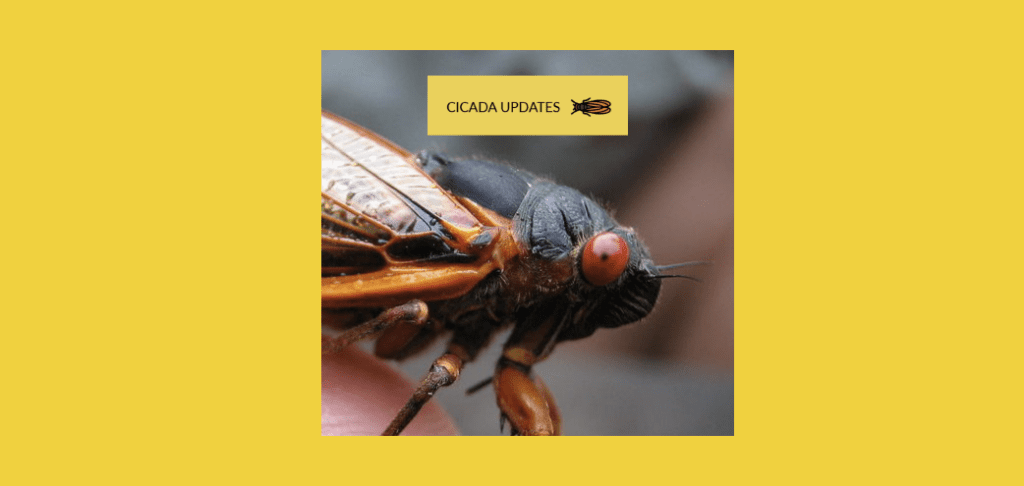
- Magicicada cassinii, better known as the cicada, are insects that emerge from the ground annually in the eastern United States. This year is Brood X’s (pronounced ten) 17-year life cycle is soon coming to an end. These nymphs have spent nearly two decades feeding on roots and will burst into a mating frenzy once the ground temperature reaches 64 degrees Fahrenheit.
When they’ll arrive
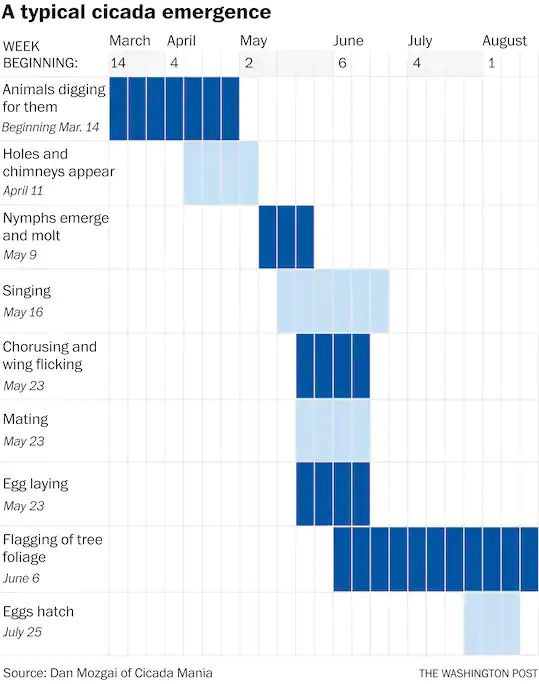
- While there have been a few cicada sightings here and there, the swarm should arrive in large numbers by mid-May – but like most natural processes, that depends! The cooler weather we have had and will continue to have for the next week or so may delay the swarm’s arrival.
- Once they come out of the ground, the cicadas should stick around for about a month before laying their eggs and dying off. The nymphs will return underground by August. Capital Weather Gang has a helpful graphic as part of their broader cicada coverage
What they do:
- Cicadas are benign to humans (they do not bite or sting).
- Although cicadas may cause minor damage to trees, they have a few benefits as well. The decomposing bodies of the adult cicadas will trap nutrients close to tree roots and act as a fertilizer. The tunnels created by the larvae will also act as a soil aerator.
- This event is an awesome spectacle of nature that has made its way to the DMV. It’s truly an opportunity for millions of people to witness and enjoy a remarkable biological phenomenon in their own backyard that happens nowhere else on the planet!
What to do:
- Smaller, young trees are the main concern. Once the cicadas arrive there is not a whole lot to do other than gentle shake your trees or brush the bugs off of their branches or leaves.
- On mature, healthy trees even an increase of cicada activity should not concern you. Any damage to small branch ends will recover over time.
- Post cicadas – if you notice a lot of damage to a young tree – it will likely self-correct.