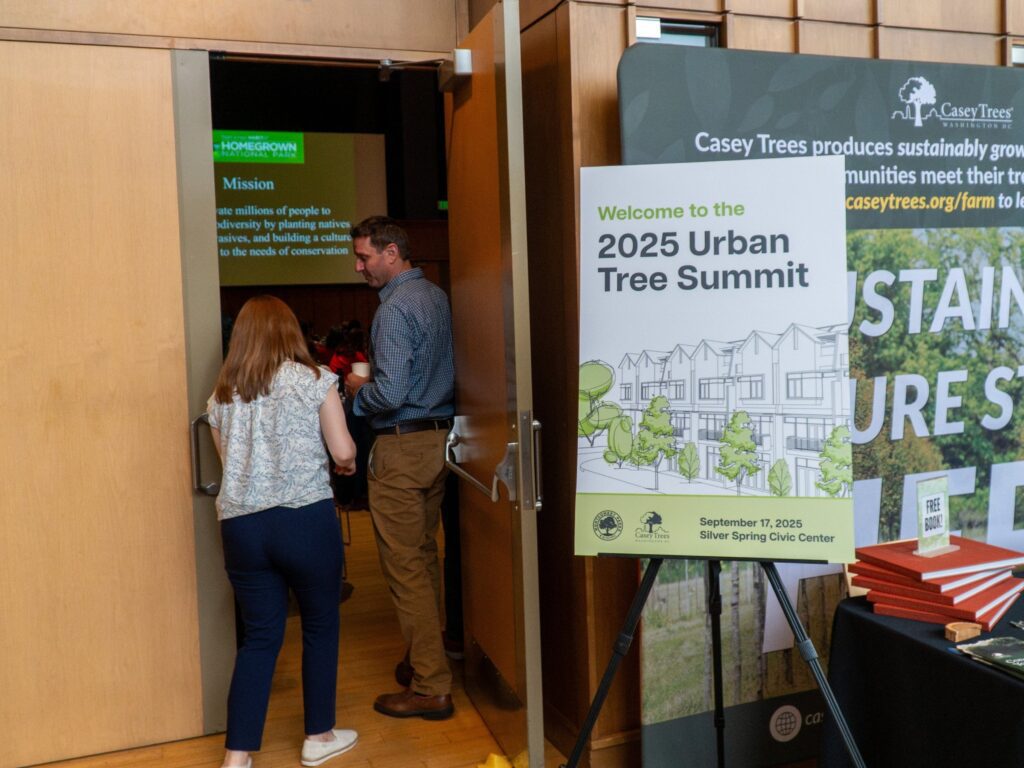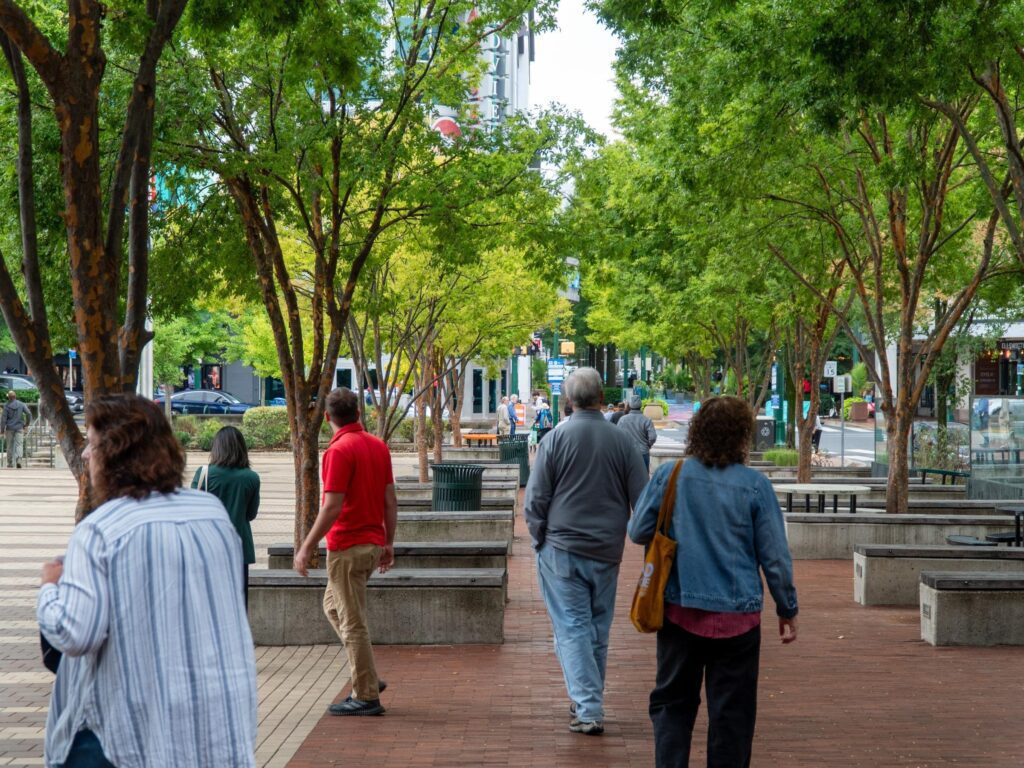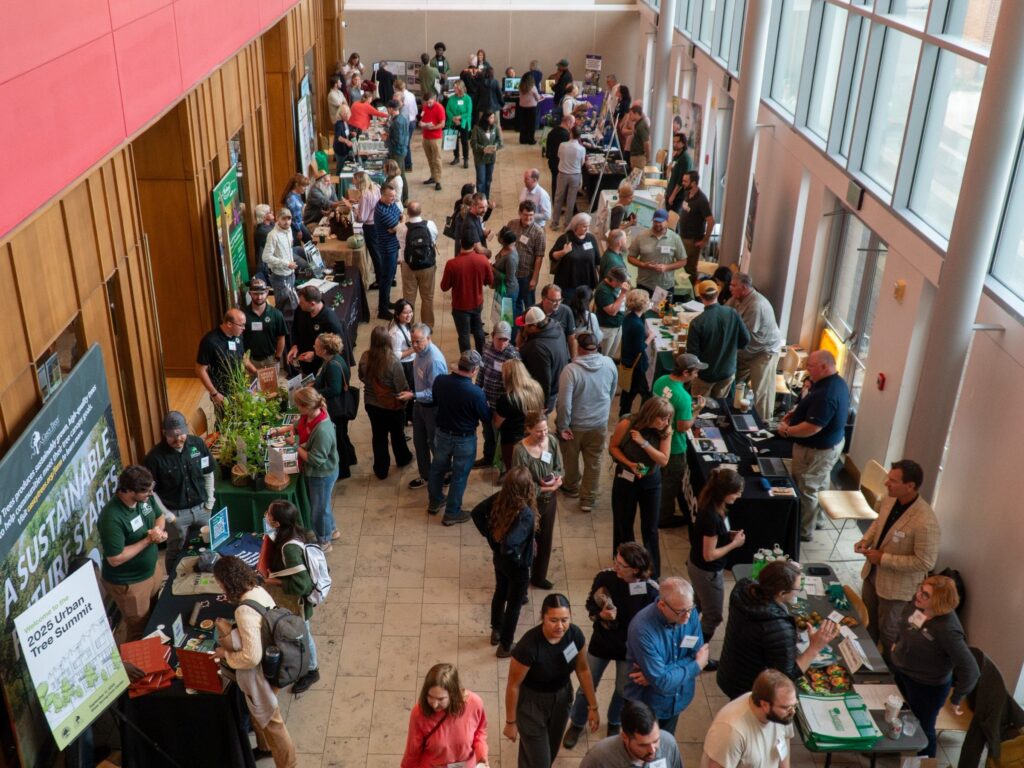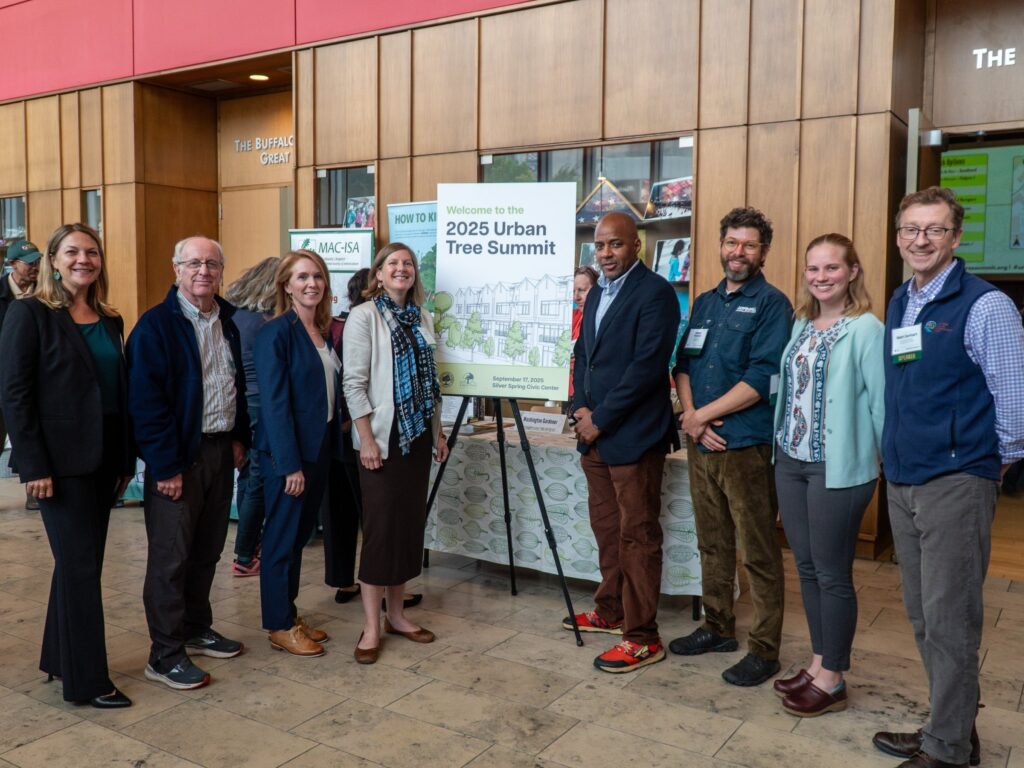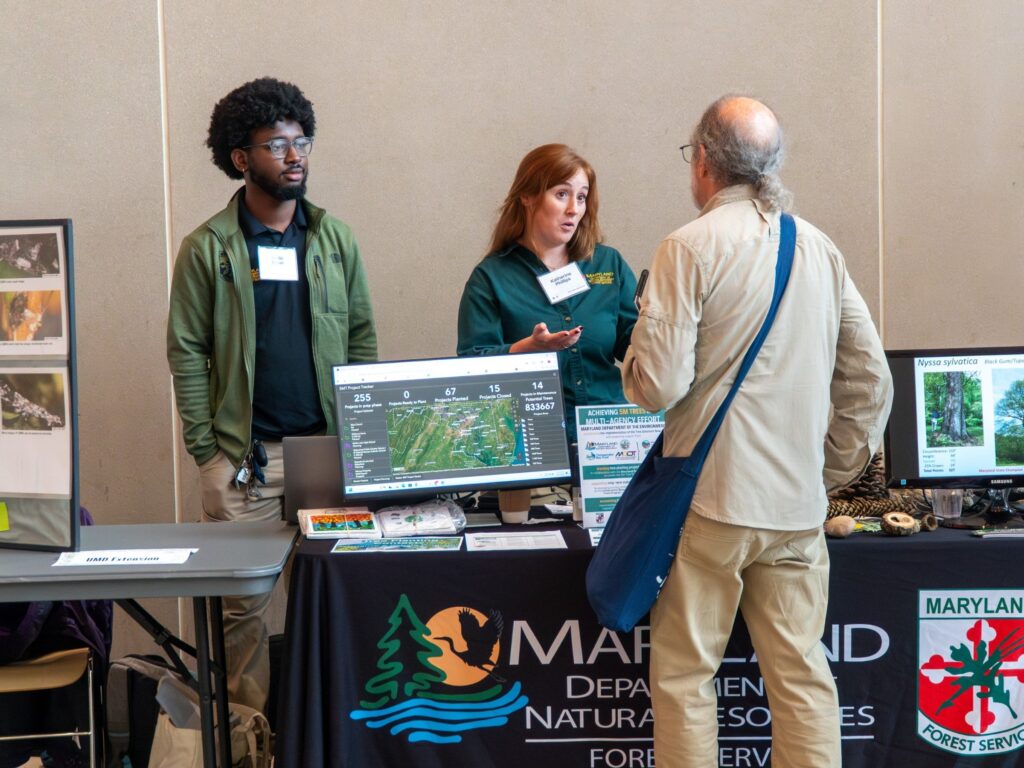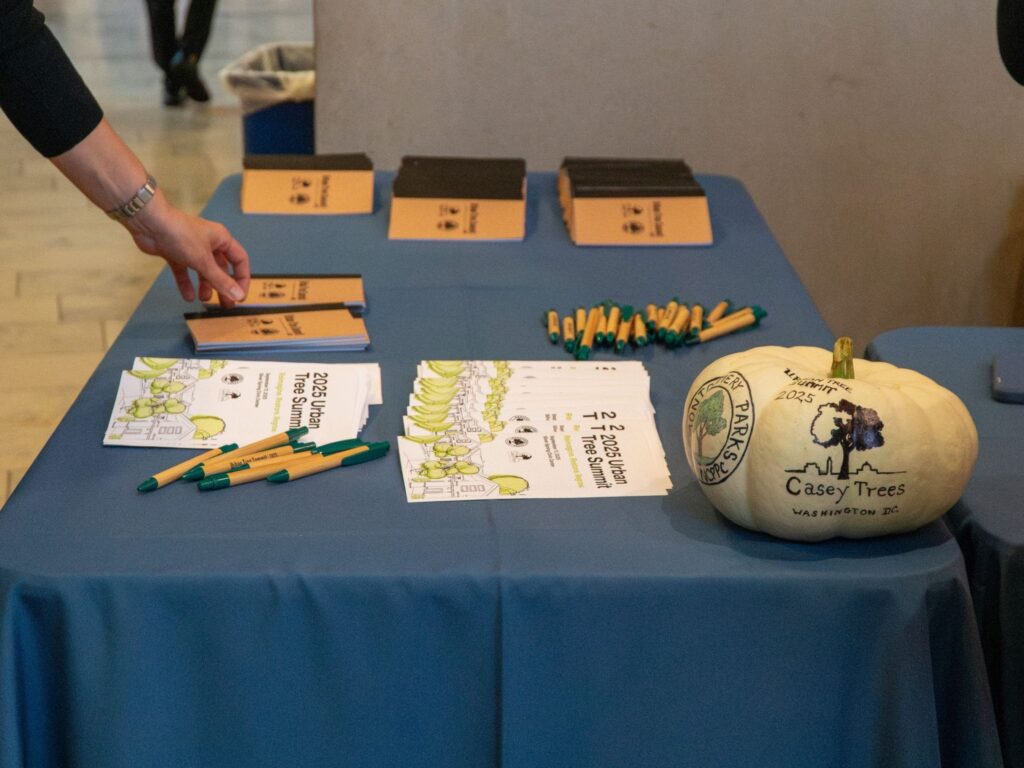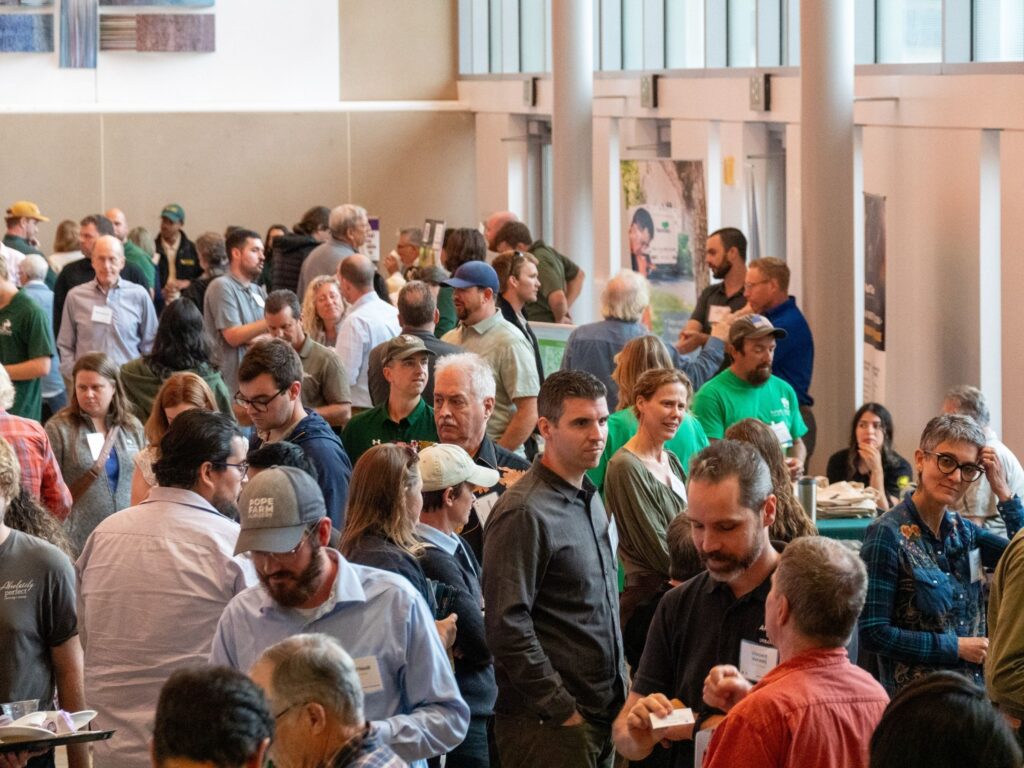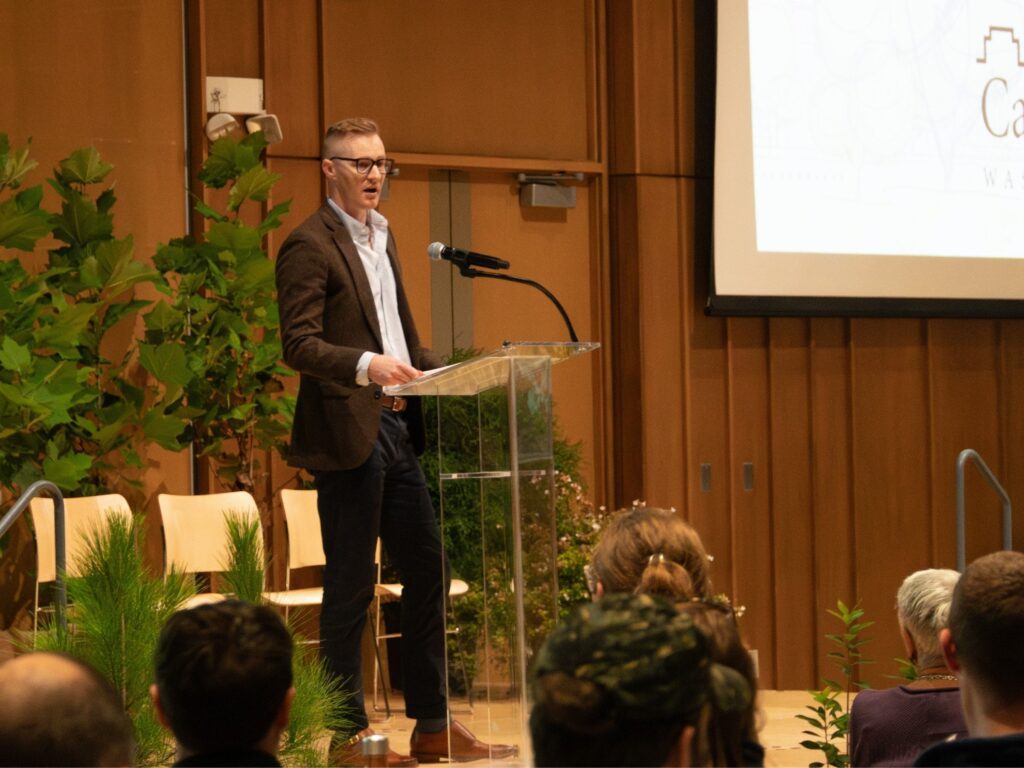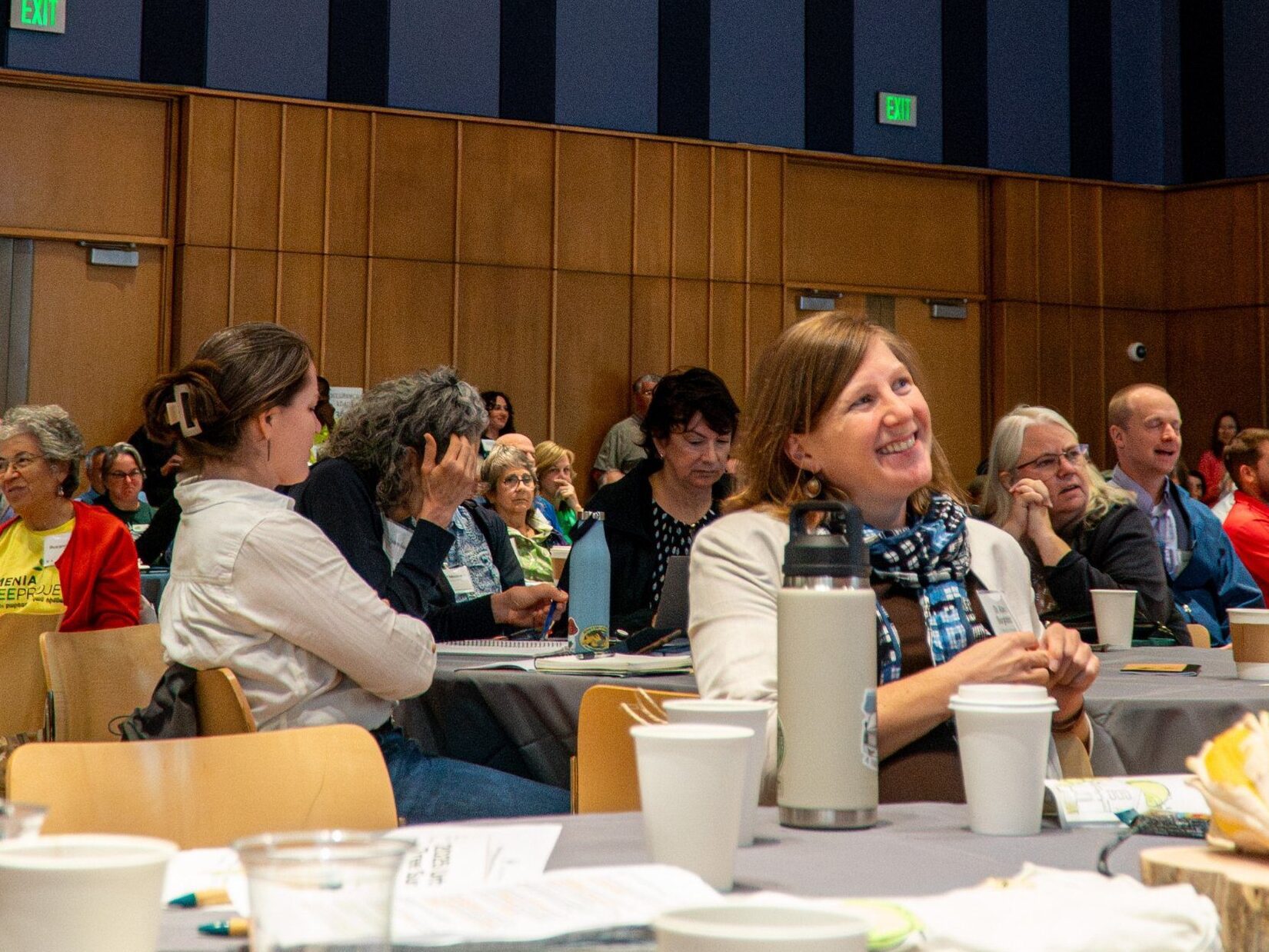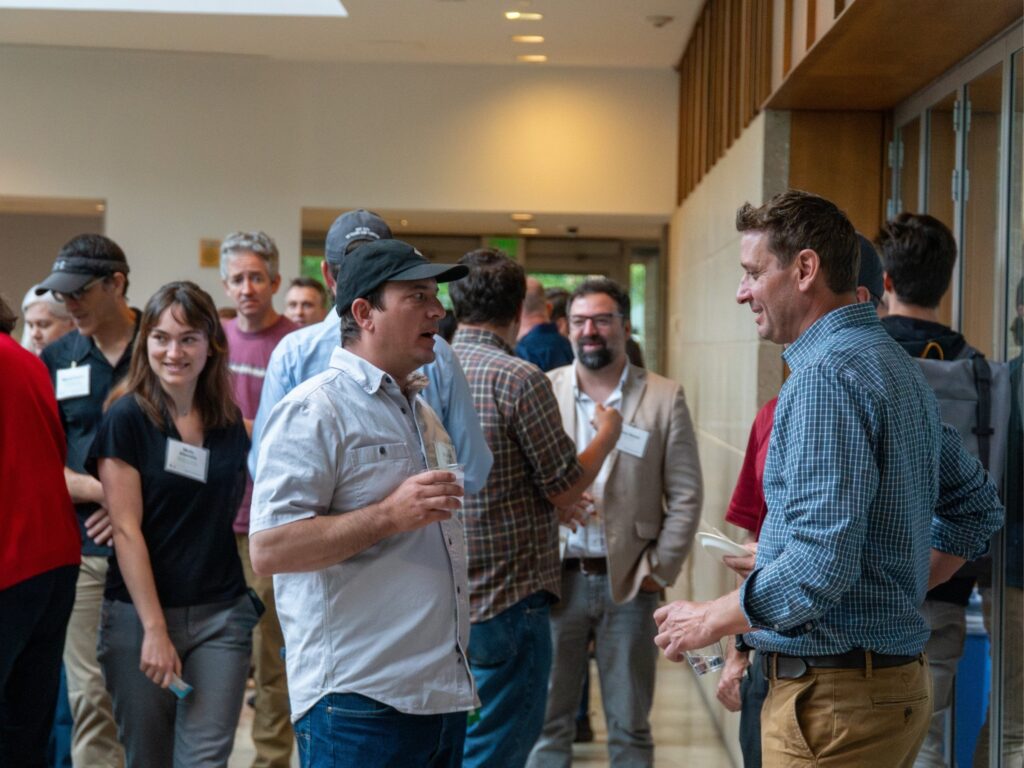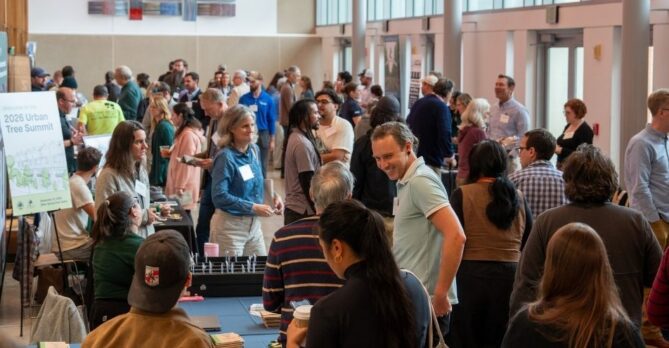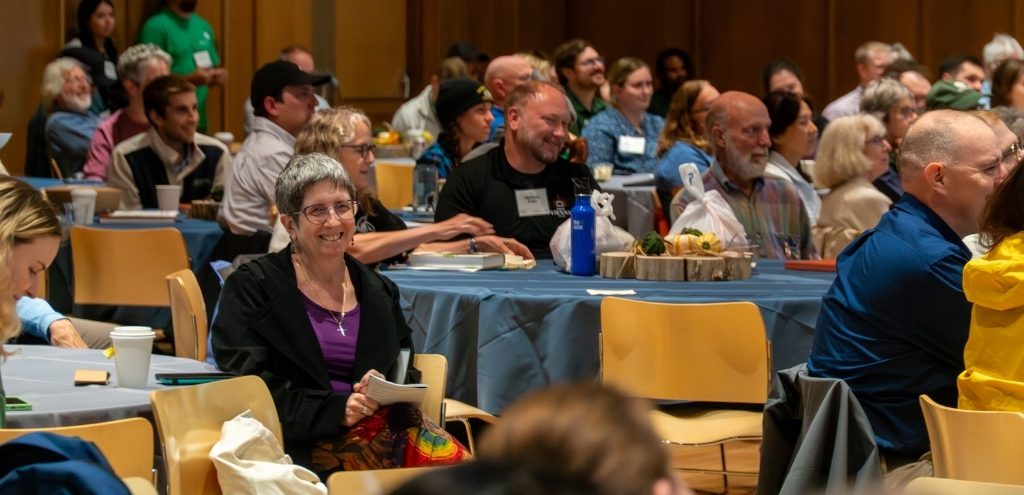
Last week, on a misty Wednesday morning in Silver Spring, Maryland, leading voices and community members across the field of urban forestry gathered for the 2025 Urban Tree Summit, presented by Casey Trees and Montgomery Parks. The sold-out conference was alive with rich conversations about the future of conservation in urban spaces – from selecting climate-resilient species to examining who is included in these conversations. Connecting people of varying backgrounds and professions, our incredible speakers drew on extensive experience across urban forestry to share insights and inspire action.
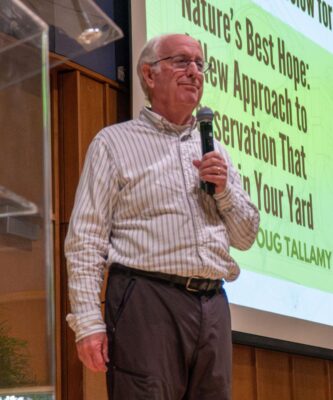
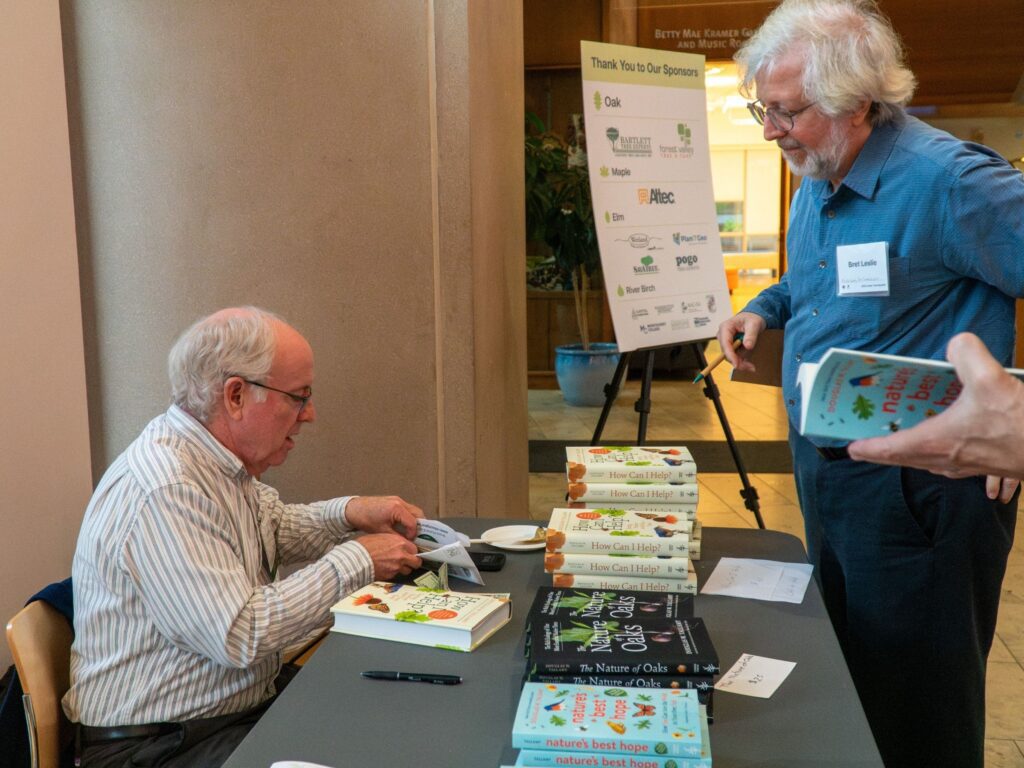
Keynote speaker Dr. Doug Tallamy opened the day with a powerful message: to save ourselves, we need to save nature. Although the challenge seems insurmountable, Dr. Tallamy assured audience members that it can be done – yet the answer lies with all of us, not just conservationists. With a great majority of the land east of the Mississippi privately owned, conservation must happen where people live and start in our own backyards — not just in preserves or public parks. In Dr. Tallamy’s address entitled “Nature’s Best Hope: A New Approach to Conservation That Starts in Your Yard,” he focused on how everyone can plan, plant, and maintain landscapes that are engineered to provide a maximum amount of ecosystem services.
This means that we must address how we approach landscaping, changing our view to prioritize the ecosystem services of plants and animals rather than growing large, pristine lawns. Dr. Tallamy underscored the importance of introducing native species, planting pollinator gardens, and preserving forested areas, thereby minimizing impacts to wildlife and ensuring that we encourage robust food webs and habitats that can reverse the declining biodiversity we see happening on a national and global scale. From the smallest caterpillars to the tallest oaks, Dr. Tallamy emphasized that all creatures and places have ecological significance, empowering the audience to see themselves and others as nature’s best hope.
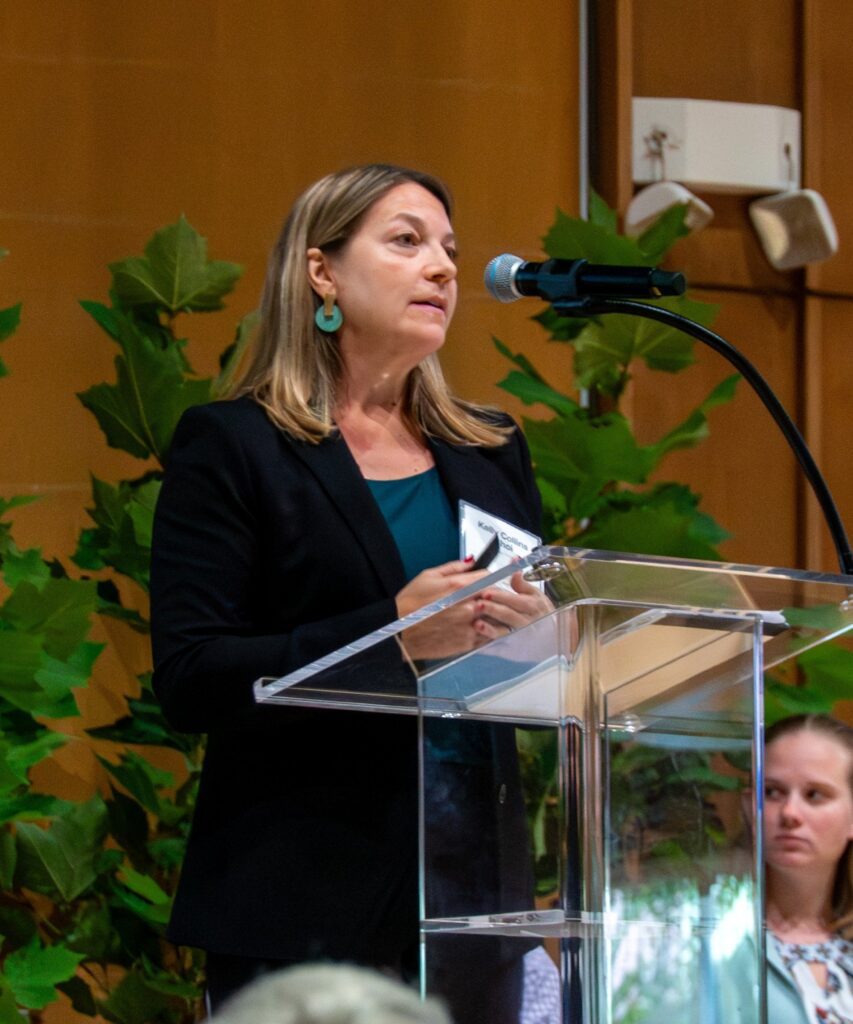
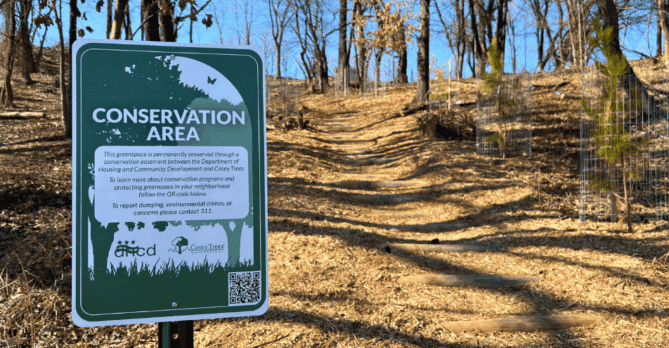
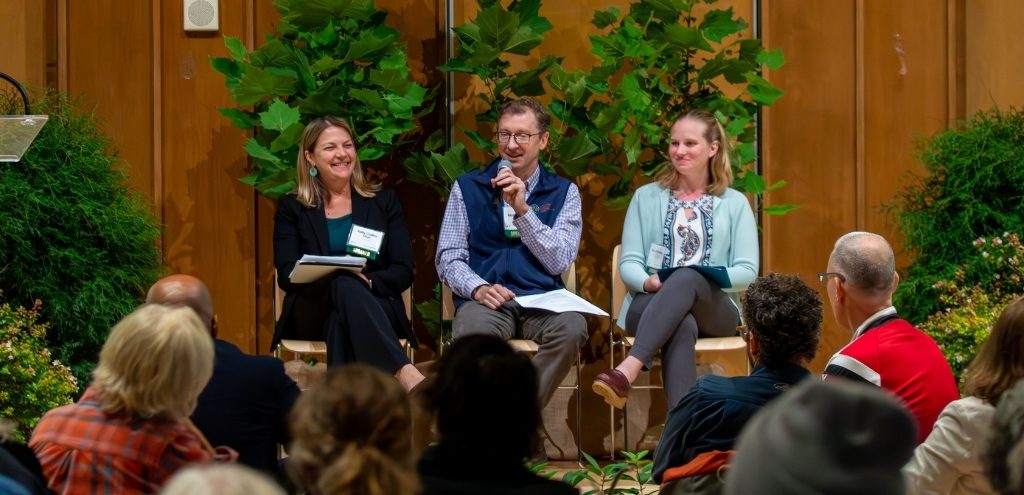
The Urban Conservation Panel highlighted innovative approaches to conservation and land stewardship across the District, Maryland, and Virginia. Kelly Collins Choi of Casey Trees kicked off the discussion by spotlighting Casey Trees’ recent land trust accreditation and the broader impact of its Policy and Land Conservation team. She shared how community conservation models and easement stewardship plans are transforming local green spaces into ecologically resilient, community-focused areas.
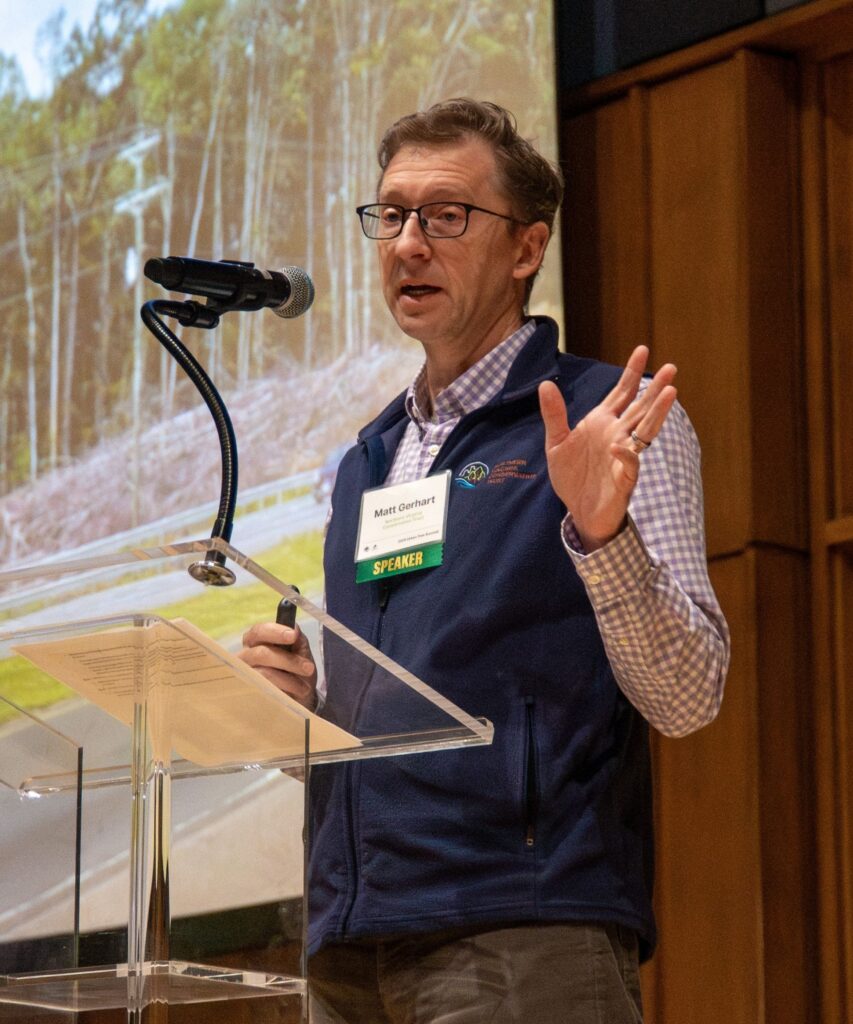
Matt Gerhart from the Northern Virginia Conservation Trust offered a regional perspective from Northern Virginia, discussing the challenges of protecting 2.2 million acres across 15 jurisdictions amid growing development. He explained how tools like GIS analysis help identify opportunities for strategic conservation in both urban and exurban landscapes.
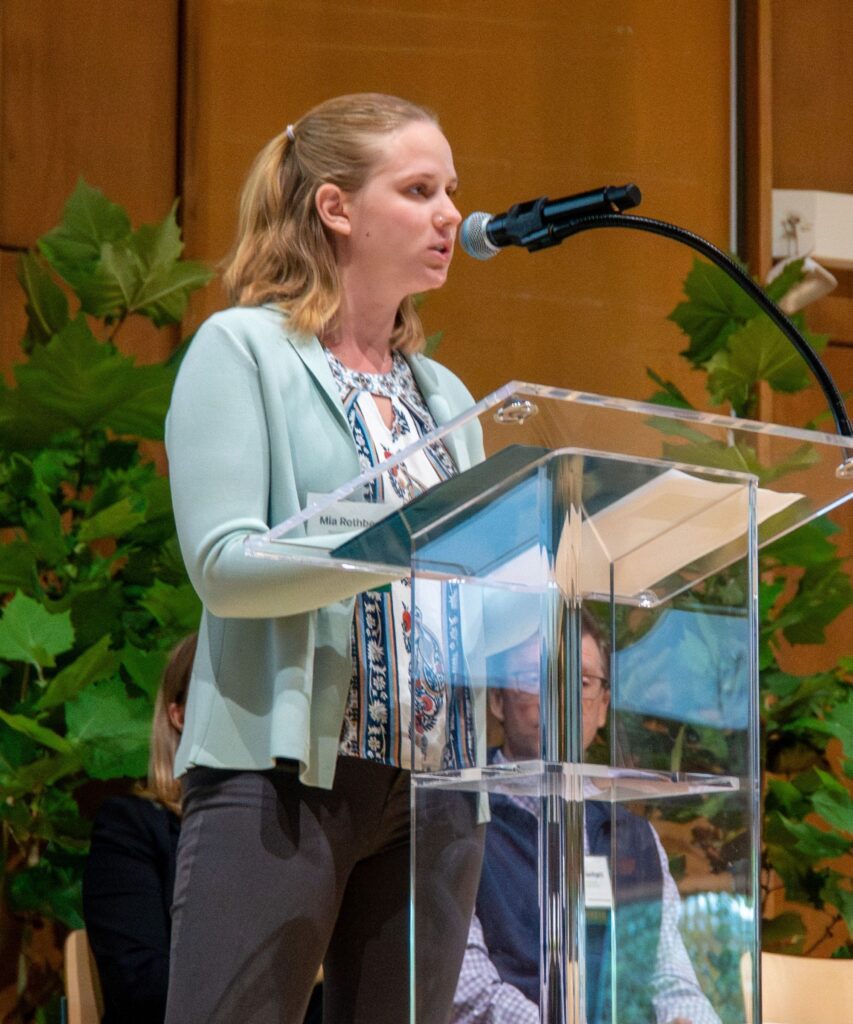
Rounding out the panel, Mia Rothberg of the Montgomery County Planning Department highlighted the role of legislation in shaping conservation programs. From the state’s Forest Conservation Act to the county’s Forest Conservation Law, these policies fund reforestation and tree planting programs that preserve forests and meet mitigation goals.
Together, the panel underscored the importance of collaboration, strategic planning, and prioritizing high-impact communities in modern conservation.
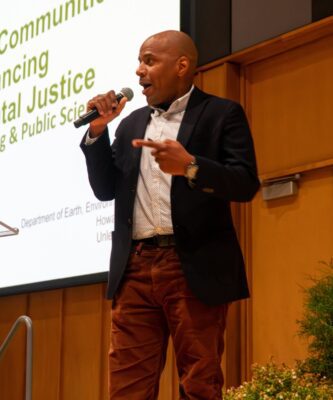
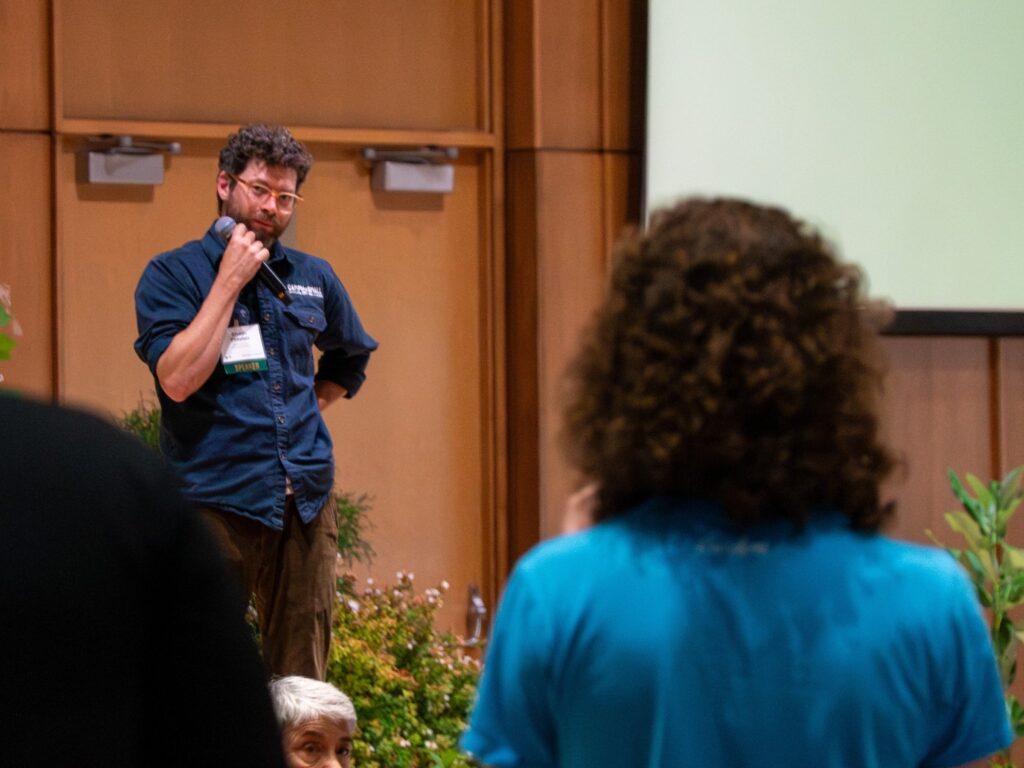
Dr. Lemir Teron began his talk discussing what he called the “elephant in the room”: who is in the room right now? Who’s “at the table,” and who’s “on the menu”? These important questions echoed in our heads as Dr. Teron led his presentation on the intersection of environmental justice and urban forestry. For every urgent issue that urban trees face today, Teron argued that socioeconomic disparity compounds its effects, highlighting redlined neighborhoods and urban heat islands as a crucial example.
To address these challenges, Teron emphasized the need to democratize the conversation–to incorporate partnerships with non-forestry groups, prioritize public engagement, focus on action plans and working relationships in marginalized spaces, highlight public science, and more. Utilizing the framework from his playbook, he discussed how environmental justice should play a role in each stage of the urban forestry planning process, and to move forward, we must address both historic and contemporary issues of inequity.
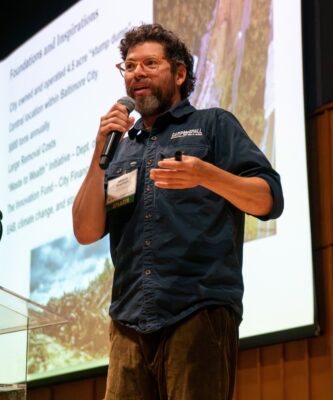
Shaun Preston presented Baltimore City’s Camp Small program, a 4.5-acre “stump dump” transformed into an innovative space for repurposing felled trees and wood waste. Preston and Baltimore City started the Camp Small initiative with a shared vision that “waste” can turn into wealth, and therefore, savings, for the city and the community.
Preston argues that Camp Small “closes the loop” by linking tree planting, maintenance, removal, and reuse into a cycle. He detailed how Camp Small processes over 8,000 tons of wood annually, repurposing material into lumber, mulch, and custom products. Even ash trees, threatened by pests, are used at their highest value, generating thousands in revenue and savings. While revenue drives Camp Small, Preston discussed how its true value comes from its impact on communities, from community education to workforce development. Now, the “stump dump”–once deemed a money pit–is a national model for urban wood reuse.
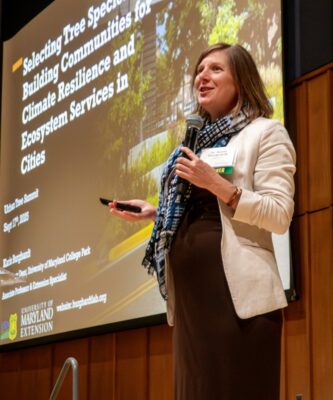
Dr. Karin T. Burghardt capped off the conference with an informative talk on how successfully planting a tree goes beyond placing it in the ground. Instead, species selection needs to be taken into consideration to withstand climate and pest challenges, especially in cities. Inherent urban features, such as simplified plant communities and heat island effects, stress trees and predispose them to pests and disease. Therefore, Dr. Burghardt argued that intentional tree species selection and diversification should be used as a risk management tool, ensuring the best chance of tree survival.
From addressing tree inequity rooted in redlining’s discriminatory policies to building climate resilience, Dr. Burghardt shared multiple detailed studies showing how simply planting a tree–any tree–is less impactful than intentional, sustainable planning. Rather, planters need to think more as though they’re growing a “community,” one where its biodiversity is its strength against climate, pest, and disease challenges.
Each speaker brought a different element of urban forestry to the table, and while each presentation highlighted challenges ahead, they more importantly showcased the solutions we have at our disposal. From pollinators to people, to trees and beyond, we all play a part in caring for our urban forests.
A huge thank you to our sponsors and everyone who made this day possible! Together, we’re planting the seeds for a greener future, and we can’t wait to see you next year!