Once overtaken by invasive bamboo and vines, a quarter-acre green patch in Riverdale Park, Maryland has been transformed into an oasis of native plants and trees. The story of Ravenswood Community Forest is one of conservation, partnership, and community stewardship.
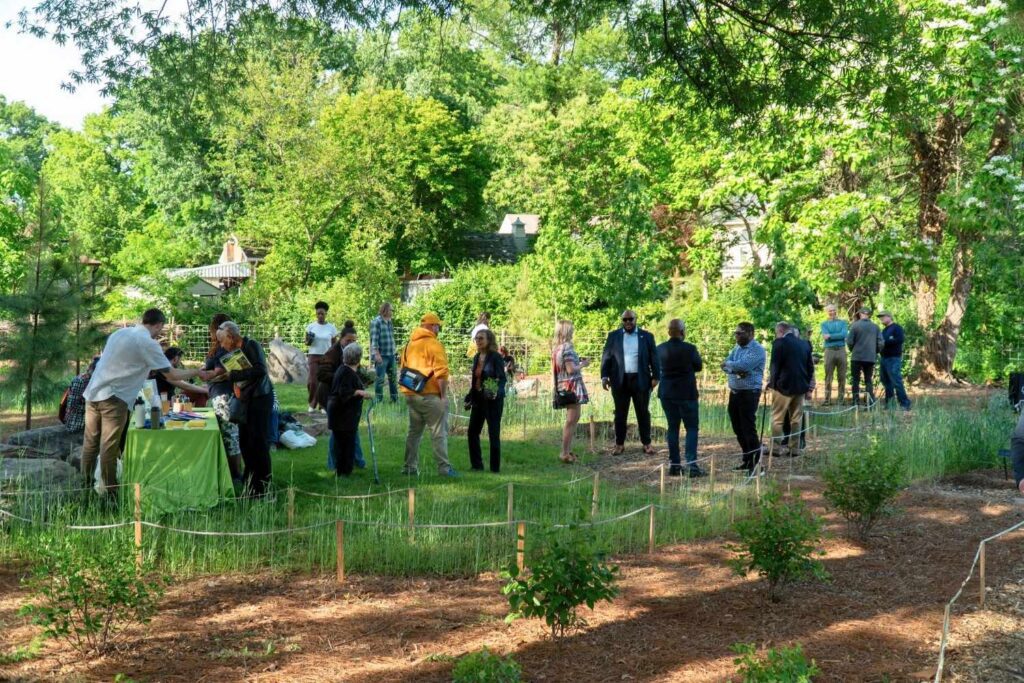
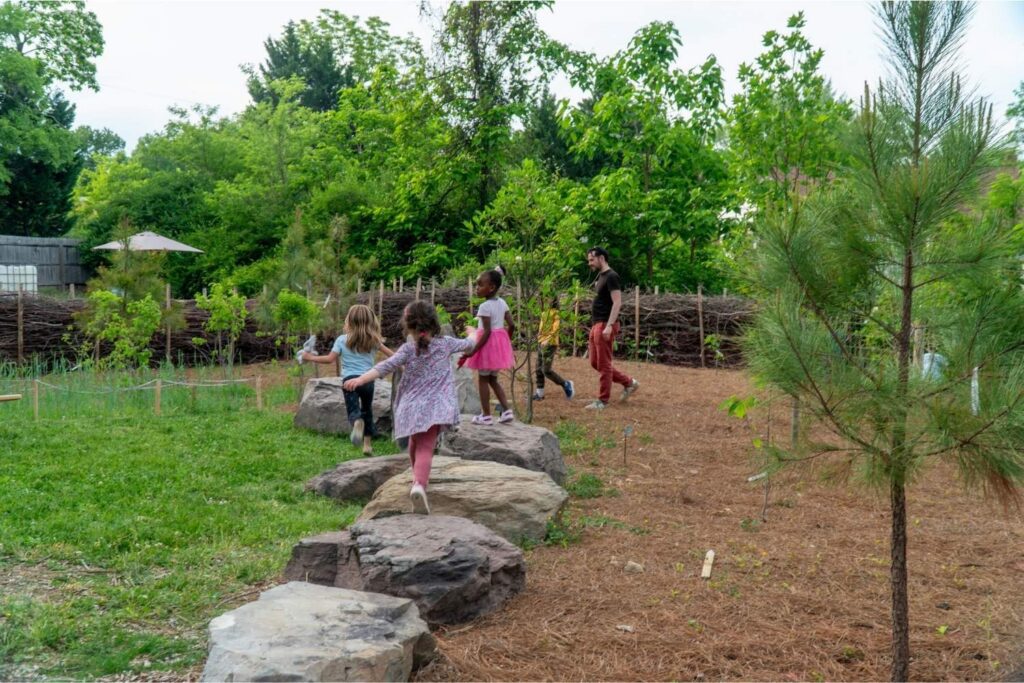
Designed with input from Riverdale residents, Casey Trees staff worked over the past year to clear overgrown vegetation and install winding walking paths, native trees, a pollinator garden, and natural play areas. The site, located at 4702 Ravenswood Road, will add shade, improve water quality, and provide wildlife habitat—all while giving the community a space to gather and connect with nature in perpetuity.
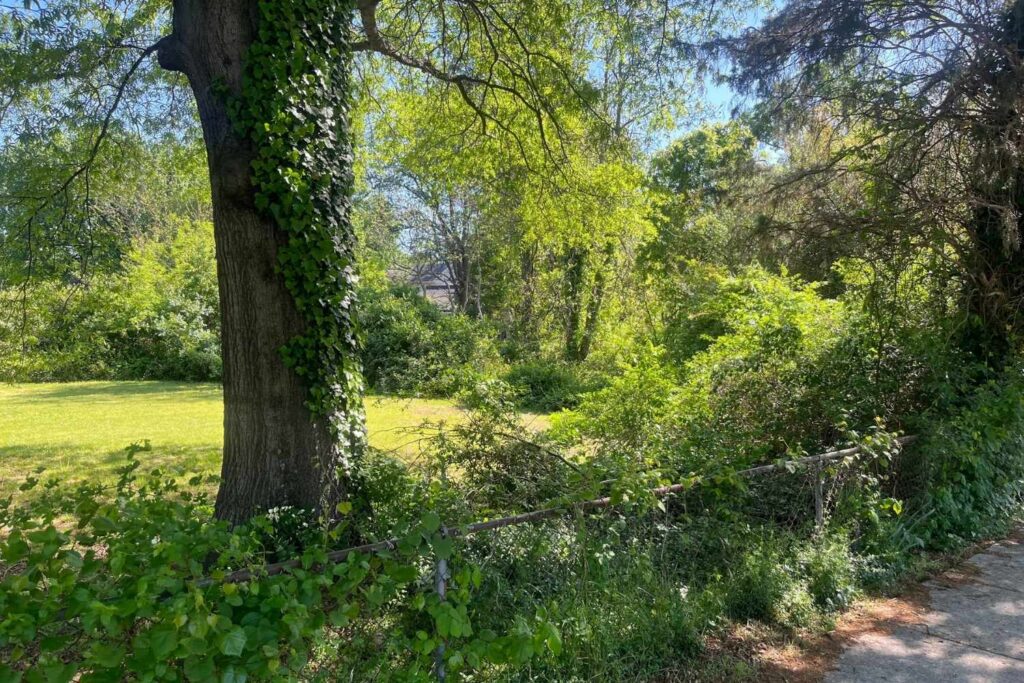
But this story begins before any of the restoration work did: with the donation of the land by Kayleigh Kulp, a local resident and developer specializing in historic preservation through Amity Rose Properties, who saw an opportunity to do more than build or sell, but instead, preserve and protect it for the community long term.
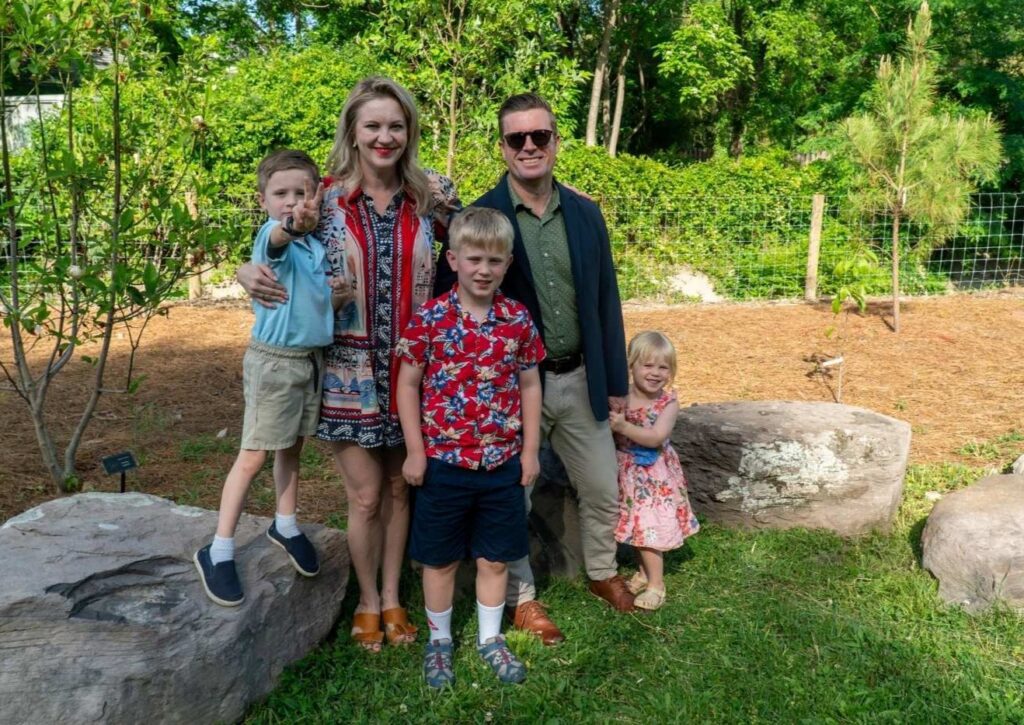
“Communities need housing, businesses, and investment. But they also need green space, gathering places, and opportunities for people to connect with nature,” she said. “The most successful communities make room for all of those things.”
For Kayleigh and her husband, Jay, the decision to donate and conserve the land was also about the example they wanted to set for their three children — that building isn’t just about maximizing value, but about stewardship, caring for a place, and investing in something that benefits your community.
“We wanted to create something permanent, accessible, and welcoming… nature doesn’t have to be far away to be meaningful,” she said. “Sometimes the most important green spaces are the ones woven directly into the neighborhoods where people live their everyday lives.”
A Project Powered by Partnerships and Community
None of this would have been possible without strong partnerships. With support from Nature Sacred, Chesapeake Bay Trust, and Prince George’s County, we brought this pocket of green space back to life.
Neighbors helped shape every detail. In May 2025, we tabled at the Riverdale Park Farmers Market and presented three design concepts for the community to weigh in on. Did people want a forested woodland, an open clearing, or pockets of pollinator gardens? Riverdale residents chose the “Woodland Wander,” which includes winding trails through native trees, a pollinator garden, and natural play areas for kids.
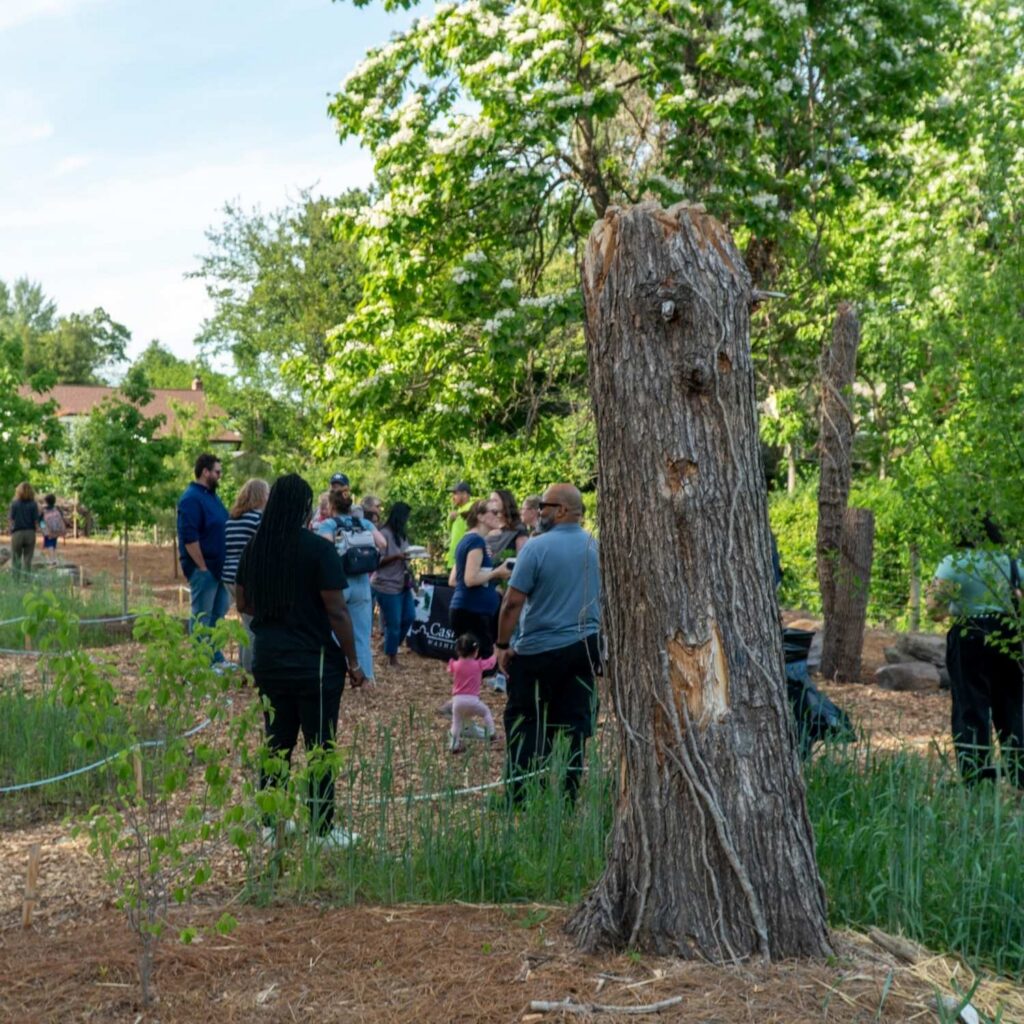
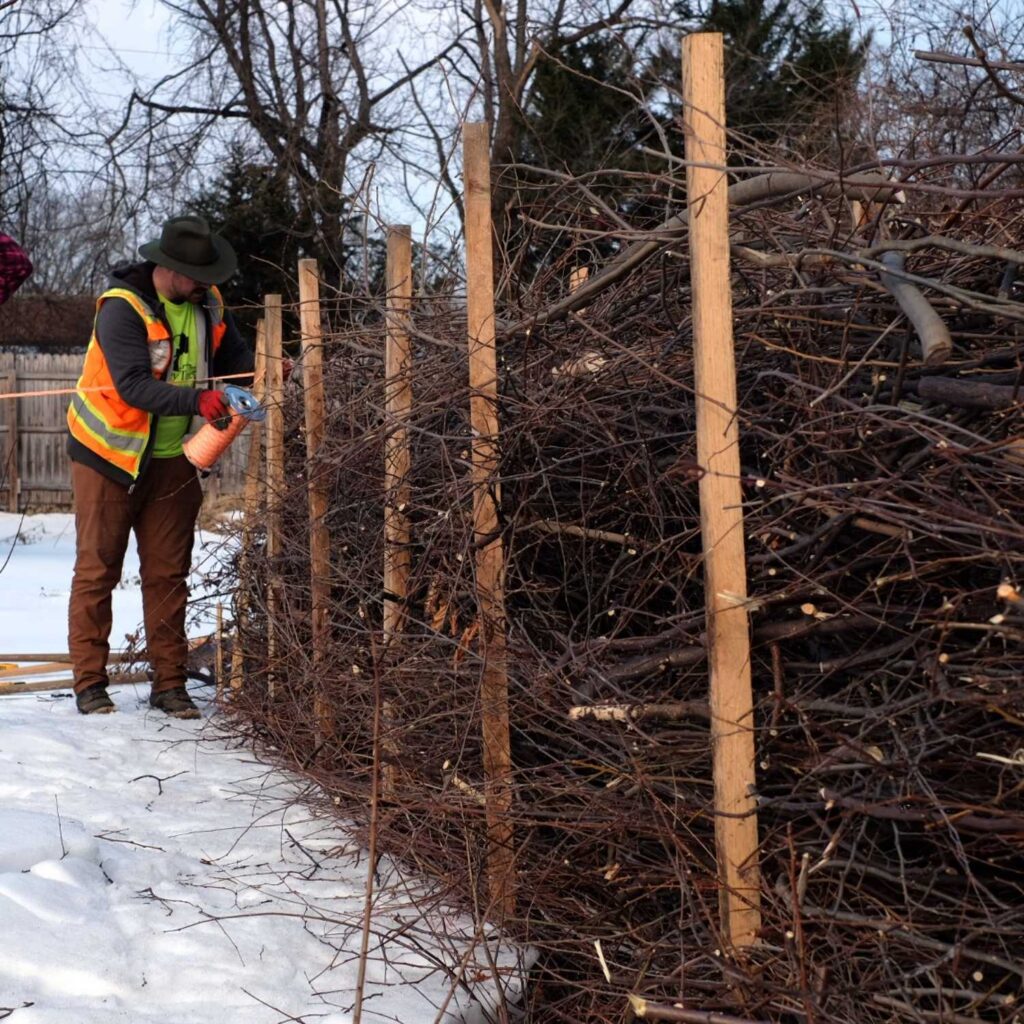
While Ravenswood Community Forest is a relatively small footprint, every design detail is intended to maximize its ecological impact. This winter, the Casey Trees crew built a natural fence—known as a dead hedge—out of pruned tree branches, creating shelter for wildlife. And after removing the branches from a dying tree on site, we left the main trunk standing as a snag to provide habitat for birds.
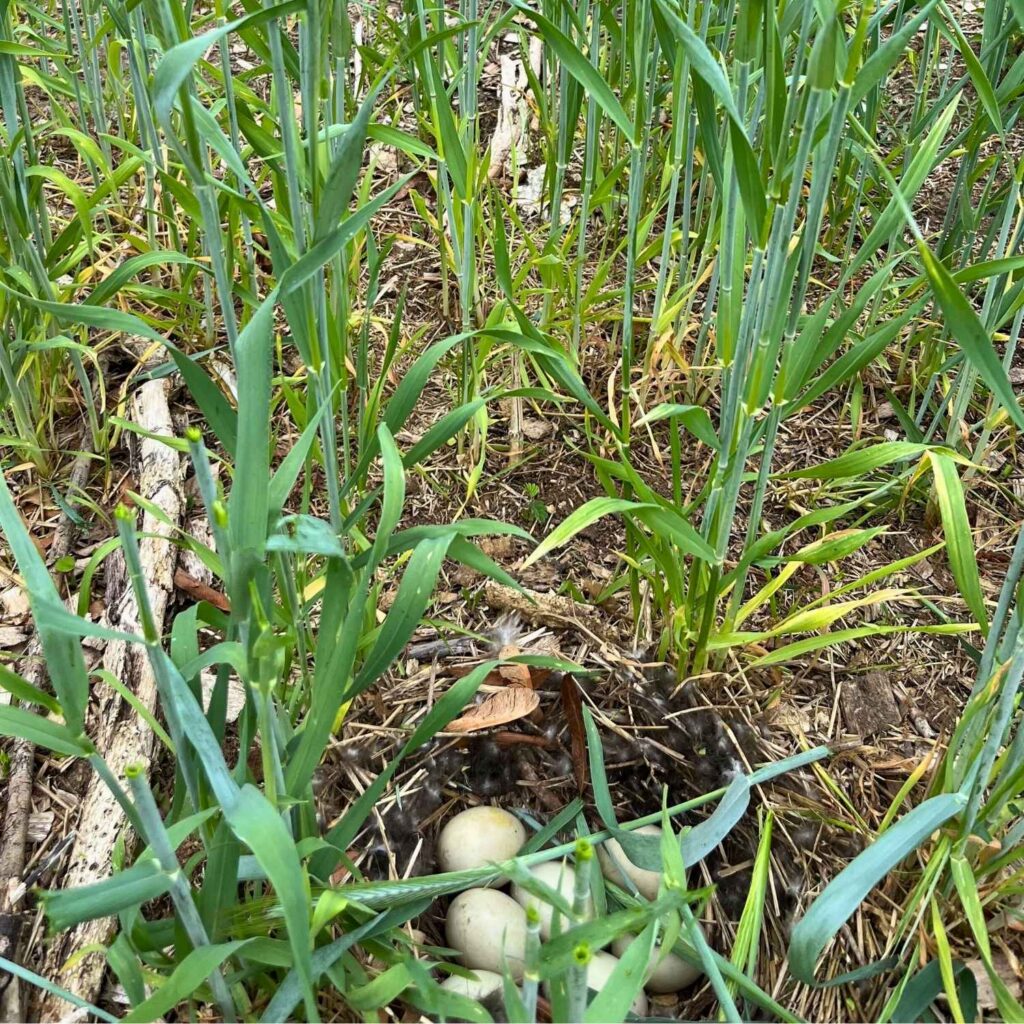
In addition to protecting mature trees already on site, our team planted nearly 50 native trees of various species, including serviceberry, sweetgum, and catalpa, as well as native wildflowers and meadow habitat, creating habitat for birds, bees, butterflies, and other wildlife. The impact was almost immediate: this spring, a duck nested her eggs in the meadow, and pollinators were spotted enjoying early-season serviceberry and redbud blooms.
A Space That Belongs to Everyone
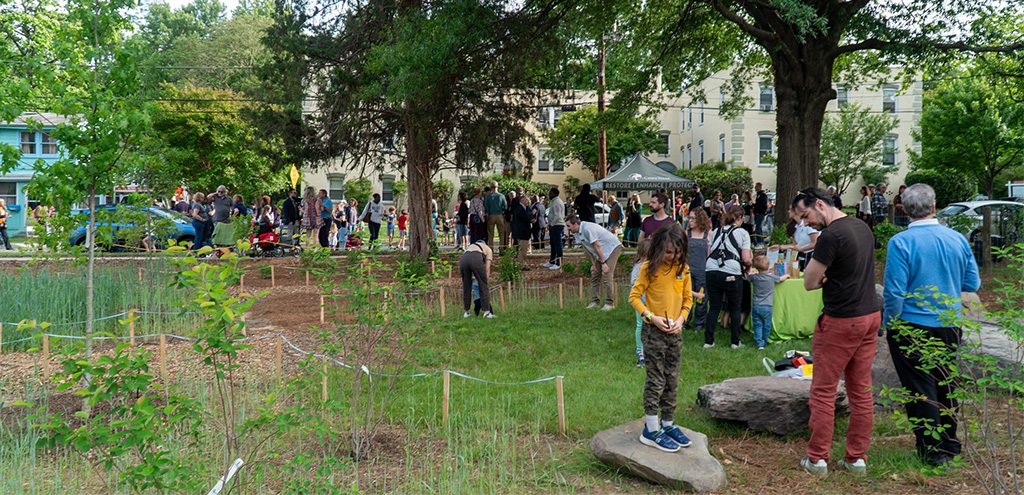
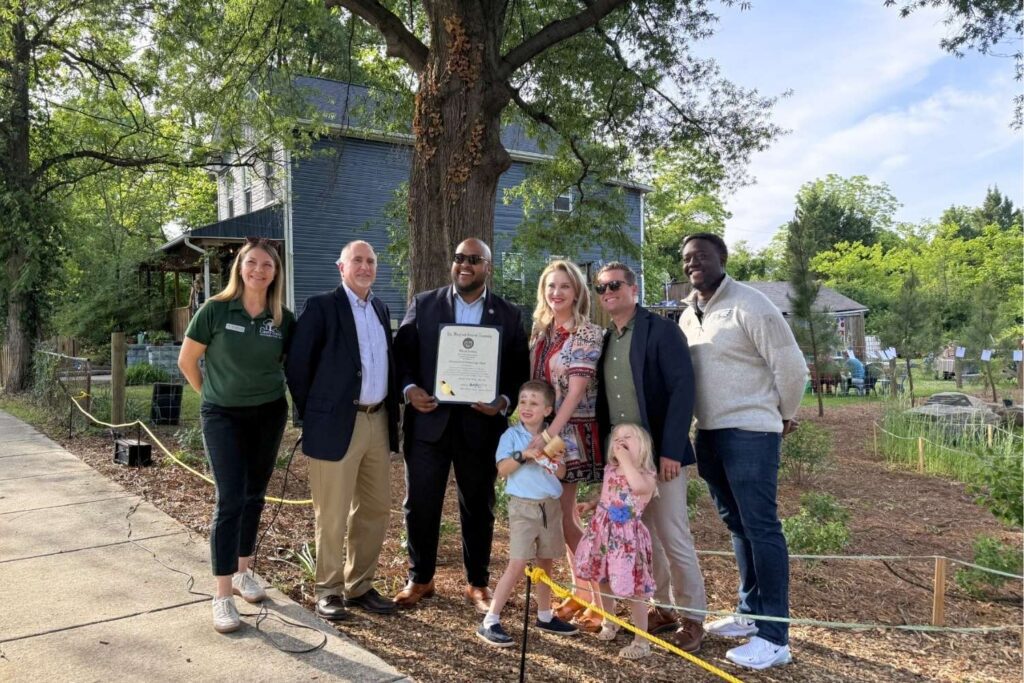
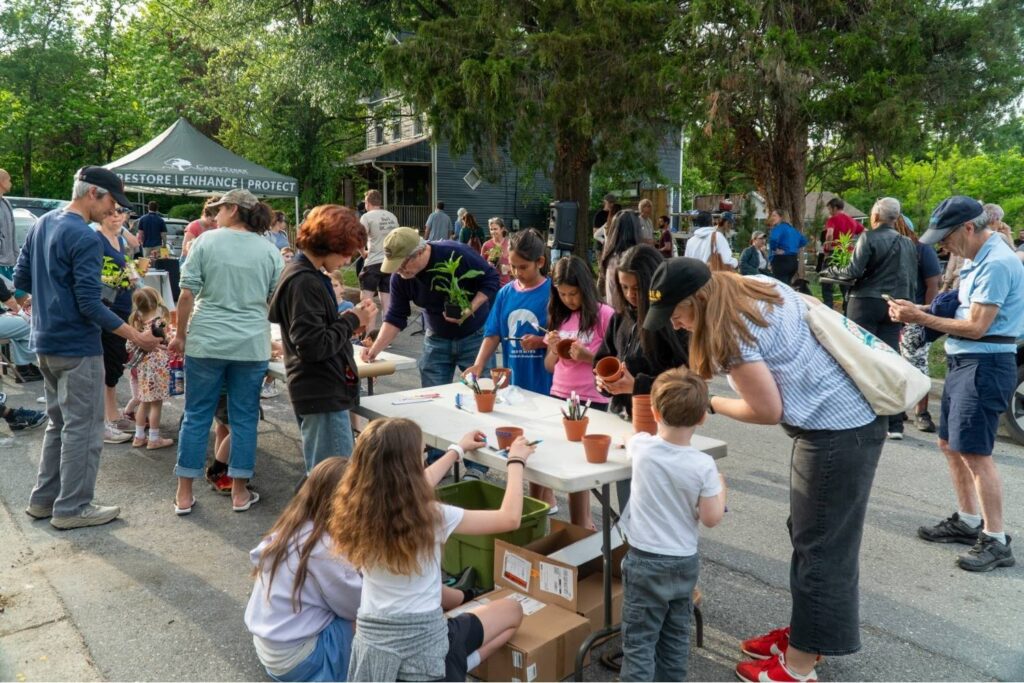
Last month, the Riverdale community celebrated the official opening of Ravenswood Community Forest on Friday, May 15, with a brass band, kids crafts, and a block party to remember. With over 200 people in attendance and remarks from the mayor as well as county and state legislators, it was a festive debut for our first conservation site in Maryland.
“What makes Ravenswood special isn’t only that the land is now protected forever, but also that neighbors helped shape what it became,” said Kelly Collins Choi, Director of Policy and Land Conservation at Casey Trees. “That community connection is what turns a conservation site into a space people care for, and that’s good for the trees, the wildlife, and the neighborhood.”
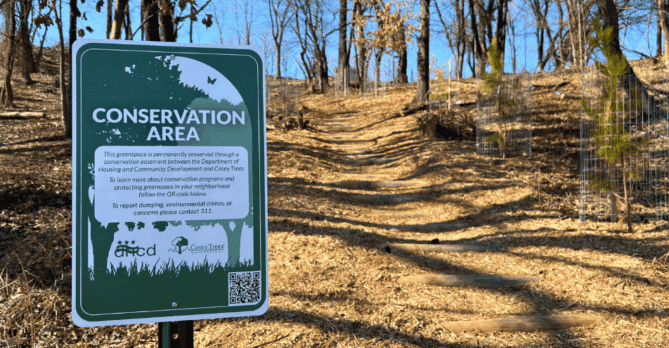
Going forward, our team will continue adding public art elements and educational signage so visitors can learn about the nature around them. Ravenswood is a Nature Sacred site, and both Kayleigh and a nearby neighbor Marianna Previti are Firesouls, who will steward the space and activate it with community programming.
We also hope this space inspires others to think differently about land conservation. It can be easy to assume that conservation happens somewhere else—in national parks and sprawling rural areas—but Ravenswood is proof that conserving small, local spaces can have an outsized impact on our communities.
Where development often replaces green space, even a small, protected parcel can make a lasting difference for the environment and the people who live nearby.
“We hope it serves as an example that development and conservation don’t have to be opposing forces,” Kayleigh said. “In fact, some of the most successful communities find ways to embrace both.”
This is only the beginning for the Ravenswood Community Forest. In the years ahead, Casey Trees will need community support to maintain and activate the space. Please consider a donation to help fund art installations, educational signage, watering, planting, weeding, and more.