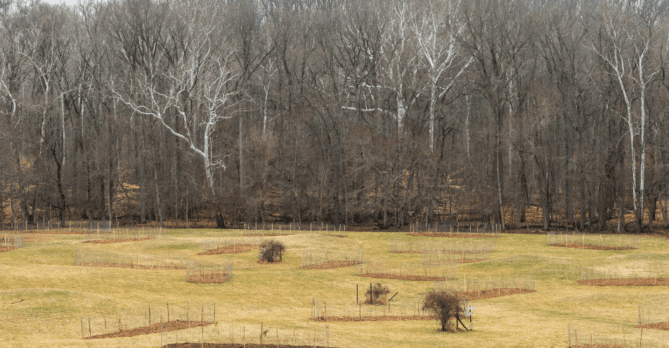
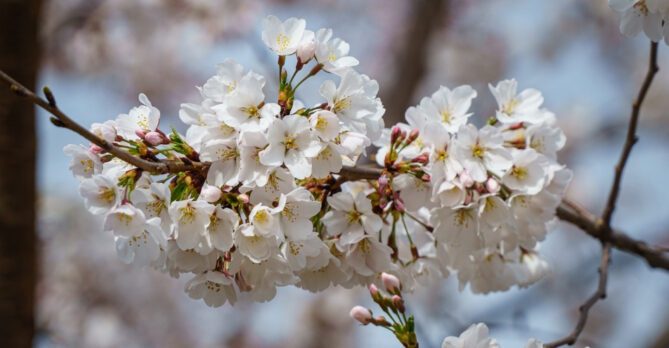
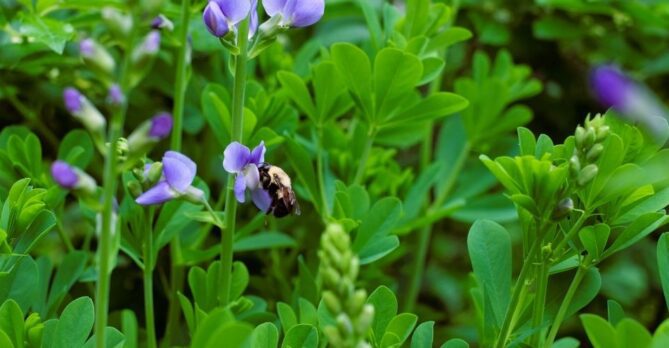
Nature, when left undisturbed, demonstrates the remarkable journey of turning barren land into flourishing forests. In the midst of this narrative lies a simple truth that often goes unnoticed – the intrinsic resilience of nature to restore and repair itself. Casey Trees Field Manager, Nick Smalley, recently wrote a piece that paints a beautiful picture of this process for us.
Here in the Midatlantic, in the heart of the realm of the east coast hardwoods, if you leave a piece of land unattended for a few weeks the grass starts to get a little high. After a few months, some herbaceous plants that have sprung up will start blooming, and maybe you’d see a few tiny seedlings poking up through the grass. If you kept the mower in the shed the next year you would have a proliferation of flowers, and the seedlings would creep higher. Some might get browsed, or out shaded by other plants, but the strong would remain.
The next year the seedlings, now saplings, would leap forward above the herbaceous layer and begin to come into their own. Five years later some trees have canopies touching and are beginning to race upward more than outward. The sun-loving herbaceous plants are starting to get shaded out and the understory mix begins to shift towards shade-tolerant plants. After a few decades, there will be proper trees, their leaves providing mulch for the shade-loving ferns, shrubs, and spring ephemerals that have come to thrive in the developing forest soil.
The trees would provide shade for any nearby homes in the summer, food and homes for wildlife, mental health benefits for people in the area, and countless other benefits. More than providing benefits for us, it’s simply what our area is supposed to be. Any land here used to be forest and if left to its own devices will return to forest.
This is a bit of a simplification. Invasive trees and vines complicate life for native plants, unchecked herds of deer overbrowse some plants, diseases, and pests have eliminated entire species from our landscapes and our forests, and fire suppression has altered the species composition in ways we are still working to understand.
Yet, if you let your gardens go, if you stop cutting your lawn, in a few decades there will be trees there. It’s why when anyone asks me what they should plant, I always answer, “If the area permits, a big native tree!” When you plant a baby oak that will grow to shade half of the block you are working with nature to provide benefits to yourself and your neighbors for this generation and for many to come. These trees were here before us and for most of us, if we plant a large native tree, it’s a legacy that will be here after us.
The symphony of nature, as expressed in Nick’s letter, underscores the remarkable power of patience and the wisdom of allowing nature to weave its story. While the complexities of invasive species, diseases, and other challenges can hinder this natural progression, the core principle remains steadfast: given time, a once-empty expanse transforms into a vibrant ecosystem, sustained by the legacy of large native trees.
As we navigate the modern world and our role within it, let us remember that planting a native sapling is more than an act of adding greenery to the landscape – it is a testament to our commitment to future generations, a living legacy that bridges the past, present, and future. Embracing the rhythm of nature, we can foster environments that not only benefit us but also breathe life into the legacy of our land.