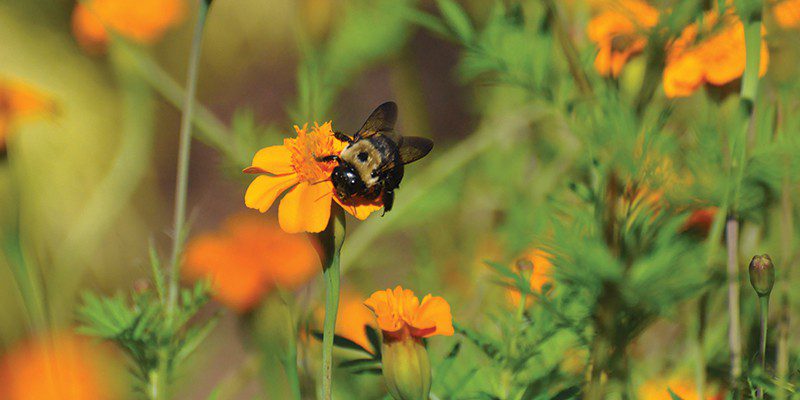
Although Pollinator week is winding to a close, it’s important that we do what we can and support our busy bees and bountiful butterflies year-round. With the summer season comes longer days that allow pollinators to amp up their foraging schedules, having healthy gardens will keep pollinators happy.
The Importance of Pollinators
Pollination is the transfer of pollen to plants to allow fertilization; USDA estimates that around 80% of all food and plant-based industrial products around the world require pollination by animals. Meaning without pollinators, none of earth’s terrestrial ecosystems would survive. Pollinators are so essential to everyday life that in 2014 the White House issued a memorandum establishing a Pollinator Task Force that developed the National Strategy to Promote the Health of Honeybees and Other Pollinators.
Top Pollinator-Friendly Trees we Plant

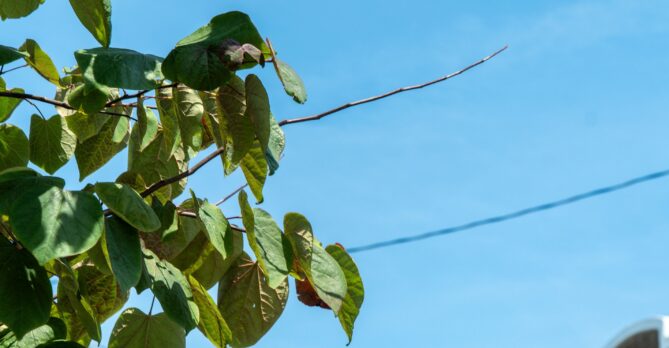
A hardy ornamental shade tree that is adaptable to a wide range of conditions, the yellowwood has beautiful pea-like flowers and showy seedpods that ripen in the fall. In full-sun, yellowwoods will reach a height of 30 feet in about 30 to 40 years. This tree is available through our residential planting program, RiverSmart Homes. You can also get up to $100 back for planting this tree yourself through our tree rebate program.
 Scarlet Oak – Quercus coccinea
The scarlet oak, the District of Columbia’s state tree, is prized for its rich, red fall foliage from which it gets its name. Once established, the scarlet oak can withstand significant dry spells. It is slow to moderate growing, reaching 40 feet in height in 30 to 50 years. It does best when planted in full sun. This tree is available through our residential planting program, RiverSmart Homes. You can also get up to $100 back for planting this tree yourself through our tree rebate program.
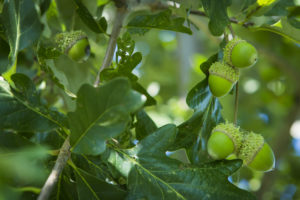 Swamp White Oak – Quercus bicolor
A favorite choice of professional arborists, the swamp white oak is a grand shade tree with distinct leaves that are a dark green color above while being silvery-white below. As its name suggests, it thrives in wet soil situations, but oddly enough, can also withstand drought. Swamp white oaks prefer full sun and will reach 40 feet in height in 50 years. This tree is available through our residential planting program, RiverSmart Homes. You can also get up to $100 back for planting this tree yourself through our tree rebate program.

Named for its unusual leaves resembling those of a willow tree, the willow oak is one of the toughest urban shade trees around. Its tiny acorns are prized by wildlife, and its strong, strait trunk make it a welcome tree in any yard. Full sun is best for willow oaks, where it will reach 40 feet in height in about 30 – 40 years. You can get up to $100 back for planting this tree yourself through our tree rebate program.
 Northern Red Oak – Quercus rubra
The red oak, considered a sentinel shade tree, has a strong and enduring form, striking dark bark, and beautiful red fall foliage with acorns prized by wildlife. Red oaks tend to grow slowly in urban soils, and once well-established can be expected to attain 40 feet in height in 40 years. This tree does best in full sun. This tree is available through our residential planting program, RiverSmart Homes. You can also get up to $100 back for planting this tree yourself through our tree rebate program.

Before modern fasteners, pin oak wood was used to join, or “pin” construction timbers together, and so it was named. This a strong, upright shade tree commonly planted in D.C. Pin oaks grow somewhat slowly and under most conditions will reach 40 feet in height in 40 to 50 years. This tree does best in full sun. This tree is available through our residential planting program, RiverSmart Homes. You can also get up to $100 back for planting this tree yourself through our tree rebate program.
Additional Ways to Help
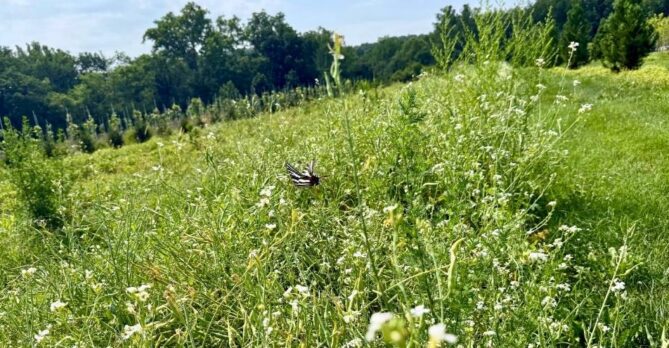
Have a pollinator garden: Keeping certain plants will attract pollinators to your garden while also providing the nutrients they need to travel long distances when migrating. If you are thinking of adding one to your space, consider working with us to add the right balance of pollinator-friendly plants and stormwater management.
Plant natives: When creating a garden, it’s important to only use plants that are native to your area. While invasive plants will still attract pollinators, they will often spread rapidly and take resources away from the native plants and local wildlife. Check out lists of D.C. native pollinator plants to find out which plants will work best in your garden.