One of the biggest threats to our urban forest is invasive species. Invasive species are plants, animals, or other organisms that are non-native to an ecosystem and whose introduction can cause economic or environmental harm. This National Invasive Species Awareness Week is dedicated to raising awareness of the threat of invasive species are and what people can do to prevent their spread. When invasive species come into an environment where they have no natural enemies they can take over other species and eventually become increasingly hard and costly to control.
Chris Riley, an entomologist with Bartlett Tree Experts, also elaborated, “Species don’t mean to be invasive, but in a world where global trade is at an all-time high, species are going to get moved around unintentionally (as well as intentionally)…The important thing is that when they receive that designation, it is usually because they are causing significant damage in one way or another (ecologically, monetarily, environmentally, etc). The more that the general public can be aware of the challenges posed by invasive species, the more they can hopefully appreciate and support efforts to reduce their introduction and spread.” With that in mind, we’re here sharing some pesky pests you should be aware of in our area. Know that, unfortunately, this is a fraction of the invasives we are currently battling in DC and throughout the Eastern US.
Invasive Plants
mile-a-minute | Persicaria perfoliata
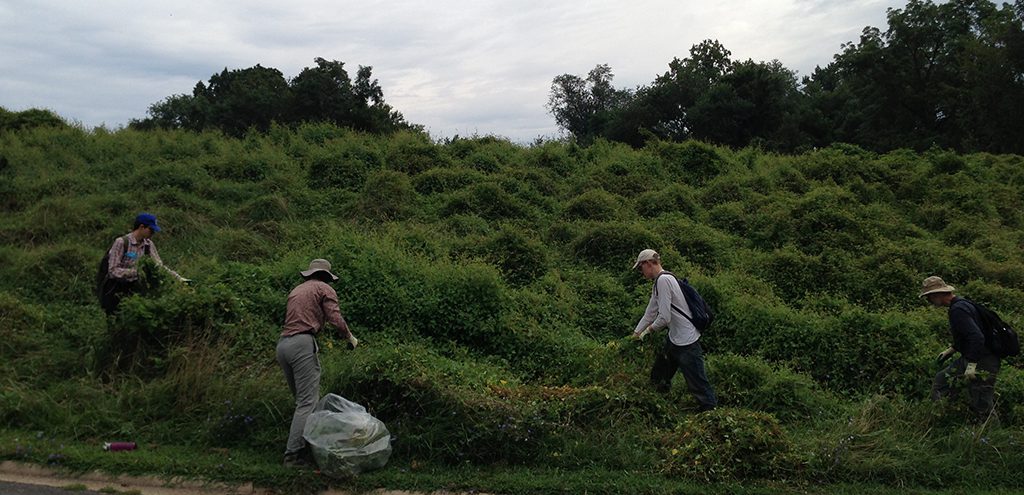
The name kinda says it all, doesn’t it? Also called Devil’s-tail tearthumb, it was experimentally introduced into Portland, Oregon in 1890, and in 1937 to Beltsville, Maryland, but did not spread until it was introduced unintentionally to a nursery in York County, Pennsylvania. It has since spread more than 300 miles, as it grows rapidly, producing a thick tangle of vines over herbaceous and woody plants and even scrambling up into trees. Thick tangles block sunlight and limit photosynthesis which eventually kills covered plants.
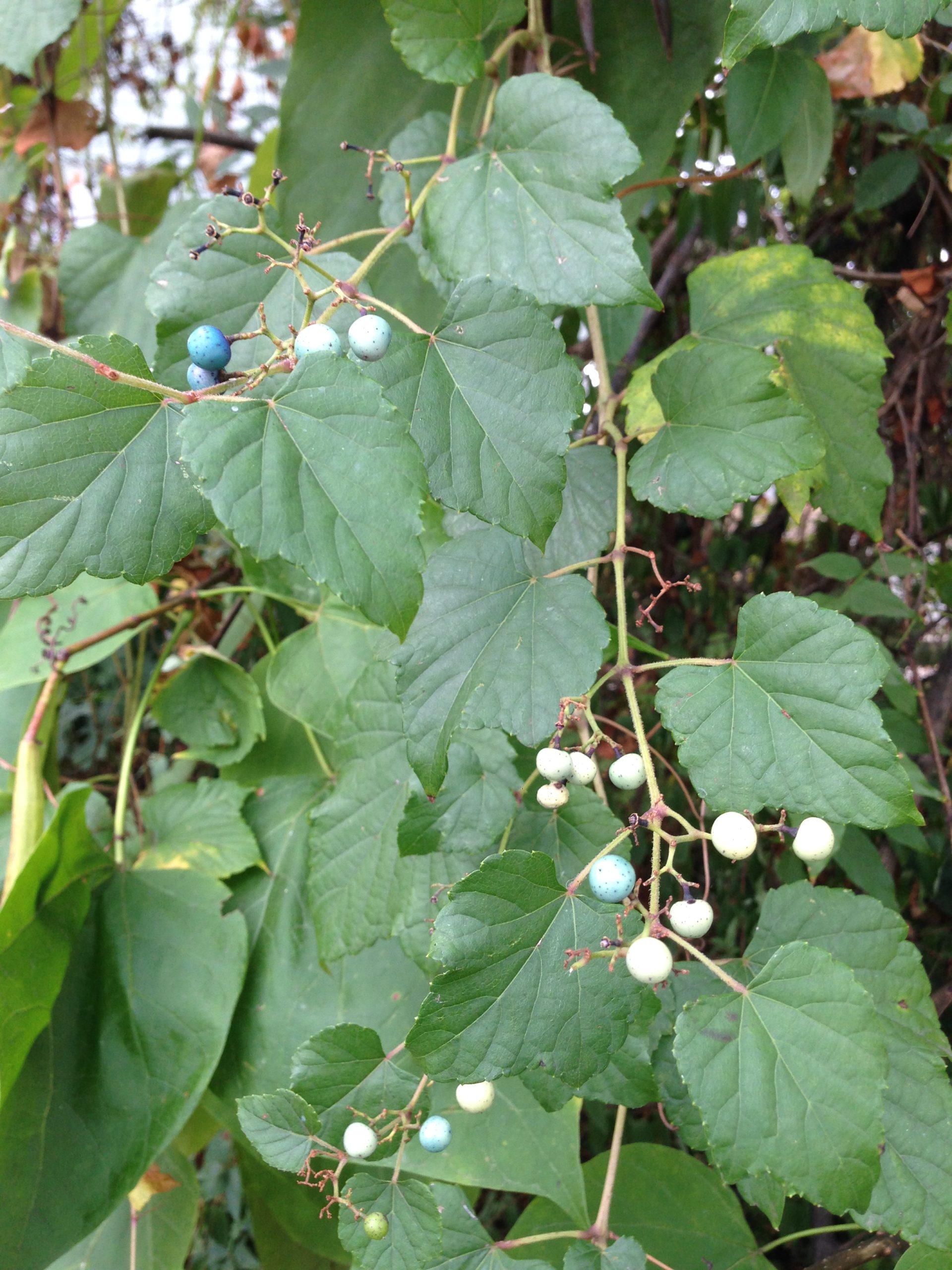
porcelainberry | Ampelopsis glandulosa
Porcelainberry is a deciduous, woody, perennial vine. It has greenish-white flowers that appear opposite the leaves from June through August, with colorful, changing fruit that appears in September and October. It is a vigorous invader of open and wooded habitat and spreads quickly in areas with high to moderate light. As it spreads, it climbs over shrubs and other vegetation, shading out native plants and consuming habitat.
Invasive Trees
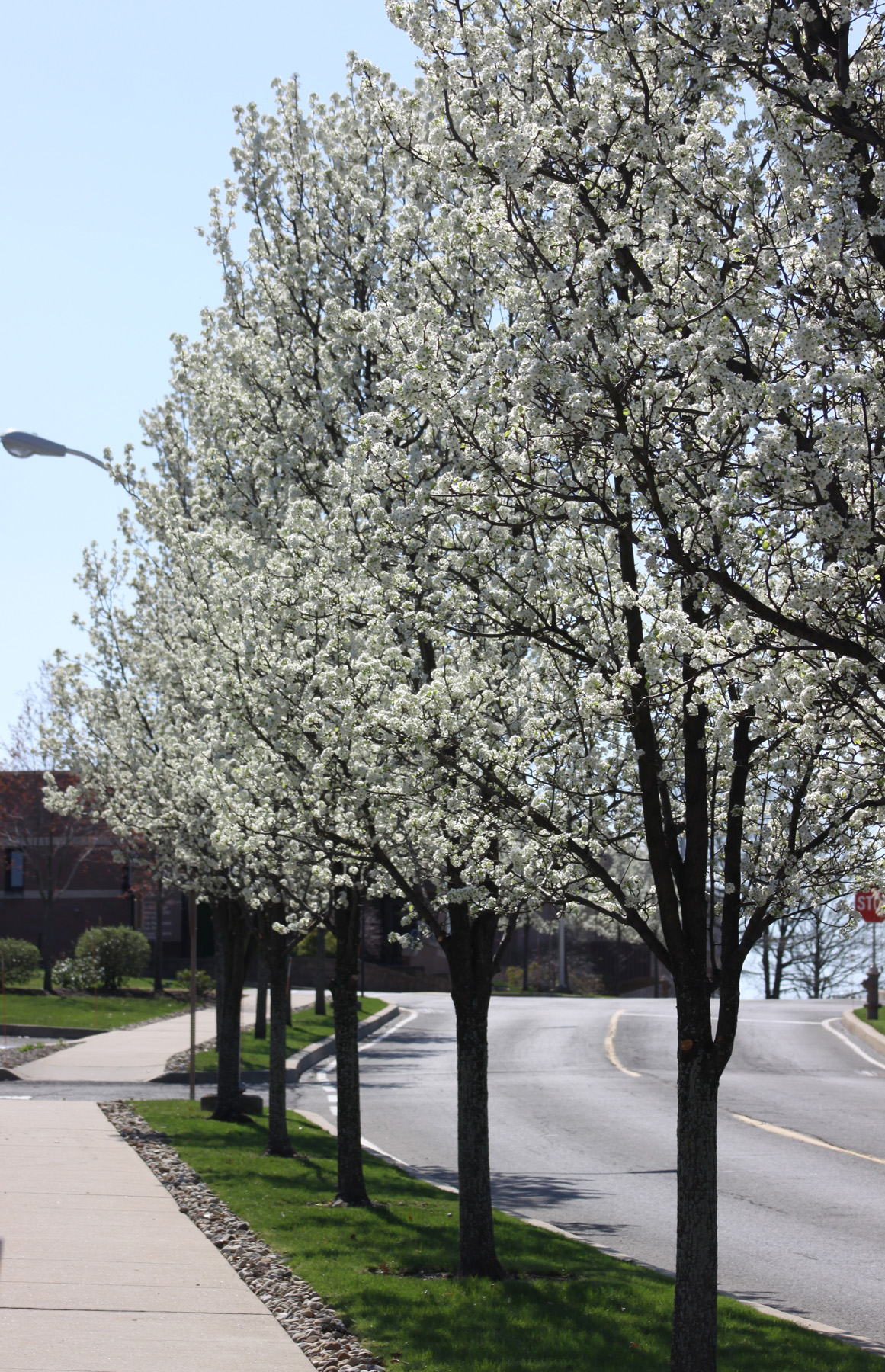
Bradford Pear | Pyrus calleryana
The Bradford pear is a relatively recent addition to invasive lists. It was first introduced in the 1960s by the U.S. Department of Agriculture as an early-blooming landscape tree. Today, the Bradford pear may be the most despised tree in this part of the world. Its wood splits easily, making extra work for utility and public works crews. Its offspring pop up unbidden in forests and parks. Its blossoms are fragrant — but not in a good way. The Bradford pear has been called a “scourge,” a “weed” and a “monster.” Short-lived and dangerous, the tree that was planted all over suburbia is no longer welcome.
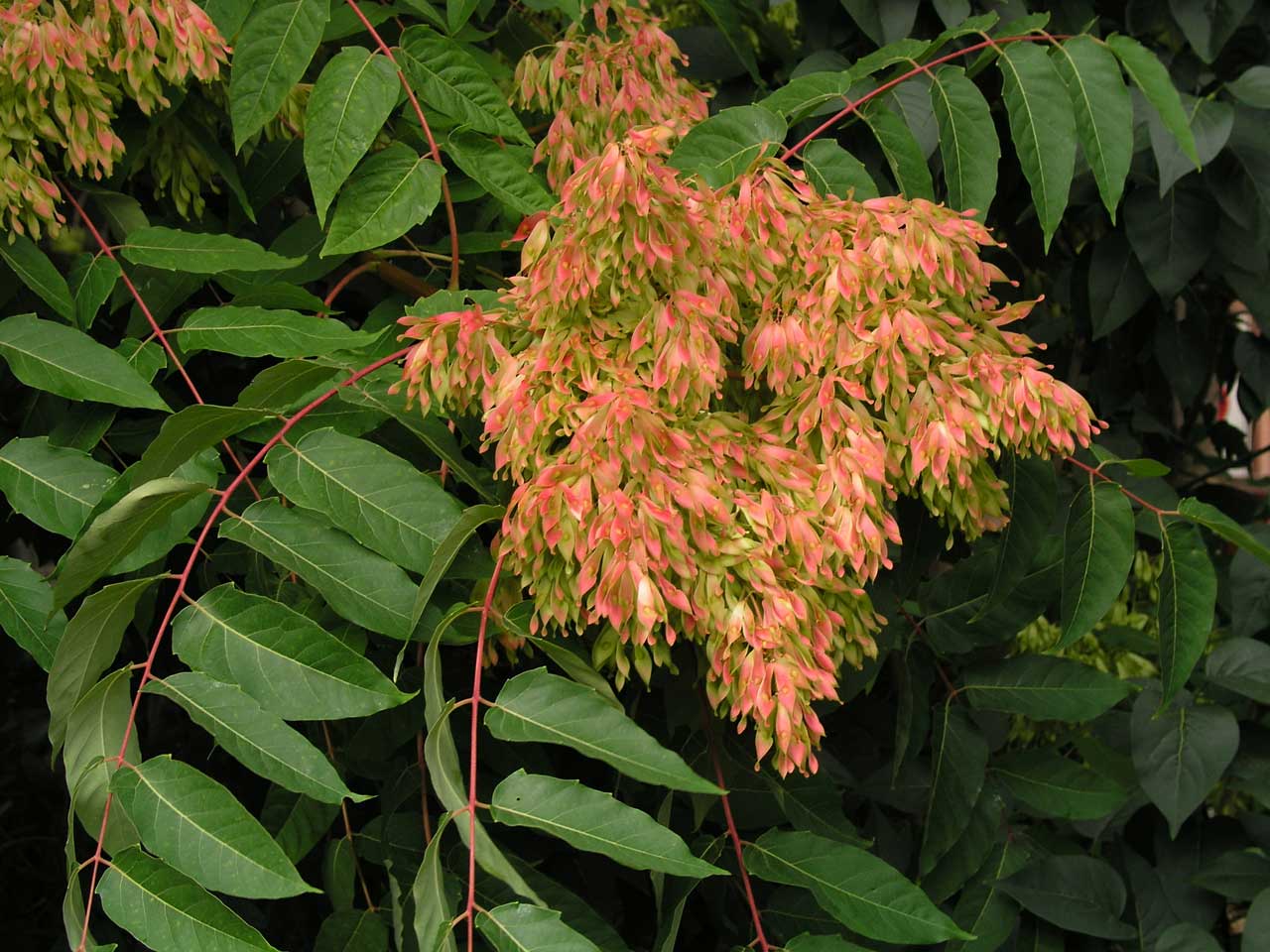
Tree-of-Heaven | Ailanthus altissima
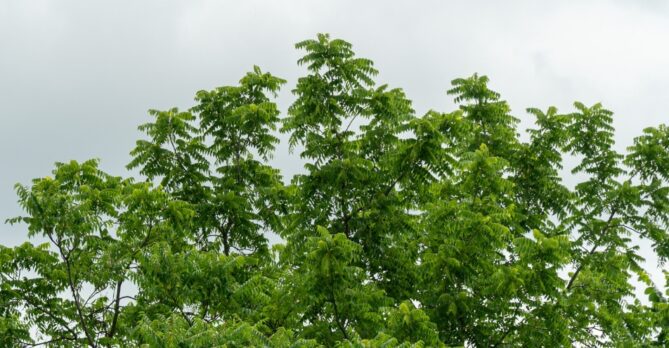
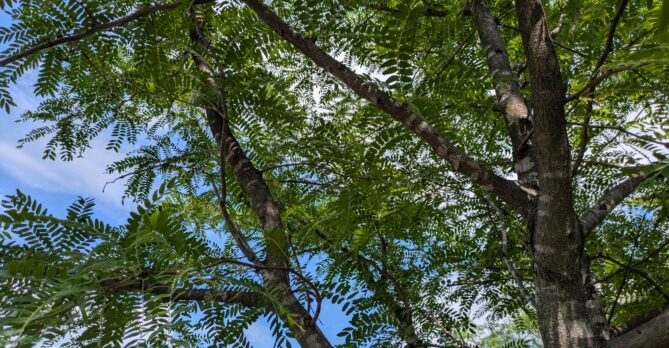
This tree is known by a number of names – stinking sumac, Chinese sumac, varnishtree and stinktree. No matter what you call it, it is no angel. The tree of heaven is a rapidly growing deciduous tree with pale gray bark, light brown twigs, and large pinnately compound leaves. It is native to China and was brought to the United States in 1784 as a horticultural specimen and shade tree by a Philadelphia gardener. Its ease of establishment, rapid growth, and absence of insect or disease problems made it popular when planning urban landscaping. The tree rapidly spread thanks to its ability to grow quickly under adverse conditions (not to mention that it produces a poisonous chemical that kills nearby vegetation and helps limit its competition). It is a prolific seed producer and can thrive in even the most unfavorable conditions with little management.
Invasive Insects
Emerald Ash Borer
Joining the ranks of mosquitoes as one of DC’s dreaded pests is a small, shiny green beetle, the Emerald Ash Borer (known as EAB). These small green beetles are from East Asia and pose a devastating threat from the tree from which it gets part of its name: the ash. There’s a near 100% mortality rate to ash trees it invades. The adult beetles themselves don’t cause harm – but their offspring burrow through the layers of bark which disrupts the flow of nutrients throughout the tree, thus killing the tree from the inside out. While EAB is killing trees, we’re lucky that the ash population in the city is small relative to surrounding areas. However, there have been significant losses in other areas, most notably, Theodore Roosevelt Island , Gallaudet University lost Ash canopy, and we’re also working with Kenilworth Park and Aquatic Gardens to restore their canopy, which took a hit from EAB.
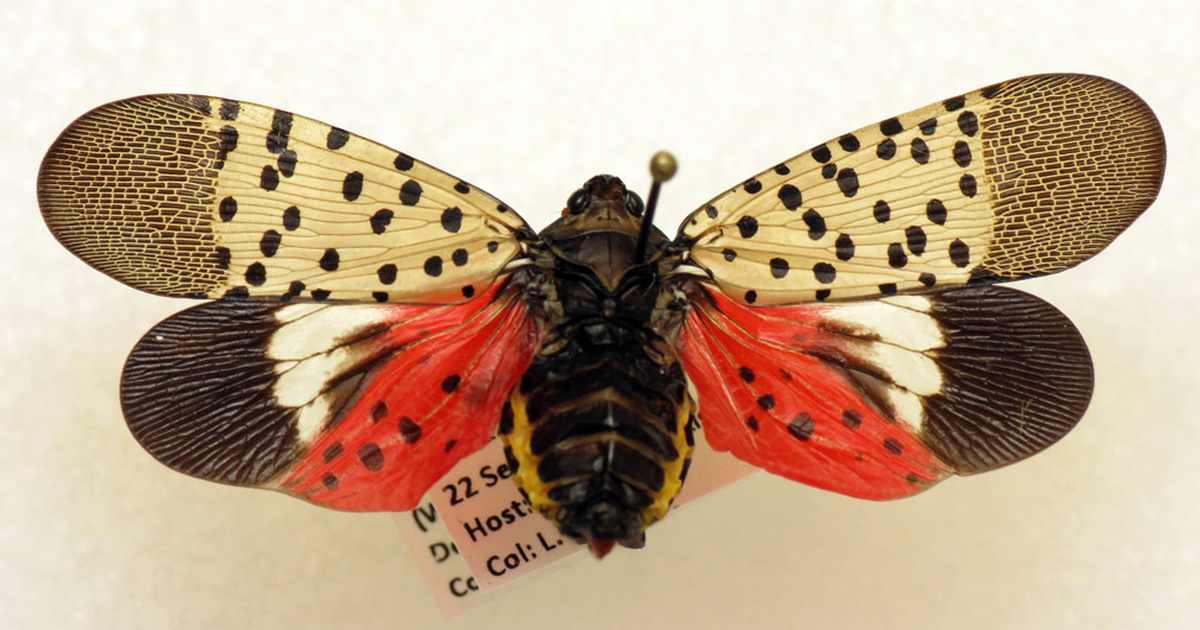 Spotted Lanternfly
The spotted lanternfly is a relatively new invasive species to our area and we’re already bracing ourselves. While this pest is quite eye-catching, the trail of destruction it leaves is not. Trees such as the tree of heaven and willow will develop weeping wounds when exposed to them. These wounds will leave a greyish or black trail along the trunk. The sap attracts other insects to feed, notably wasps and ants. That’s not the only trouble caused by the spotted lanternfly: Both nymphs (immatures) and adults cause damage when they feed, sucking sap from stems and leaves. This can reduce photosynthesis, weaken the plant, and eventually contribute to the plant’s death. Look for this and columns of brown-ish egg deposits on smooth parts of bark. If you see any, let the city know.