March is Women’s History Month, so we’re looking at monuments to women’s history in DC and their trees.
Home to numerous monuments and memorials, the National Mall also is the site of the Vietnam Women’s Memorial, located just north of the Reflecting Pool. The memorial was dedicated in 1993 and portrays three women caring for a fallen soldier. During the Vietnam War, women served in many different roles. Many women served as nurses and physicians while others acted as air traffic controllers, communication specialists, and intelligence officers. The Vietnam Women’s Memorial was established to honor the women who risked their lives to serve their country. Surrounding the Memorial are maple and beech trees, among many others that line the National Mall.

Mary McLeod Bethune was a world-renowned educator, civil rights champion, leader of women, presidential adviser, and public servant. Known as “The First Lady of The Struggle” because of her commitment to gain better lives for African Americans, she was appointed as a national adviser to President Franklin D. Roosevelt and was a noted educator, founding a private school for African American students that is now Bethune-Cookman University. We’ve spoken at length about her statue in Lincoln Park, but there is also the Mary McLeod Bethune Council House National Historic Site, which was the first headquarters of the National Council of Negro Women (NCNW) and was Bethune’s last home in Washington, DC. It is now dedicated to preserving and sharing her legacy. Outside the Council House in Logan Circle are a Chinese elm and a willow oak. Fittingly, the official tree of DC, a scarlet oak, also shades the entrance.
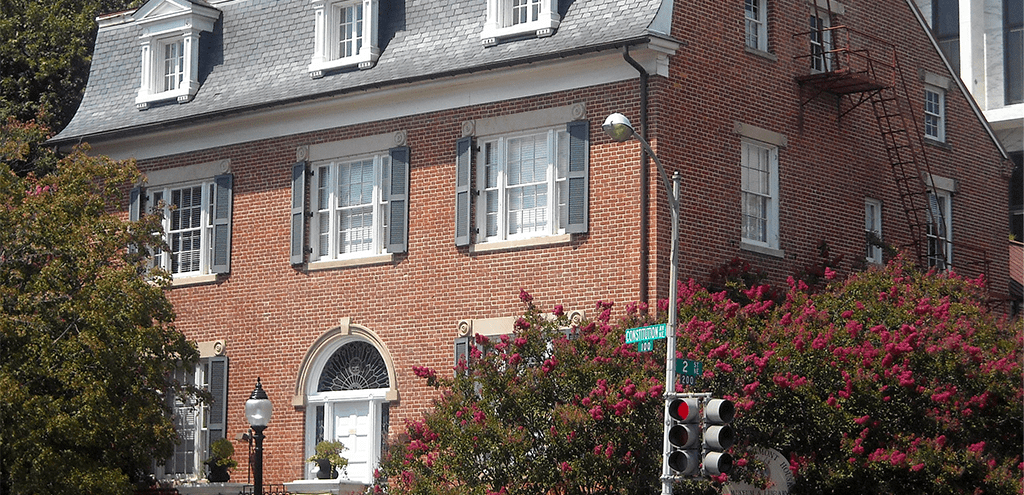
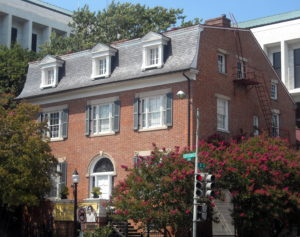 Across town is Belmont-Paul Women’s Equality National Monument. Home to the National Woman’s Party (NWP) for more than 90 years, this building was the epicenter of the struggle for women’s rights. From this house in the shadow of the US Capitol and Supreme Court, Alice Paul and the NWP developed innovative strategies and tactics to advocate for the Equal Rights Amendment and equality for women. While you’re learning about the story of the fight for the 19th Amendment, be sure to notice the numerous colorful crape myrtles that welcome you into the Monument.
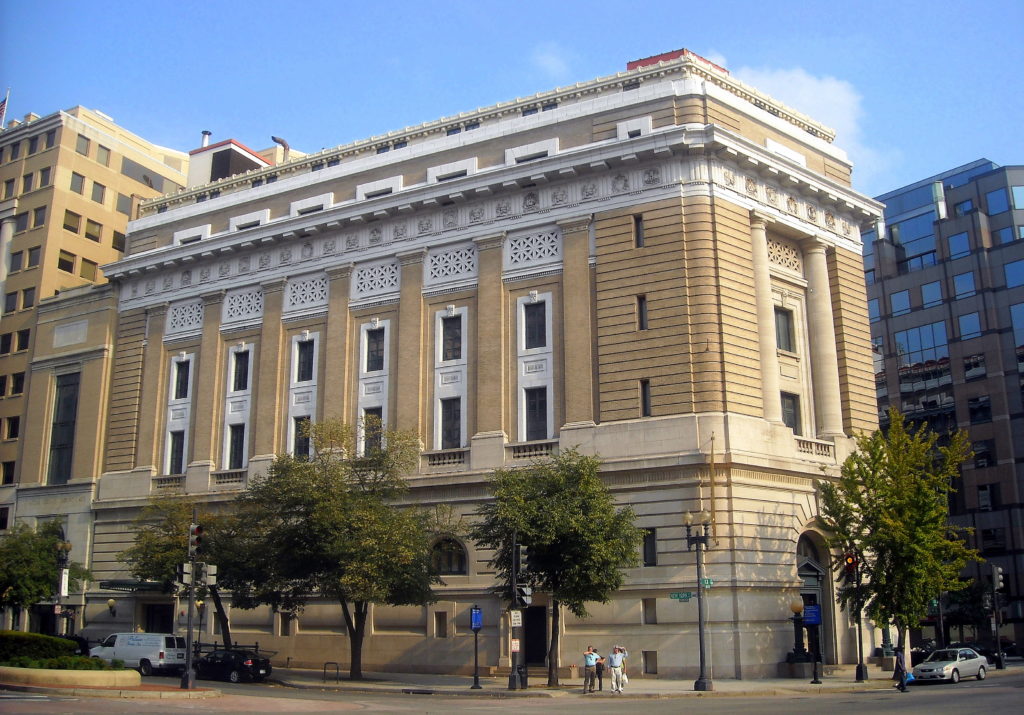
Tucked downtown is the National Museum of Women in the Arts, which touts itself as “the only major museum in the world solely dedicated” to celebrating women’s achievements in the visual, performing, and literary arts. After your finished admiring the artists’ work, step outside and enjoy the work of city arborists. A ginkgo, littleleaf Lindens, and an American Linden line the street outside the museum.
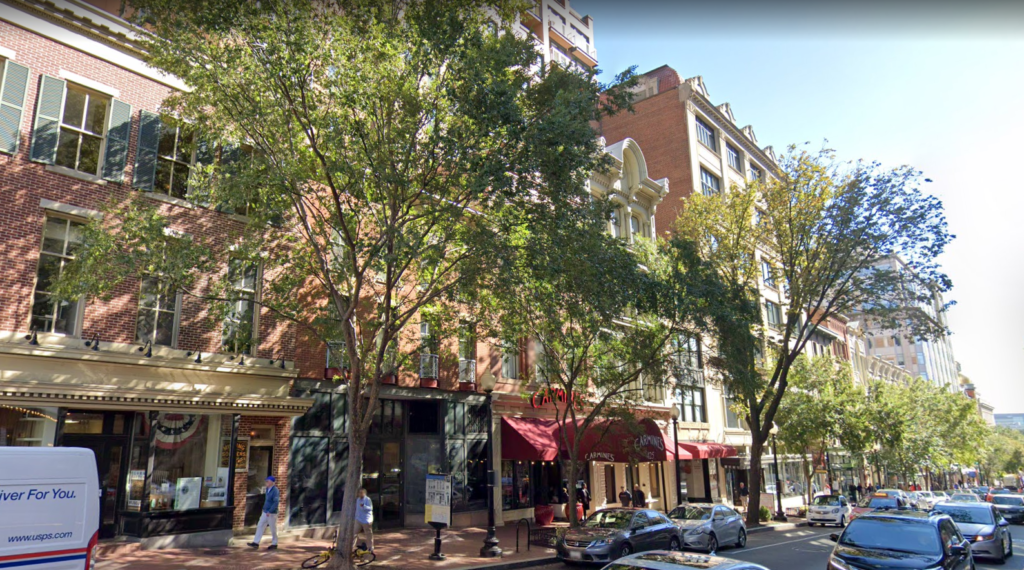
A few blocks away in Penn Quarter is the Clara Barton Missing Soldiers Office Museum. During the Civil War there was no official system in place to document missing or dead soldiers. As the war ended Clara Barton, the “Angel of the Battlefield” who had achieved fame as a nurse during the war, took it upon herself to fill this void and account for the missing soldiers. By the time the office closed in 1887, more than 20,000 missing soldiers have been identified. Outside the office you can find two Chinese elms.
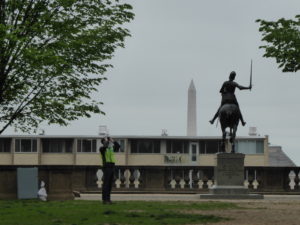 There is so much more to Malcolm X/Meridian Hill Park than debating whether or not the fountains will be on next week. Overlooking the city is the Joan of Arc Statue, which is the only equestrian statue of a woman in Washington, DC. Erected in 1922 as a gift from the Society of French Women of New York, it honors Joan of Arc, a heroic French figure who claimed to receive religious visions telling her to fight for France and overthrow the English during the Hundred Years’ War. Thanks to our efforts inventorying trees in the Park throughout 2016 and 2018, you can check out the stately elms that surround the statue.
These historical spots host incredible evidence of the achievements, struggles, and lives of women during the history of the continent. The monuments also testify to the role of our National Park Service and other land agencies in preserving important pieces of our nation’s story and cultural heritage.