Willow Oak
Introduction
The willow oak can turn out to be a towering tree that dwarfs anything beside it, and in this form it is a centerpiece of any forest, grove or yard as it gives plenty of food for wildlife and copious amounts of shade. .
Common Name
Willow oak
Latin Name
Quercus phellos
Leaf
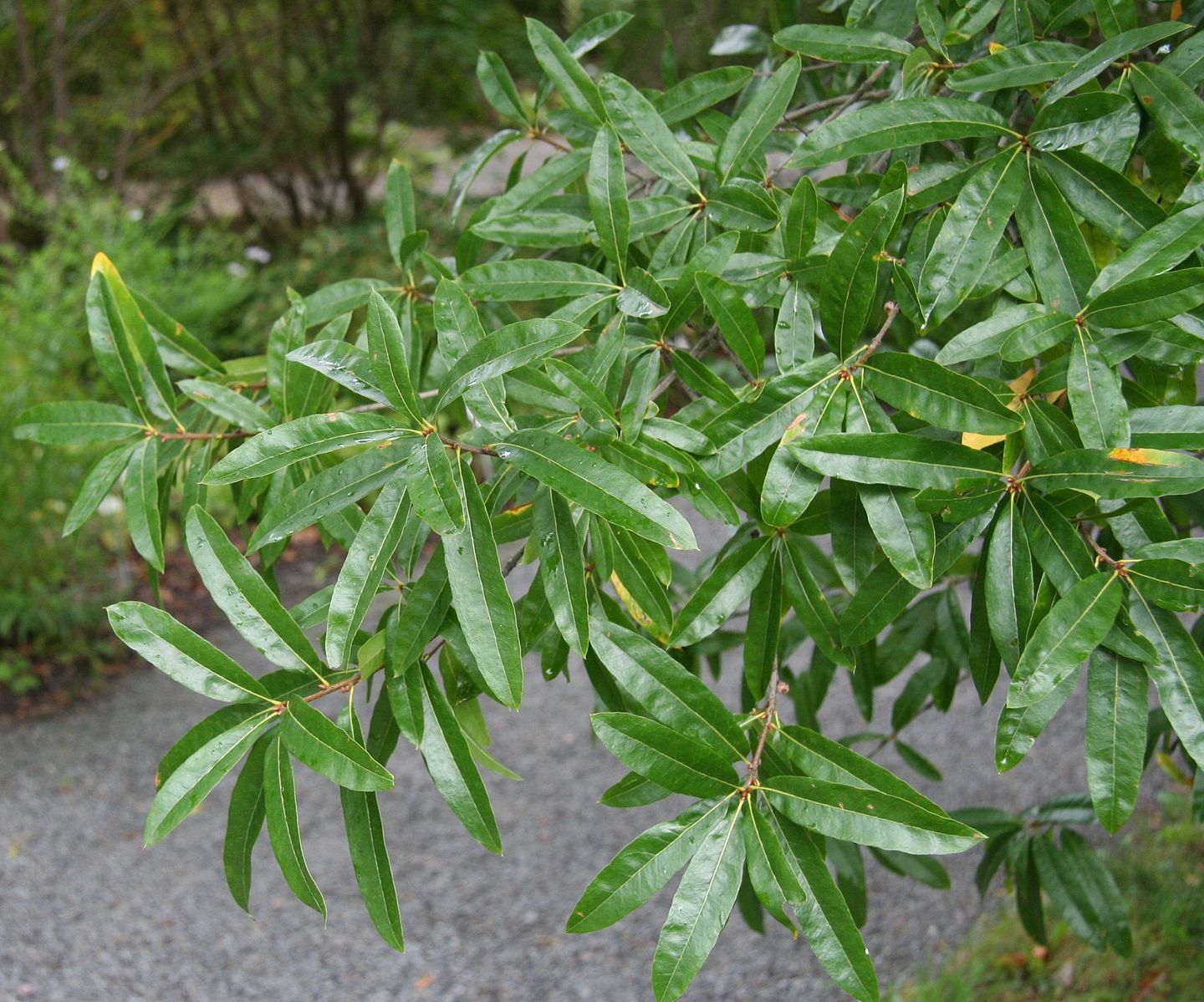
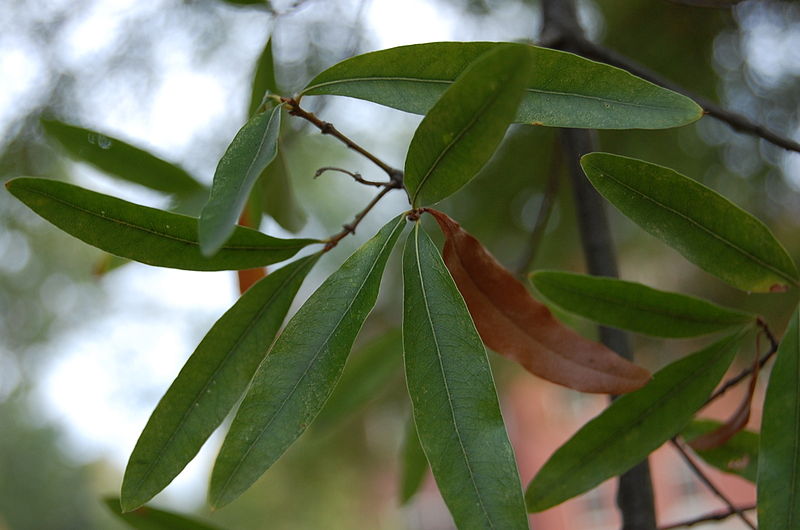
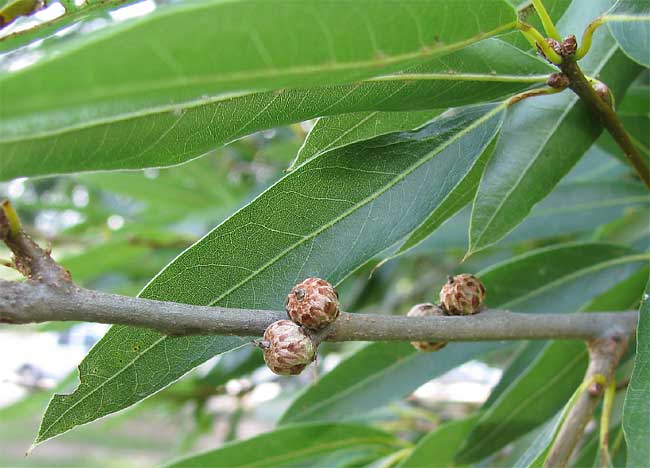
Alternate, simple, 2 to 5 inches long, willow-like in shape with a bristle tip
Flower
Male flowers are borne on slender yellow-green catkins*; female flowers are borne on very short auxiliary spikes
Fruit/nut
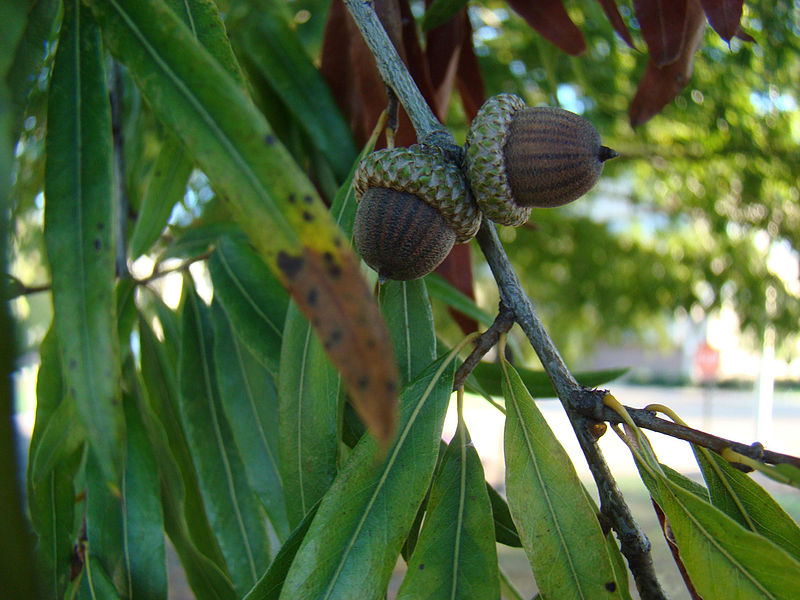
Acorns are very small, 1/4 to 1/2 inch across, nearly round and yellow-green, turning tan when older. The caps are thin, saucer-like and cover only a quarter of the acorn
Twig/branches
Slender, hairless, olive-brown in color when young. The multiple terminal buds are very small, reddish brown and sharp-pointed
Bark
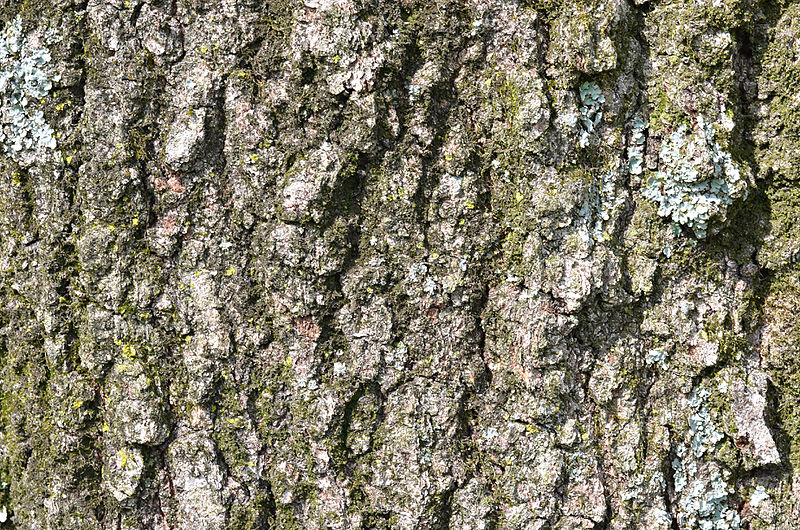
On young stems, smooth, gray and tight; later becoming darker and forming irregular rough ridges and furrows
Form
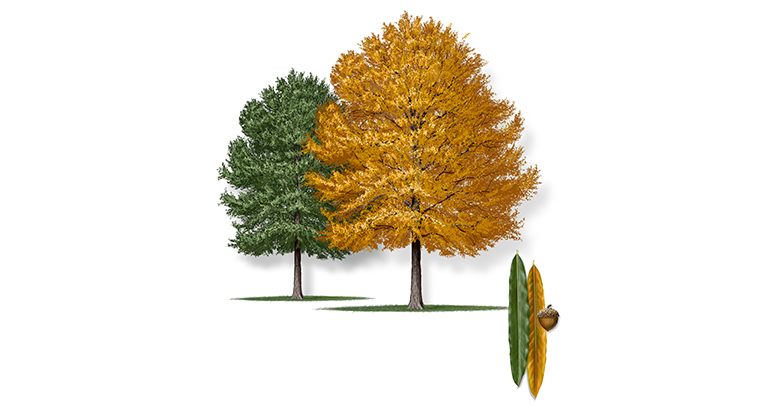
Dense oblong crown when grown out in the open. Normally has a pyramidal, rounded shape
Size
Typically matures at 40 to 60 feet tall and 35 feet across, but it can grow up to 120 feet tall
Native Range
Ranges along the Coastal Plain from New Jersey south to Georgia and northern Florida, west to eastern Texas, and north to southeastern Oklahoma and western Tennessee
Type
Medium-large deciduous
Seasonal Colors
Leaves turn yellow-brown in fall
Soil
Prefers acidic, moist, sandy, well-drained, wet, clay soils
Light
Grows best in full sun
Similar Species
Water oak, laurel oak, shingle oak, Darlington oak
Pests and Diseases
Perhaps the most serious insect pests are trunk borers such as the red oak borer, carpenterworm and the living-beech borer. Common cankers attack willow oaks and are caused by the fungus Polyporus hispidus.
Rebate Eligibility
$100
Of Note
Willow oak is a major supplier of food for game animals such as ducks, squirrels, deer and turkey.
The tree is planted widely around the D.C. area as street trees along roads and parks.
Photo Credits
Comments are closed.