Ginkgo


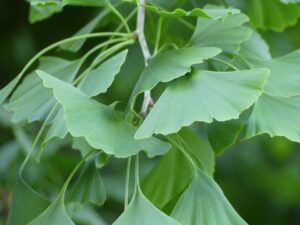
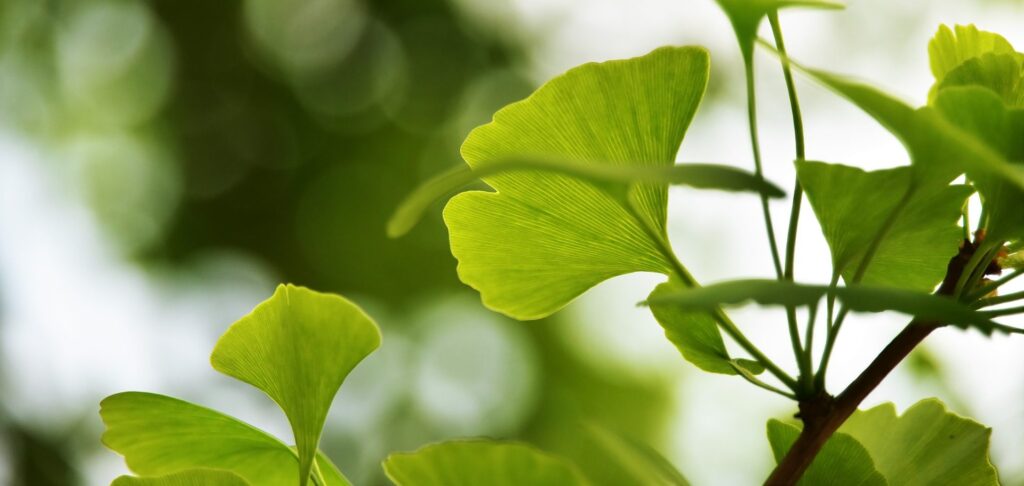
Young ginkgo leaves

Introduction

A very unique, graceful tree that has spanned millions of years and once ranged all over the world, the ginkgo is prized not only for its distinctive genetic pedigree but by its outstanding resiliance to trauma and extreme growing conditions. Expand all items below.

Common Name

Ginkgo

Latin Name

Ginkgo biloba

Leaf

Fan-shaped with veins radiating out into the leaf blade, sometimes splitting to form lobes

Flower

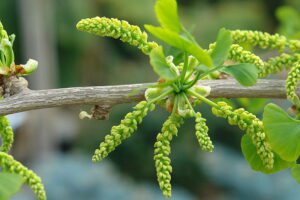
Pendulous catkins on male trees; pendulous flowers on female trees

Fruit/nut

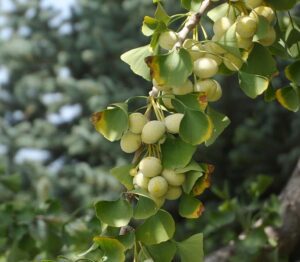
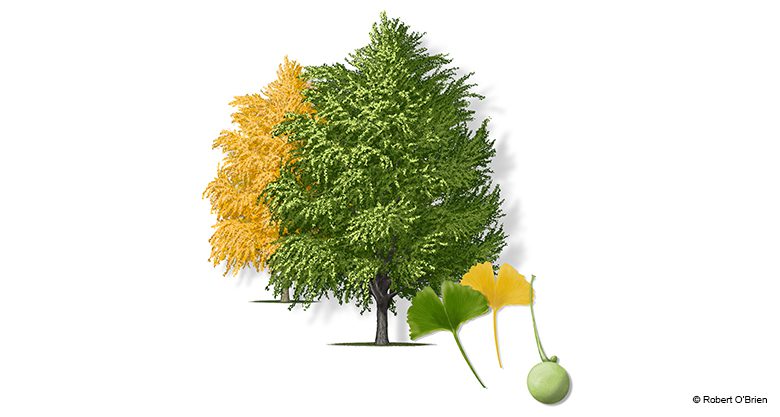
Female fruits are tan-orange, oval-shaped, and are often produced in great abundance and become mushy once on the ground, where they produce a strong, pugnent odor.

Twig/branches

Stout, tan, light brown, or gray; relatively smooth branches are somewhat reflective in the winter sun

Bark

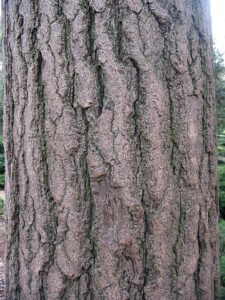
Light brown to brownish-gray, deeply furrowed and highly ridged with age

Form

Angular crown and long, somewhat erratic branches

Size

Quite large, growing from 66 to 115 feet tall

Native Range

Originally found throughout the world 2 million years ago, the ginkgo is now native to a small region in China, although transplantings in the past 200 years have brought it to many areas of the United States.

Type

Large conifer tree (although the unique attributes of Gingko biloba do not lend to easy classification)

Seasonal Colors

Leaves turn to a stunning yellow in fall

Soil

Prefers moist, deep, sandy soils in full sun, but is very adaptable to stressful situations, and is therefore very urban-tolerant

Light

Relatively shade-intolerant species

Similar Species

None that are genetically similar; closest genetic relatives are its own ancestors

Pets and Diseases

Ginkgo biloba is susceptible to few diseases and pests, and is generally not harmed by them.

Rebate Eligibility

$50

Of Note

Ginkgo has long been cultivated in China; some planted trees at temples are believed to be over 2,500 years old.

Extreme examples of the ginkgo’s tenacity may be seen in Hiroshima, Japan, where six trees growing between 1 to 2 km from the 1945 atom bomb explosion were among the few living things in the area to survive the blast.

Ginkgo is known to have real and alleged mental health properties. Recently, careful clinical trials have shown it to be effective in treating dementia, but other claims have yet to be scientifially verified.

The Ginkgo biloba‘s genetic line spans the Mesozoic era back to the Triassic period, 225 million years ago. That is why it is classified as a living fossil tree.

The Ginkgo biloba was also a favorite tree of architect Frank Lloyd Wright.

Photo Credits

Leave a Reply