American Sweetgum
Introduction
A popular medium-large ornamental tree, the American sweetgum is distinguished by its distinctive leaves and burr-ball fruit. .
Common Name
American sweetgum
Latin Name
Liquidambar styraciflua
Leaf
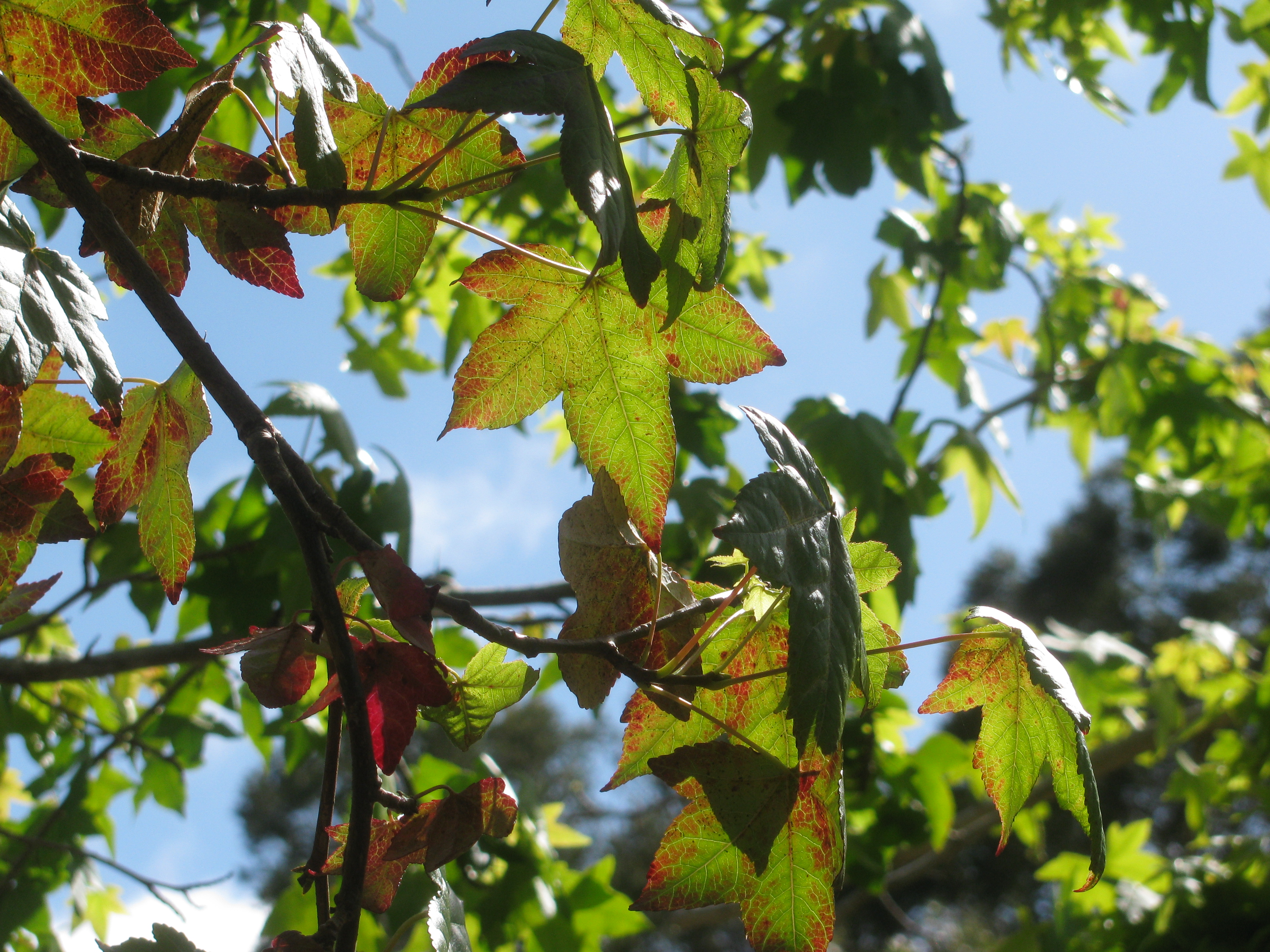
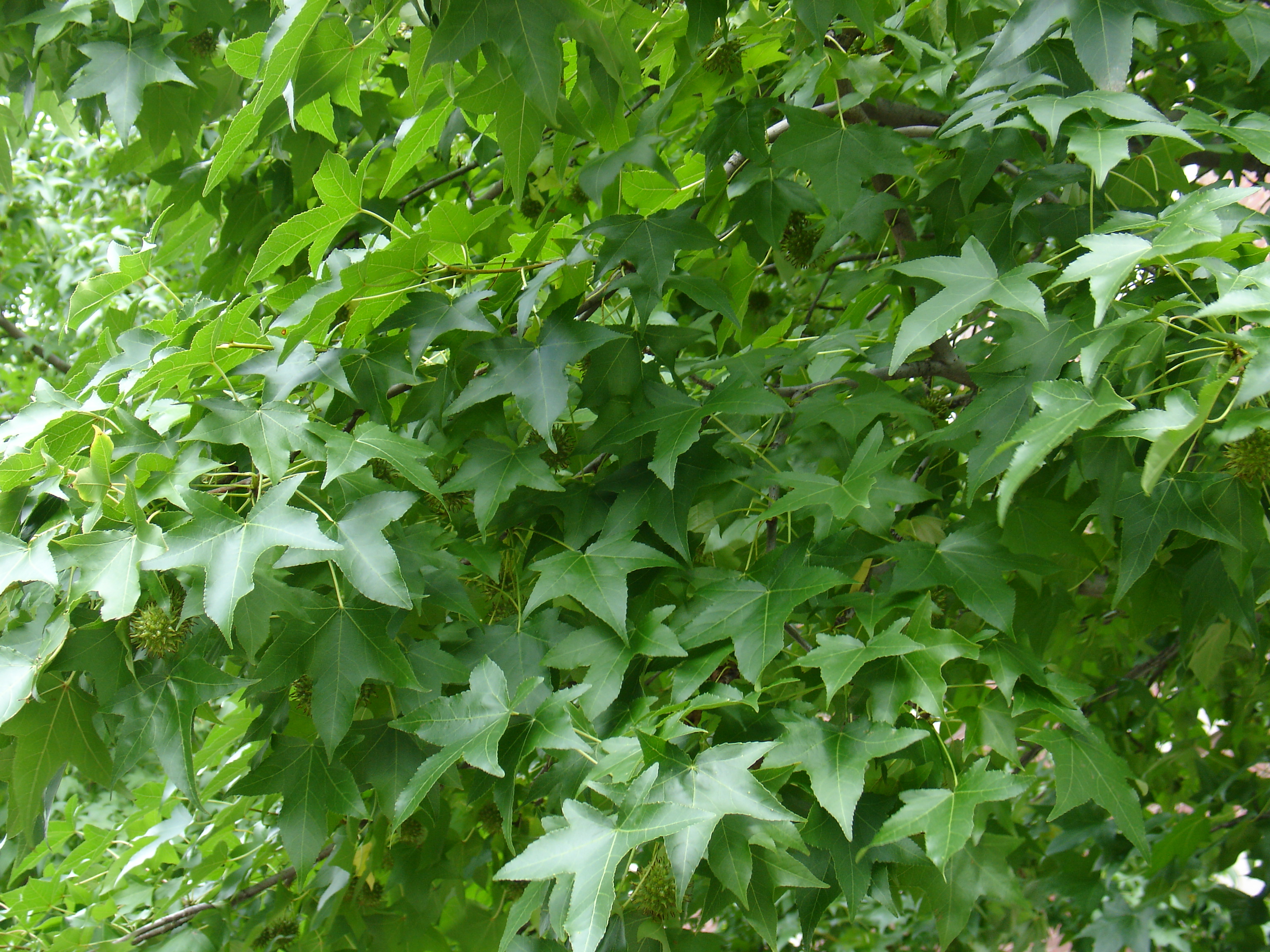
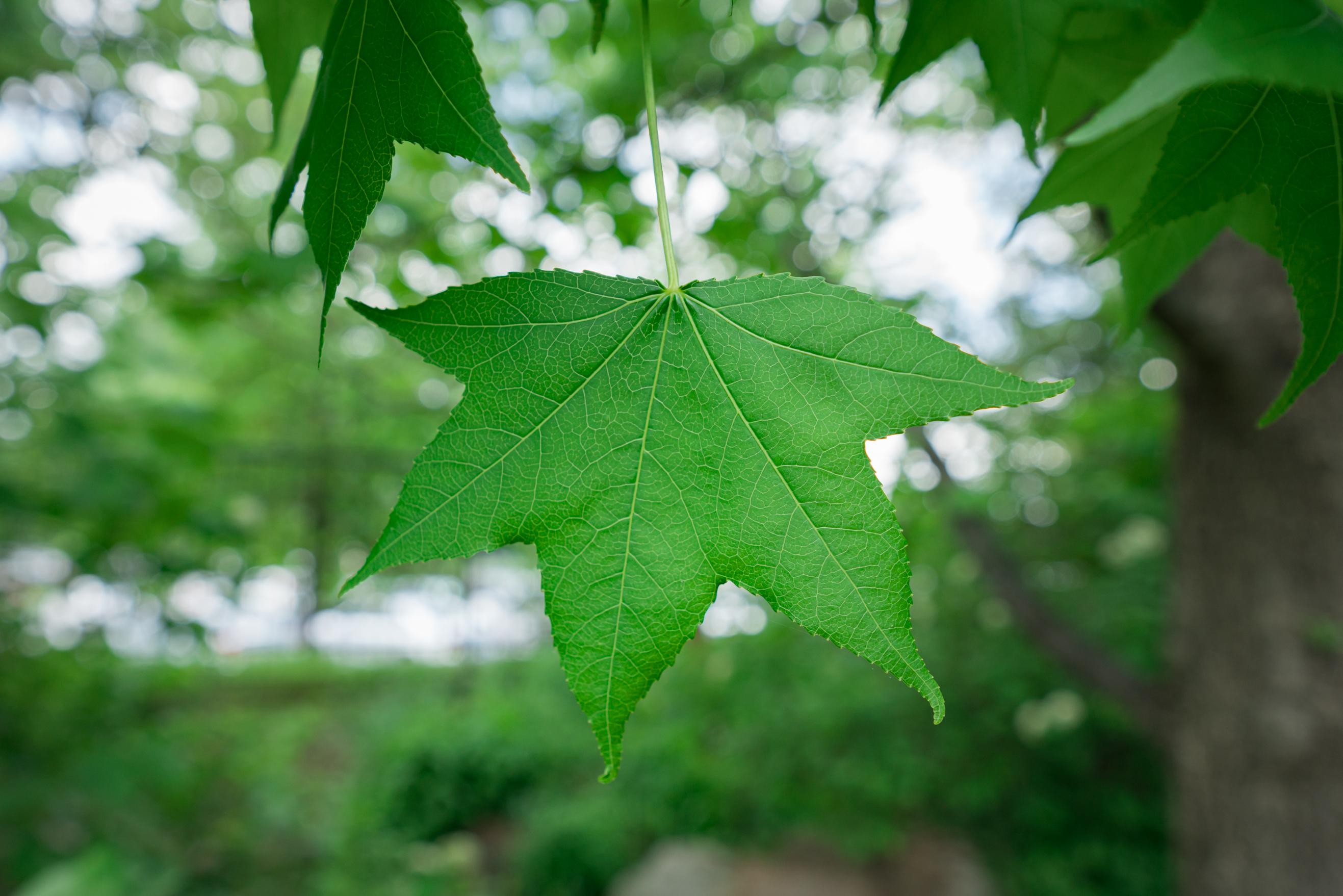
Glossy leaves arranged in a five, sometimes seven, pointed star shape
Flower
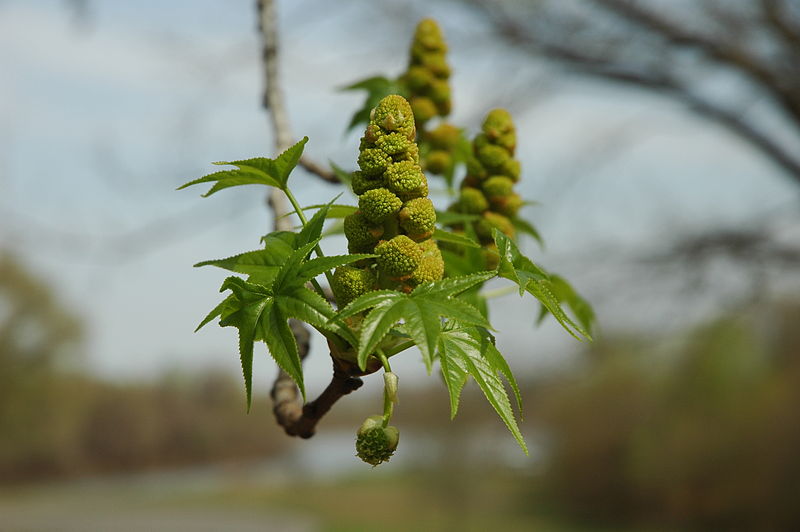
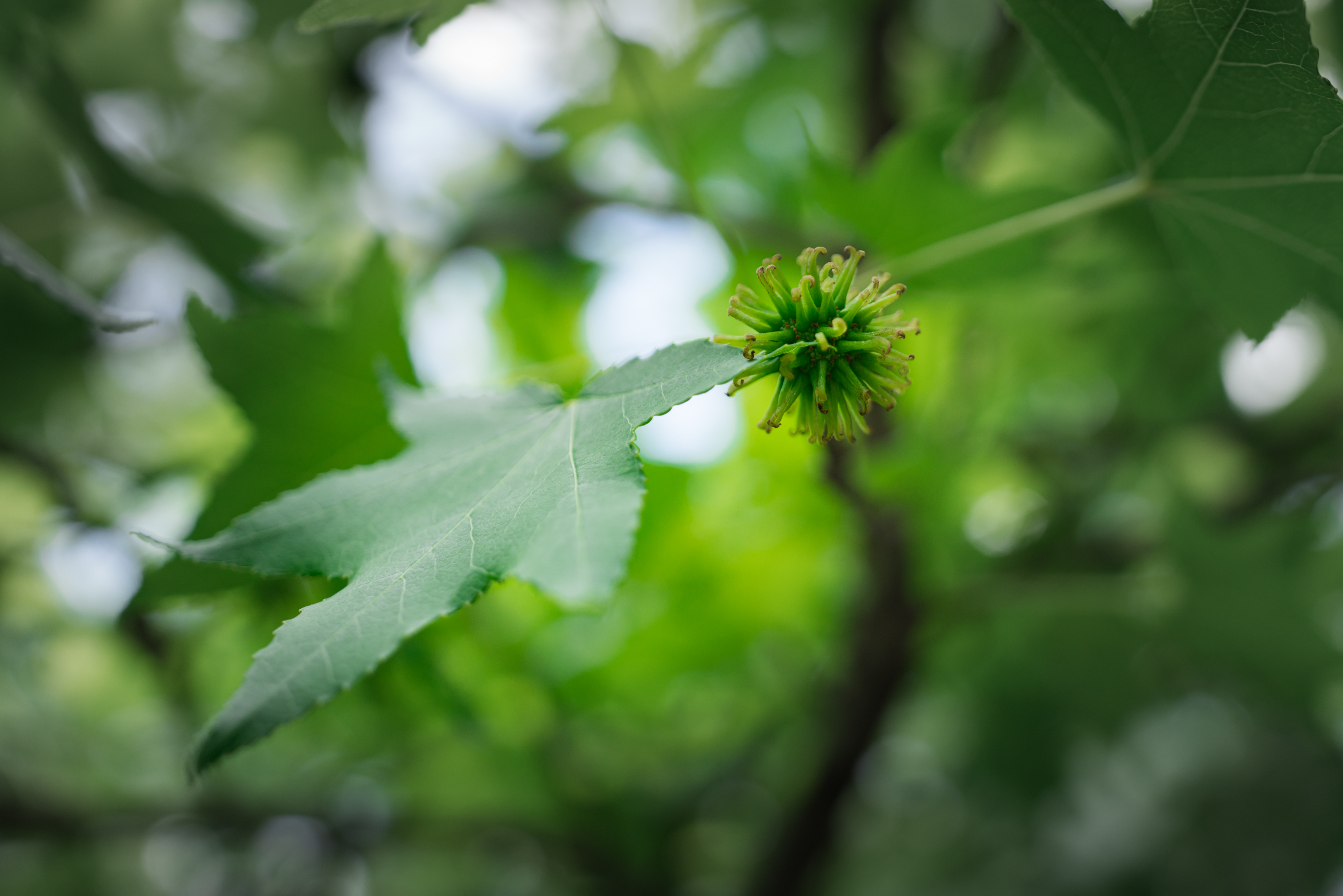
Small, green-red globular clusters attached by stalk to branches
Fruit/Nut
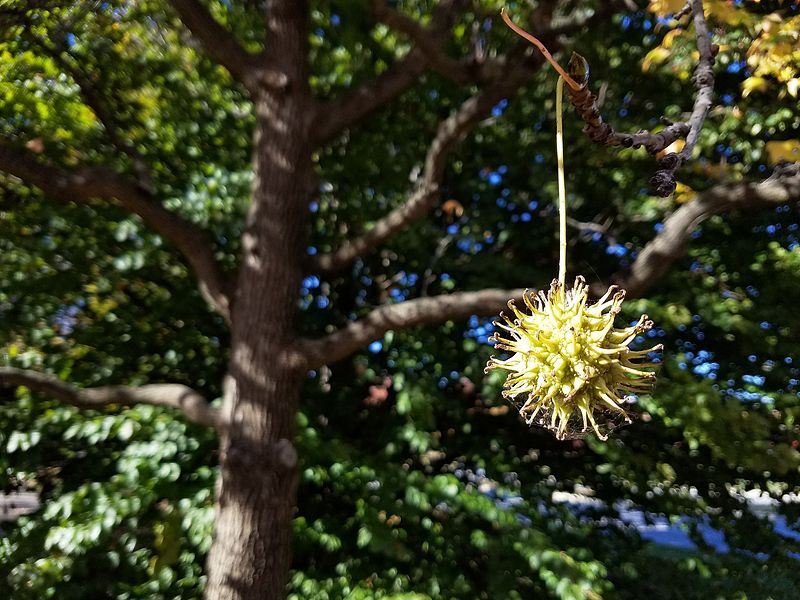
Hard, dry, spherical shaped with short rounded spikes protruding from all sides
Twig/branches
Corky-ridged, with leaves extending alternately
Bark
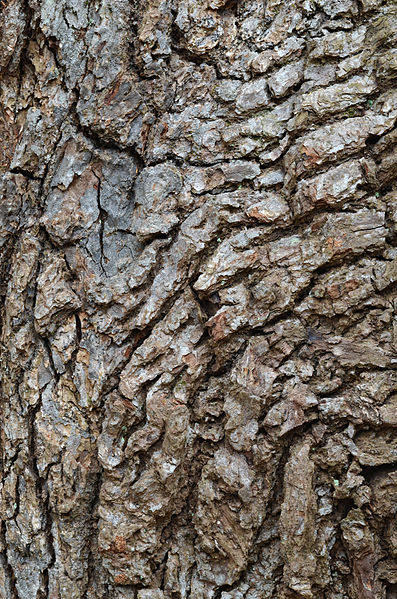
Light brown tinged with red, deeply fissured, scaly ridges
Form
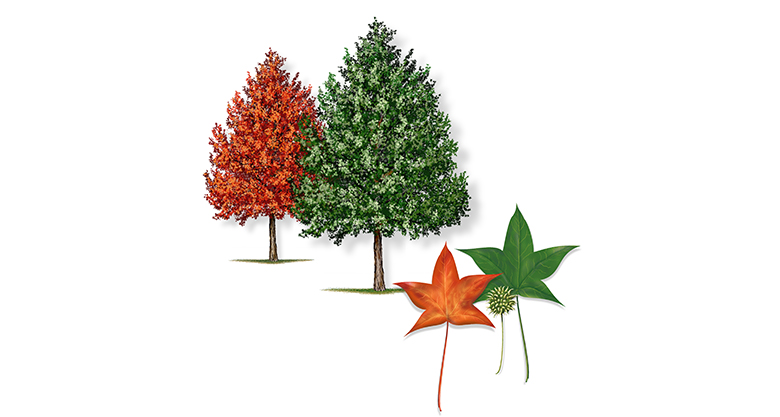
Comes to maturity with an oval, pyramidal shape
Size
Commonly grows 65 to 115 feet tall, 40 to 50 feet wide
Native Range
Eastern United States from Connecticut to Florida, also found in Mexico and Guatemala
Type
Medium to large deciduous, occasionally evergreen
Seasonal Colors
Leaves generally turn brilliant orange, red, and purple in autumn
Soil
Prefers acidic, loamy, moist, sandy, well-drained, wet, wide range, clay soils
Light
Grows best in full sun
Similar Species
Nyssa aquatica, N. sylvatica
Pests and Diseases
Sweetgum blight is a problem in southeastern areas, probably due to drought conditions. Pests attack the leaves but are not usually harmful to the tree.
Rebate Eligibility
$100
Of Note
In the extreme southern or tropical parts of its range, some trees are evergreen or semi-evergreen, with negligible fall color.
Sweetgum is one of the most important commercial hardwoods in the southeastern United States.
The Aztecs believed the resin to have medicinal properties and drank it in ceremonies.
Photo Credits
Comments are closed.