American Holly
Introduction
As a broadleaf evergreen tree, the American holly is a symbol of the holiday season for its winter vitality and unique mix of red and green colors. These traits also make it a great addition to any urban site, where it can complement both deciduous and other needle-leafed evergreen trees. .
Common Name
American holly
Latin Name
Ilex opaca
Leaf
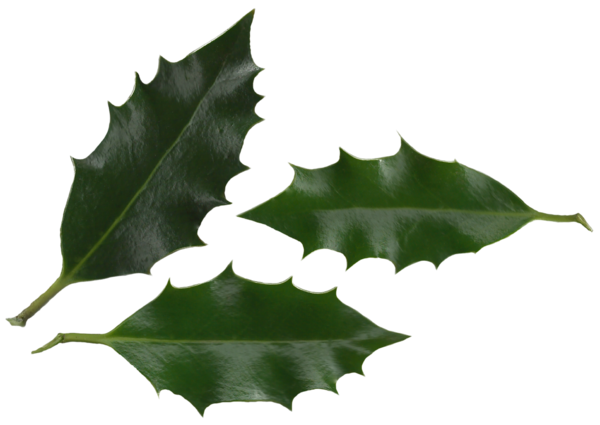
Alternate, simple, evergreen, elliptical, 2 to 4 inches long, spiny toothed margin, thickened and leathery, shiny dark green above, much paler below.
Flower
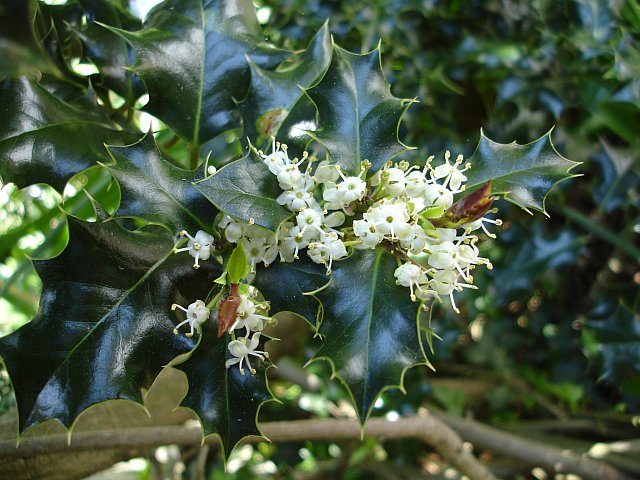
Dull, green-white male flowers, female flowers are solitary with a pleasant odor appearing in late spring.
Fruit/nut
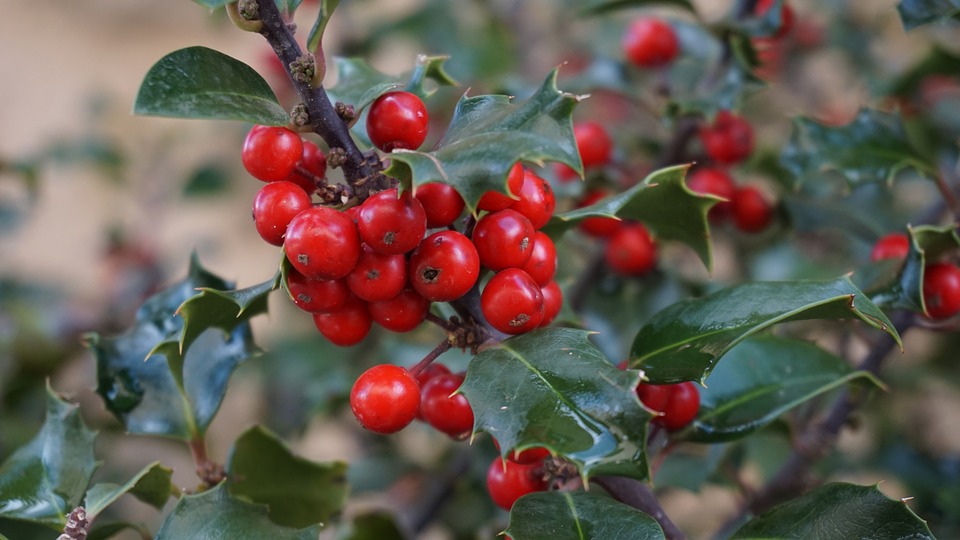
Berry-like drupe, red or yellow when ripe; persist on tree until winter
Twig/branches
Slender, with rust-colored pubescence; buds small reddish brown, pointed
Bark
Light gray and smooth regardless of size
Form
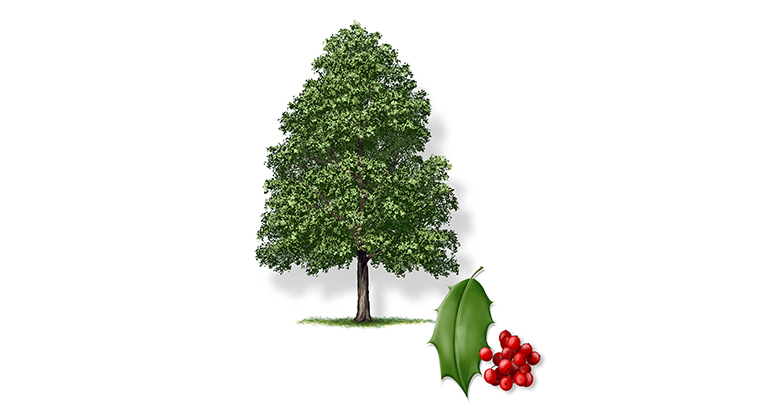
The American holly has a thick crown and pyramidal form, usually with branches to the ground
Size
Grows to around 40 feet in height
Native Range
From the coast of Delaware inland to Pennsylvania abundantly southward throughout the coastal plain and Appalachian system, south to Florida and west to eastern Texas
Type
Small evergreen tree
Seasonal Colors
Stays green throughout the year
Soil
Moist, slightly acid, well-drained sites such as upland pine sites and hammocks
Light
Mostly tolerant to partial shade
Similar Species
Large gallberry, Foster’s holly, Chinese holly, dahoon
Pets and Diseases
Many types of fungi attack the thick leaves of the American Holly, but do little other than superficial damage. As for insects, the southern red mite causes a reduction in leaf and twig growth and undesirable foliage color; the native holly leafminer can damage foliage severely and cause leaves to drop prematurely. Other pests cause superficial damage as well.
Rebate Eligibility
$50
Of Note
In English poetry and stories, the holly is inseparably connected with the merry-making and greetings which gather around Christmastime.
American holly is the state tree of Delaware.
Despite the presence of saponins in the leaves and berries, American holly is not considered poisonous to man or animals.
Photo Credits
Comments are closed.