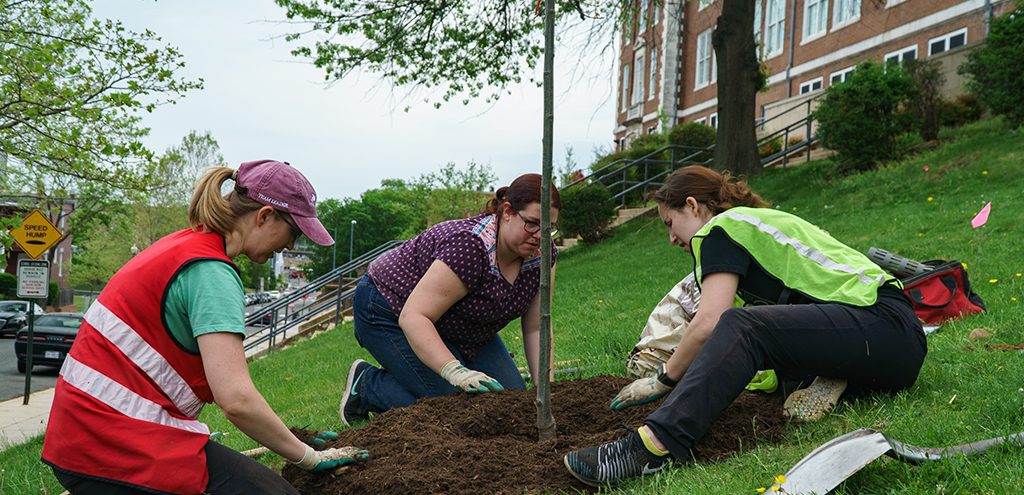
This brief guide will give you the information you need to keep your tree healthy during its most formative years. With proper care, your tree will provide you with many years of benefits and enjoyment.
Watch our video below to learn how to care for young trees:
En español: Cuidado de árboles jóvenes
With proper weeding and mulching, consistent watering, and continually monitoring your tree’s health, your tree will grow and thrive for years to come.
Tree Care essentials
Below, find some quick tips and essential guidance on all aspects of caring for your young tree.
Weeding
Proper weeding safeguards young trees by eliminating weeds and grass that compete for essential water and nutrients. During the growing season, inspect the area around the tree base weekly and keep a 3-foot radius clear, installing mulch to suppress future weed growth.
Gently pull weeds by hand, grasping low on the stem and extracting the entire root system to stop regrowth. Be careful not to damage the tree’s trunk or roots, using gloves or a hand trowel for stubborn weeds without digging too deeply.
Mulching
Proper mulching is one of the best things you can do for your tree. Mulch fertilizes the soil, insulates the roots, holds moisture, and reduces competition from turfgrass or weeds.
Mulch should be applied in a wide and shallow ring around the tree. Apply mulch in a donut shape around the tree, ensuring mulch does not touch the trunk. Never pile mulch against the tree trunk – doing so harms trees by rotting bark, suffocating roots, and fostering fungi, insects, and disease. Spread mulch in a “donut” shape, with more mulch on the outside of the mulch ring.
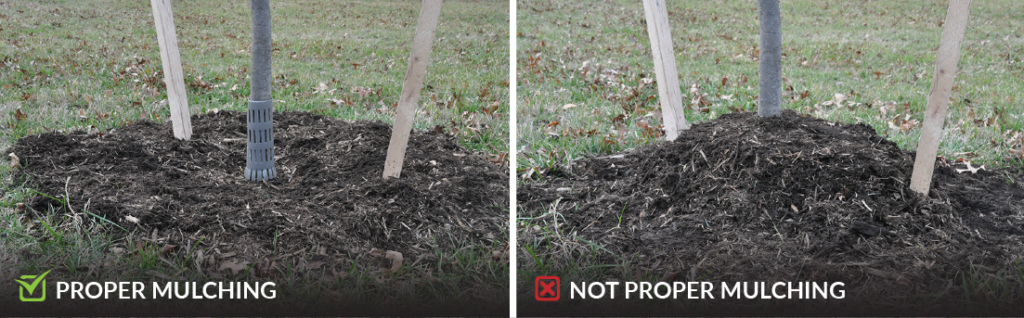
Follow the 3-3-3 guideline when mulching: Apply 3 inches of mulch in a 3-foot ring around the tree, leaving a 3-inch space around the tree trunk. When mulching, use natural, shredded bark or leaf compost. Reapply mulch annually or as needed in the spring or fall.
Watering
The single most important factor for young tree survival is water. In addition to watering a tree on the day it is planted, continue watering for the first 2 to 3 years after planting.
Water weekly from early spring until late fall (generally April – October), especially during times of drought. Young trees need up to 25 gallons of water (approximately 1.5 inches of rainfall) per week to thrive.
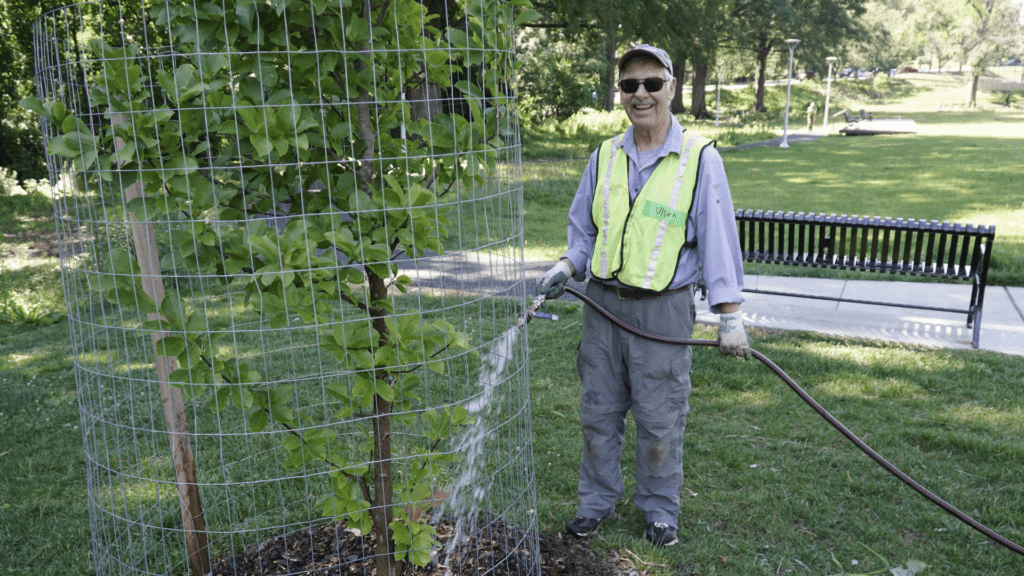
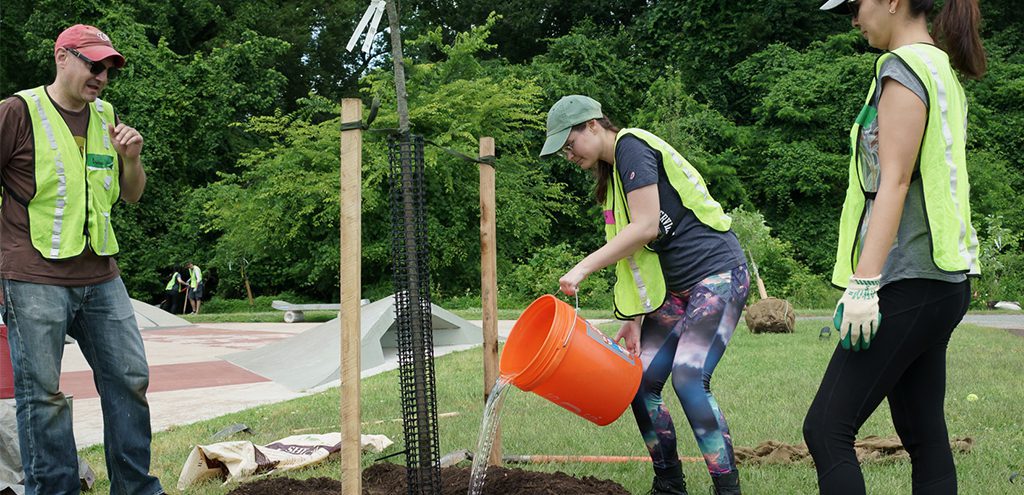
Water slowly, using a garden hose or bucket. Ensure the water penetrates deeply rather than running off the surface. Water once per week under normal conditions, increasing to two or three times weekly or as needed during droughts or extreme heat.
For more tips on watering, or to sign up for our weekly watering alerts, visit caseytrees.org/water.
Tree Protection
Though it may not always be necessary, a variety of protective guards can be installed around a tree to shield it from damage caused by wildlife such as deer, lawn equipment like mowers and trimmers, or even vandalism or human activity in high-traffic areas.

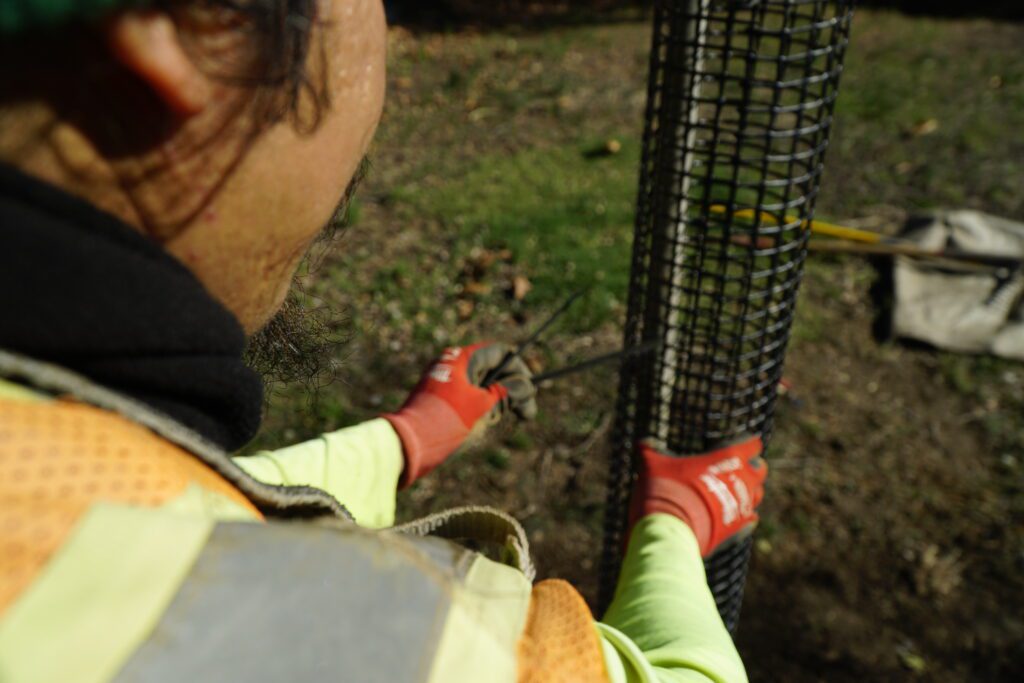
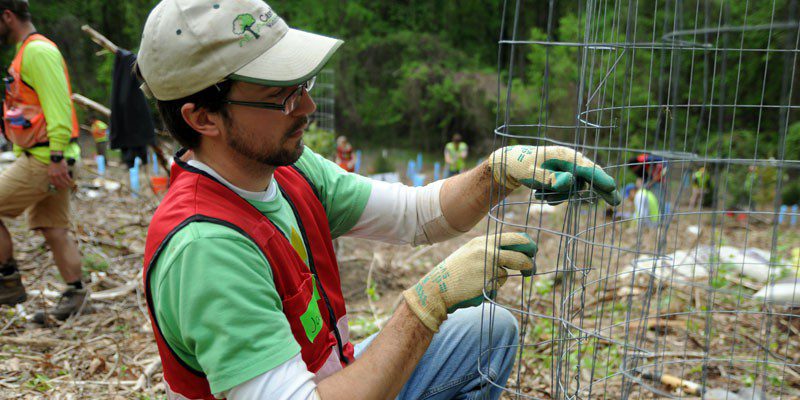
Inspect tree protection materials regularly as the tree grows, and remove them once the tree has outgrown them, they become too tight, or are no longer needed. For trees planted with support stakes and ties, remove all ties after one year in the ground. Leaving ties on too long can restrict growth and eventually girdle the tree.
Establishing itself in a new environment takes a lot for a new tree, so you can expect to see signs of stress as it settles into its new home. If the tree seems to be getting progressively worse over a number of months, don’t hesitate to reach out to a Casey Trees Arborist. If Casey Trees has installed your new tree, Casey Trees will replace a dead tree within the warranty timeframe only if you have adhered to tree maintenance items (watering, mulching, etc.), per your tree maintenance agreement.
Additional Resources
Download Young Tree Care Brochure
More How-To Guides: Resources on other aspects of tree care, like planting, watering, and pruning.