Help butterflies and bees navigate our city safely with native trees and plants!
Casey Trees is installing free trees and 10,000 square feet of native plant gardens for DC homeowners within specific urban wildlife corridors around the Anacostia River and east of Rock Creek Park, with funding from the National Fish and Wildlife Foundation.
Just like we need sidewalks and crosswalks to navigate the city, pollinators need connected green spaces to travel between the larger parks and natural areas where they feed, nest, and reproduce. Without these connections, urban development creates isolated islands of habitat—forcing pollinators to risk dangerous flights across concrete deserts of roads and buildings.
If your yard has open space to plant and is eligible, it could become a vital link in DC’s pollinator corridors.
Type your address into the map below to see if your property qualifies for a free garden and/or tree!
This program targets key corridors where your participation can make the biggest difference for pollinators. These areas currently have the lowest tree canopy coverage and the greatest need for green infrastructure.
Click here to open the eligibility map in a new window.
What makes a yard eligible?
At this time, we are prioritizing planting areas that:
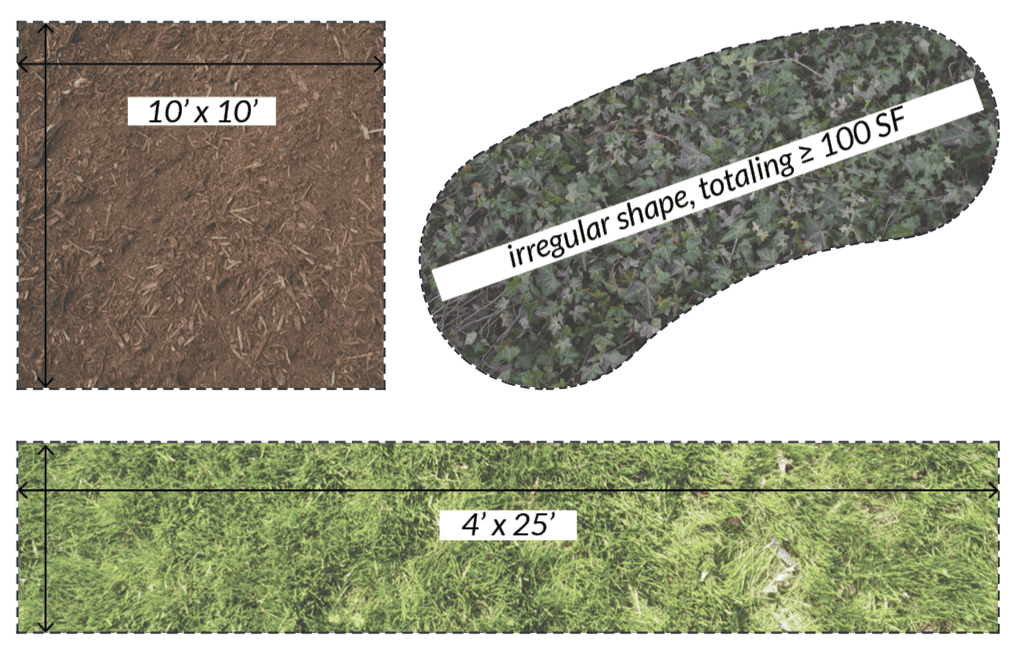
- Are at least 100 square feet in total size and contiguous (i.e., not several separate areas)
- Are currently lawn or turfgrass, bare ground, or mulch, and do not already provide value for wildlife or pollinators
- For trees, properties will be evaluated on a case-by-case basis to determine eligibility and recommended species
Right now, we can’t install gardens in these types of areas:
- Areas already filled with plants that you want to keep.
- Areas covered by hard surfaces like concrete, brick, or stone.
- Areas covered by gravel or landscape fabric.
- Areas in the public right-of-way, such as tree wells or verge strips.
What types of trees and plants will we plant?
- All gardens will be custom-tailored to your space by our design team. We will evaluate the soil, sun, and moisture conditions present on site and select native, perennial species that will thrive in your yard.
- Trees will be species native to the eastern United States, hardy to our climate zone, and our tolerant to urban conditions.
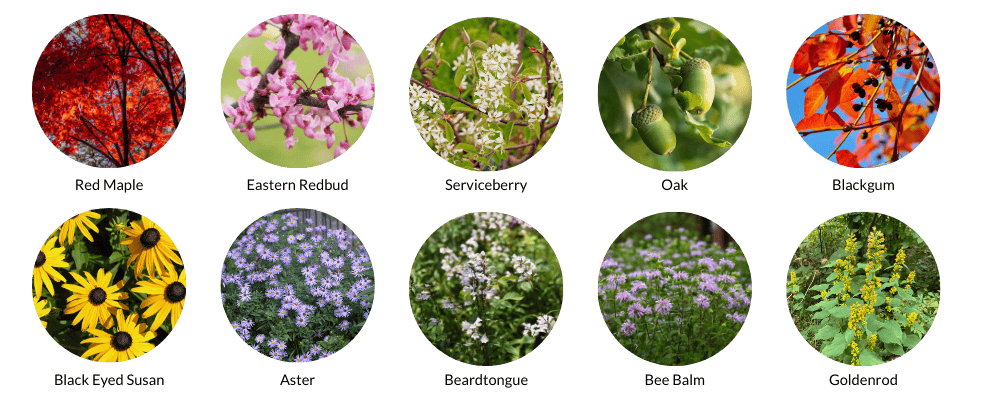
- Below are some examples of common wildlife- and pollinator-friendly species that may be planted through this program.
About the Pollinator Pathways Program
The program’s goal is to plant 700 trees and 10,000 square feet of native gardens in the wildlife corridors shown on the map. These gardens will provide food for pollinators year-round and create a network of pollinator “cafes” to help bees, butterflies, and other insects travel between DC’s largest green spaces, including Rock Creek Park, the National Arboretum, and Fort Dupont Park.
Pollinator pathways were identified through geospatial analysis conducted in partnership with the District Department of Energy and Environment (DOEE) and the BlueGreen Resilience Corridors working group. Together, we mapped the safest potential routes for pollinators and other wildlife to travel between existing parks and gardens.
With funding from the National Fish and Wildlife Foundation, homeowners in the pathways are eligible for a free native plant garden and/or trees.
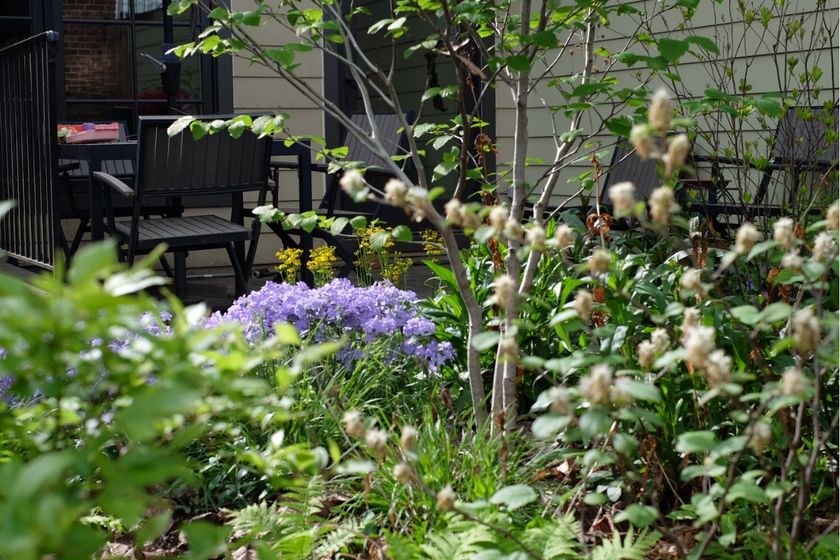
Here’s how it works:
- If your yard has open planting space, check the map above to see if you are in a corridor! If so, express your interest in participating
- We will confirm your yard’s eligibility and schedule a site visit with a certified arborist and/or horticulturalist
- Review and approve your custom planting design
- Welcome new flowering trees and/or plants to your property
- Water your garden and enjoy watching pollinators thrive in your yard!
Transform your backyard, transform your neighborhood
Through this initiative, Casey Trees will provide:
- Free native trees carefully selected to support pollinators
- Free pollinator garden installations in qualifying areas
- Expert consultation from certified arborists and horticulturists who will help choose the right trees and plants for your space
- Guidance on maintenance to ensure your plants thrive
While you’re helping pollinators, you’ll also:
- Reduce flooding by absorbing excess stormwater
- Cool your home and neighborhood with shade trees
- Beautify your property with native flowering plants
- Connect with neighbors who share your commitment to a greener DC
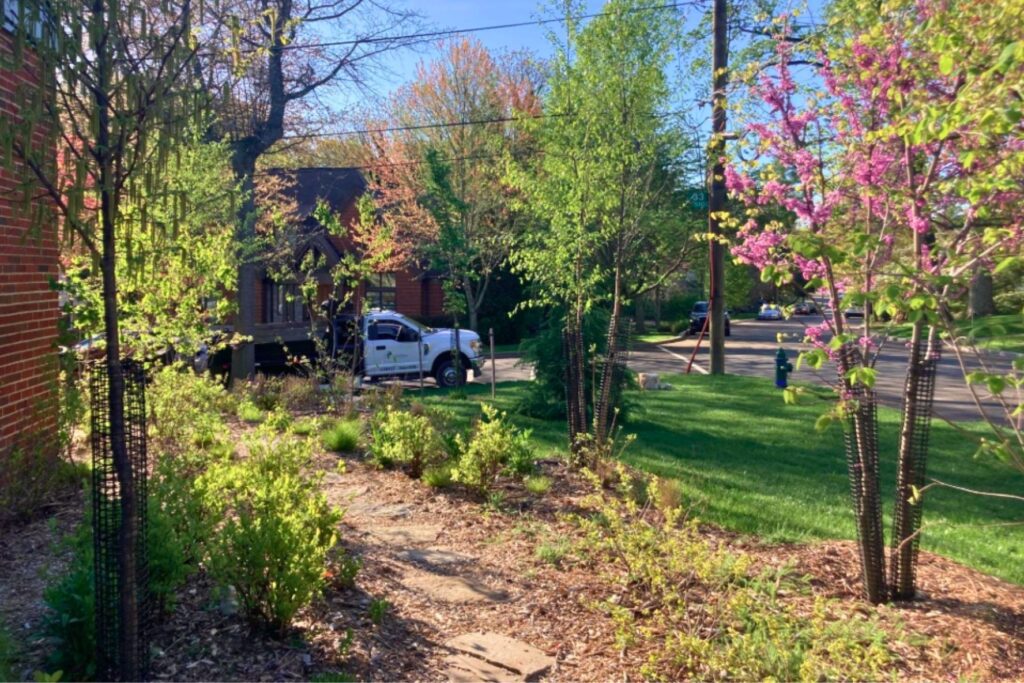
Don’t live in a pathway? Your yard can still support pollinators!
Through Casey Trees’ ecological garden program, our team designs and installs native plant gardens for homeowners within the Beltway. Our plantings require less maintenance, less water, and less fertilizer than conventional landscaping and turf lawns. Any profit generated is invested in our mission of re-treeing the DC area.
About This Initiative
This project is funded by the National Fish and Wildlife Foundation’s Chesapeake WILD Grant Program.
The Chesapeake WILD Grant Program supports on-the-ground projects that enhance, restore, and protect fish and wildlife habitat within the Chesapeake Bay watershed while maximizing co-benefits for water quality, communities, and climate resilience.
**Disclaimer:** The views and conclusions contained in this document are those of the authors and should not be interpreted as representing the opinions or policies of the U.S. Government or the National Fish and Wildlife Foundation. Mention of trade names or commercial products does not constitute their endorsement by the U.S. Government or the National Fish and Wildlife Foundation.