Whether you’re adding shade, fall color, or spring flowers, planting a tree is one of the simplest and most impactful ways to grow our urban tree canopy, combat climate change, and add beauty to your yard. With a little preparation and proper technique, you can give your tree a strong start and set it up for a long, healthy life.
The best time to plant a tree is in the fall or early spring. You can also plant in the winter if the ground isn’t frozen; however, summer should be avoided as it’s too hot and often too dry for young trees to establish. For a list of trees that do well in the DC area, check out our Tree Guide.
Watch our video below to learn how to plant a tree, the right way.
En español: Cómo plantar un árbol
TREE PLANTING STEP-BY-STEP
Right Tree, Right Place: Picking the right tree for the right place is all about setting your tree up for a long, healthy life and keeping things simple for yourself down the road. Before planting, imagine how big the tree will get and check for things like nearby power lines, sidewalks, or buildings. It’s best to give trees plenty of space to grow. Always call 811, Miss Utility (if in DC), or your local free underground utility marking service before digging to locate any underground gas, sewer, water, or other utilities.
Look for a spot with the right amount of sun and good soil, and choose a tree that fits your site’s needs–whether you want shade, flowers, or fruit. Planning ahead saves time and trouble in the future, and ensures your tree will thrive in your space.
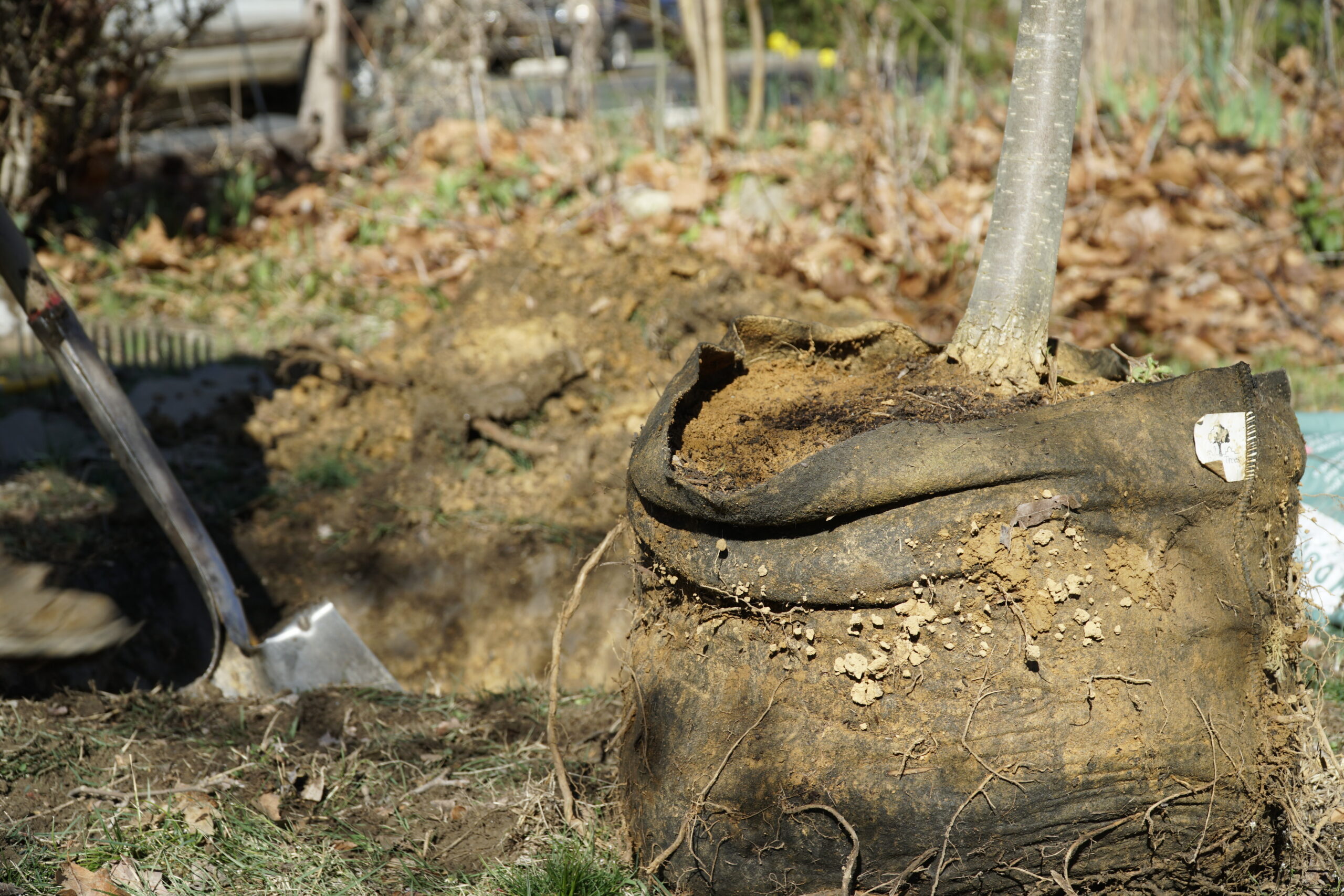
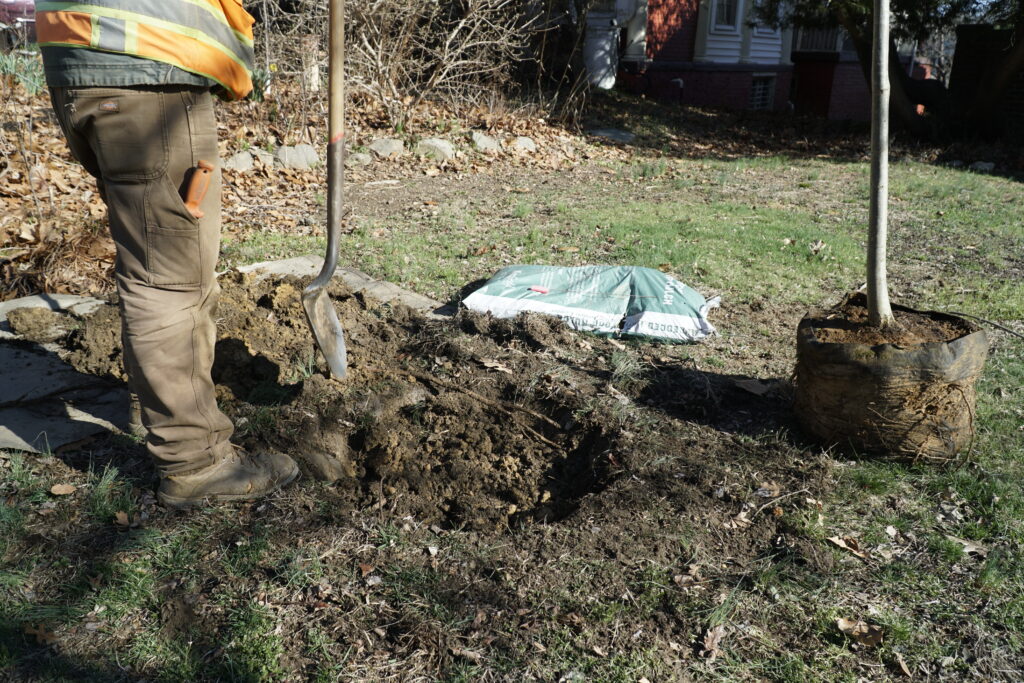
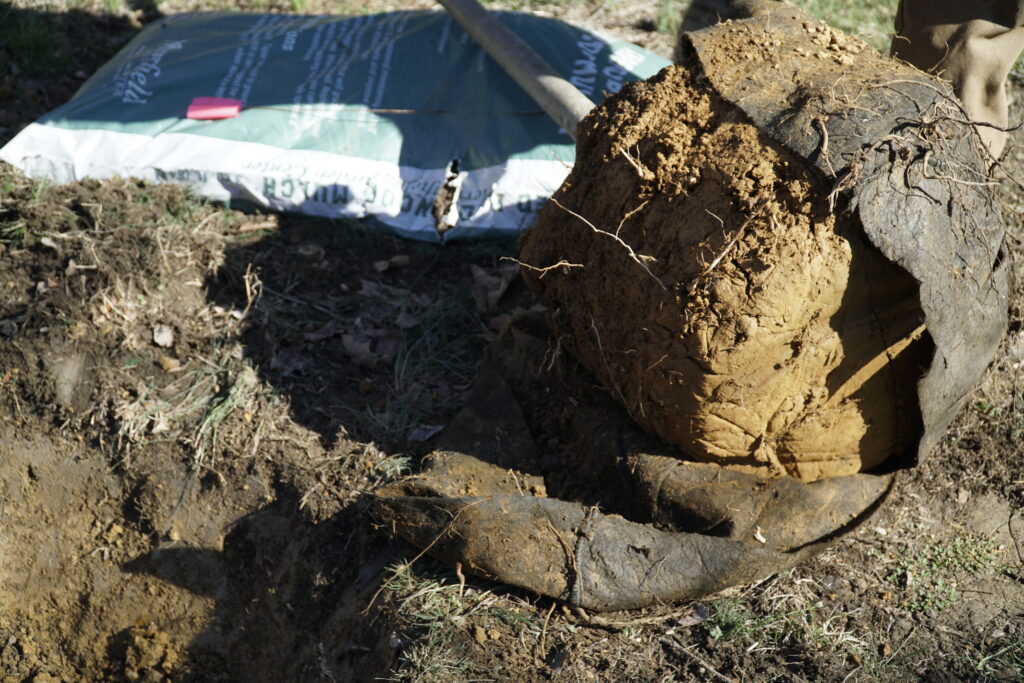
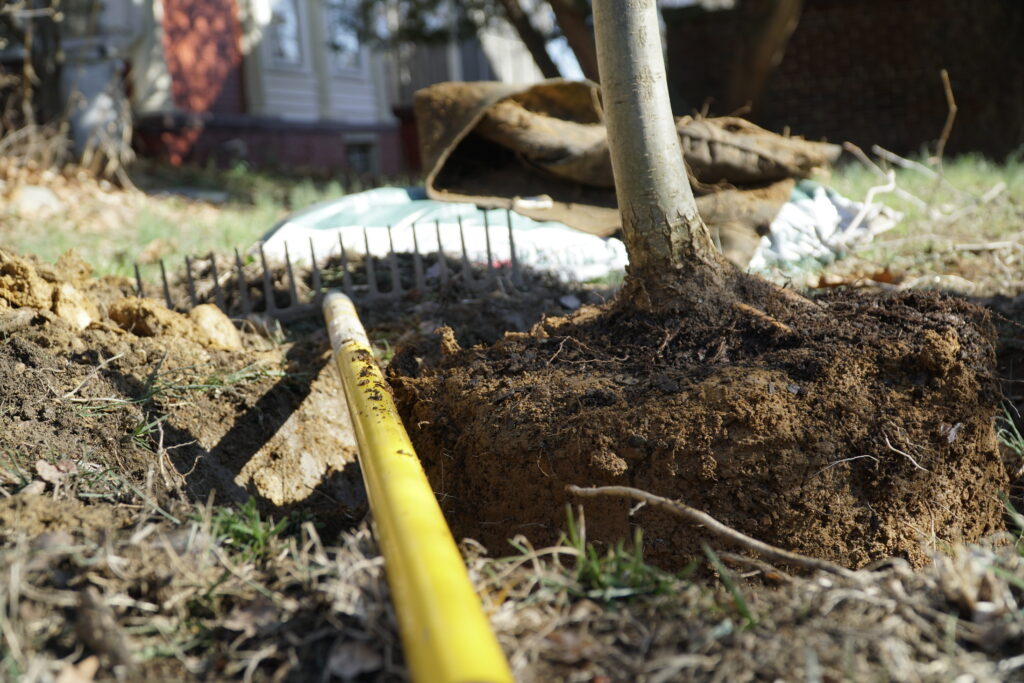
Digging Your Hole: Dig your tree’s planting hole only as deep as the root ball so that the root flare (the spot where the trunk widens and roots begin) rests right at ground level or just slightly above it. Make the hole two to three times wider than the root ball, which gives new roots plenty of loose soil to grow into and helps your tree get established faster. The sides of the hole should slope out like a wide bowl, not straight up and down. When planting your tree, be sure to remove the rootbag or container from the root ball.
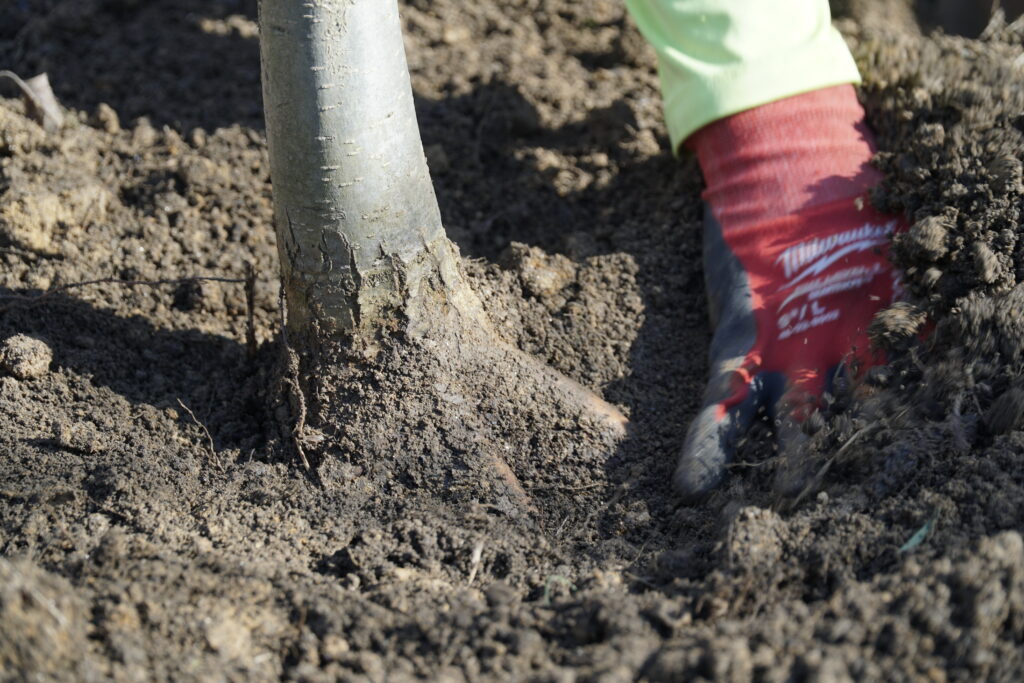
Adding Mulch: After planting, apply mulch around the tree. Follow the 3-3-3 framework: Spread mulch in a circle at least 3 feet wide and 3 inches deep, leaving a 3-inch gap between the mulch and the trunk. Adding mulch boosts tree health by insulating roots, retaining moisture, and minimizing weeds and mower damage.
Watering & Caring for Your Tree: After mulching, water your tree deeply to settle the soil and help it establish. Young trees should be watered for 2 to 3 years after planting, and need up to 25 gallons of water a week to survive. See more watering tips at caseytrees.org/water, and be sure to subscribe to our weekly newsletter to see Weekly Watering Alerts throughout the summer.
Frequently Asked Questions (FAqs)
-
Should I remove the rootbag from my tree before planting?
-
Yes. You should remove the rootbag, container, or anything around the root ball before planting your tree. It is best to do this right before you drop your tree into the hole.
-
When putting dirt back into the hole after planting, should I remove or add anything to the soil?
-
All native soil, including any small or medium-sized rocks, should be put back into the hole around your tree. Though your tree’s root ball has displaced soil, all soil can be added back to the hole and around the tree. Depending on your soil quality, amending it with some organic soil conditioner or compost could help your tree establish.
-
Do I need to water my tree after planting?
-
Yes. Watering your tree after planting helps to settle the soil and establish in its new home. If planting in the fall, water weekly until temperatures are consistently below freezing, or if your tree is deciduous, until it loses all of its leaves and has gone dormant. Continue to water your tree for two to three years after planting. For more information on watering, visit caseytrees.org/water.
-
Do you have any additional resources?
-
For a step-by-step planting guide to planting rootbag trees, see our “How to Plant a Rootbag Tree” print resource.