We’re excited to share that Casey Trees has received $499,816 from the National Fish and Wildlife Foundation’s Chesapeake WILD Grant Program to launch our first Pollinator Pathway initiative. Over the next three years, this project will create wildlife corridors for pollinators in areas of DC east of Rock Creek Park.
Through this new initiative, Casey Trees will plant 700 native trees and add 10,000 square feet of native plant gardens along the corridors, with the goal of creating a network of pollinator “cafes,” providing food and shelter year-round as pollinators travel between DC’s largest green spaces, including Rock Creek Park, the National Arboretum, and Fort Dupont Park.
Building Bridges for Birds and Bees
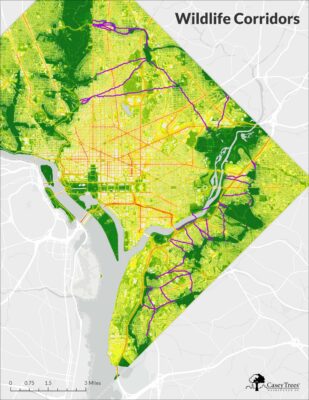
From Park View to Anacostia, this program focuses on DC neighborhoods with the fewest trees and the greatest need for plants and access to nature.
To identify the pathways, we worked closely with the DC Department of Energy and Environment (DOEE) to study how wildlife actually move—or struggle to move—through the city.
Using GIS mapping tools, we determined the most dangerous and the safest crossings for wildlife in DC by layering data on land use, traffic volume, distance from major roads and habitat patches, and hard, impervious surfaces, like concrete. Unsurprisingly, major roads and highways like Interstate 295, Georgia Avenue, and Connecticut Avenue act as barriers between DC’s largest green spaces. However, through our analysis, we uncovered the paths of least resistance—areas where new native trees and plants could reconnect fragmented sanctuaries for city wildlife.
Protecting Pollinators
Without these connections, pollinators are often forced to cross dangerous stretches of roads and buildings. And without pollinators, our world would be very different.
More than 75% of Earth’s flowering plants need birds, bees, butterflies, moths, and other wildlife to carry pollen from one plant to another in order to reproduce. These are the same plants that provide food and habitat for other essential animals. Pollinators are also responsible for creating one in every three bites of food we eat, including fruits, vegetables, nuts, coffee, and chocolate.
In addition to producing food for humans, pollinators help keep our air, soils, and waterways clean and healthy by supporting plant growth. Plus, pollinator insects, like moths, are a source of food for more than 80% of birds in the United States, as well as reptiles, amphibians, and mammals.
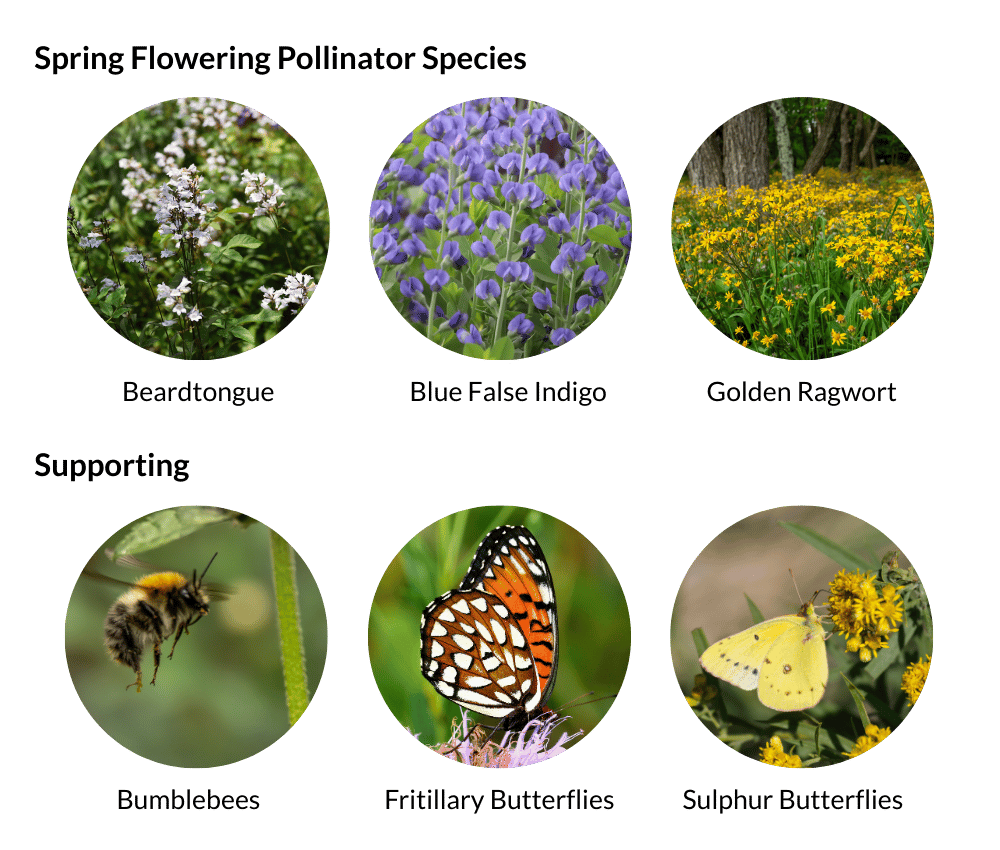
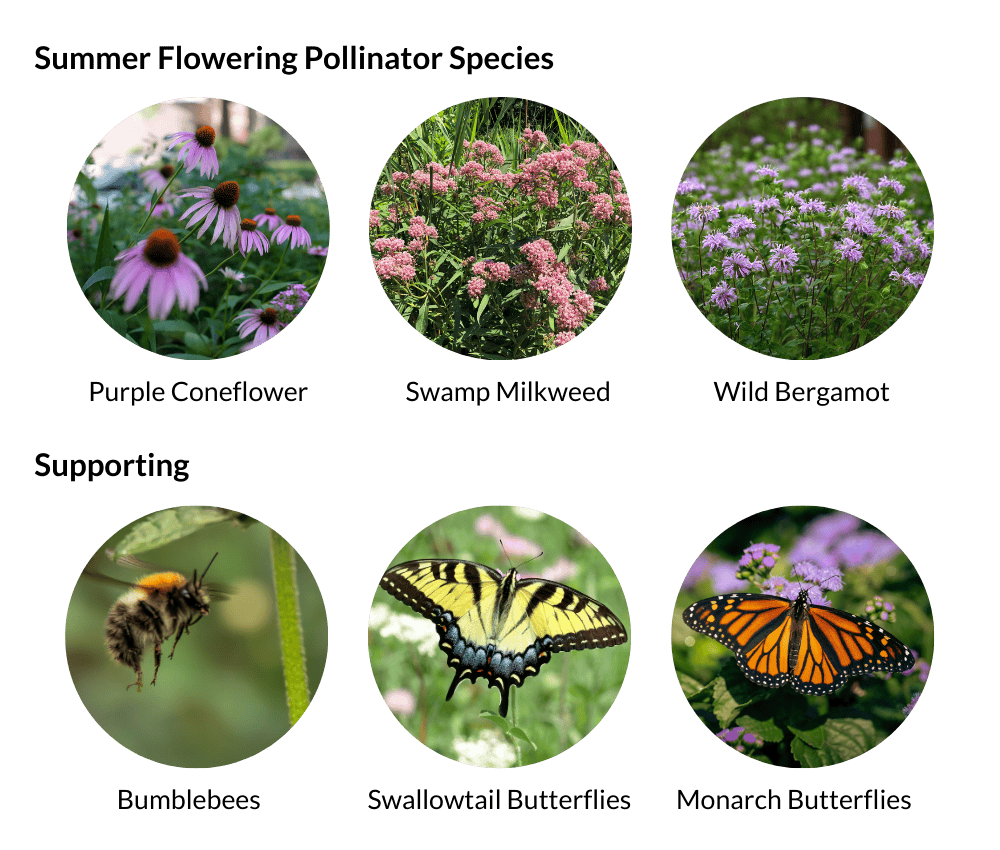
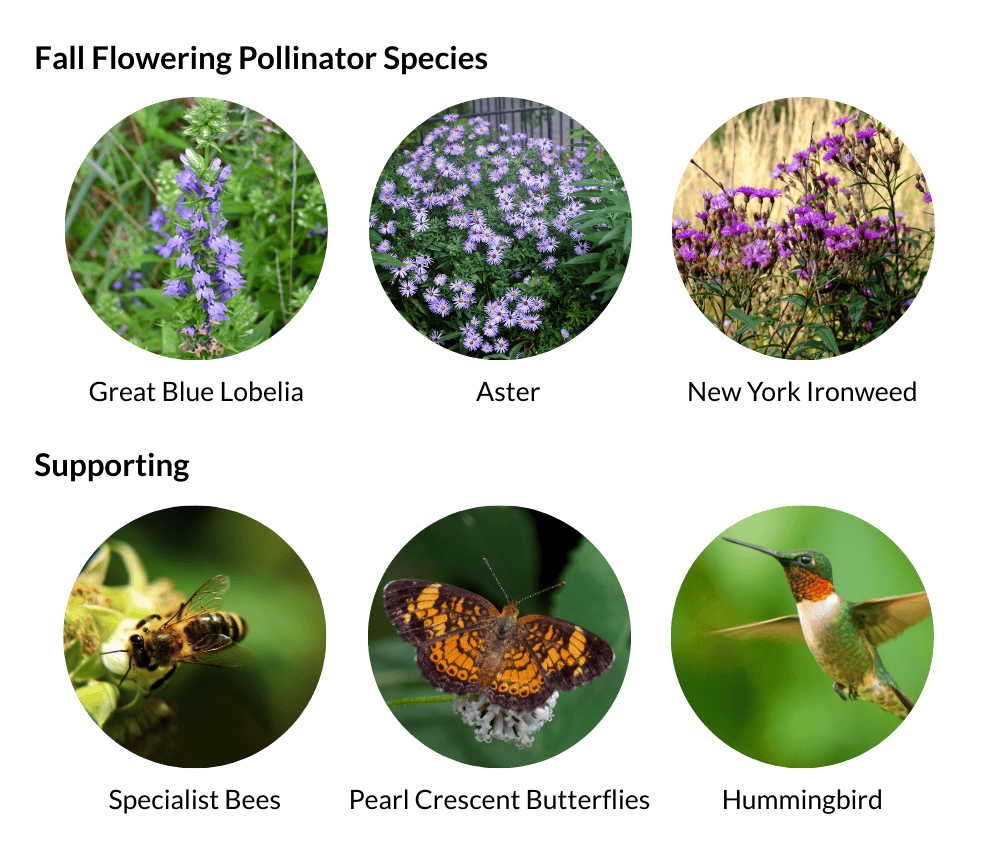
But as their food and shelter get erased, populations of bees, butterflies, and migratory birds—including DC’s official bird, the Wood Thrush—have dropped sharply over the years. Much of this decline comes from habitat loss and fragmentation as cities grow and native plants and green spaces are replaced by pavement, buildings, and lawns. In cities like DC, even parks and gardens that support wildlife can become isolated, separated by miles of concrete.
That’s why, through this program, we want to show that cities can support pollinators and wildlife when the right plants are in the right places. For the Eastern Tiger Swallowtail butterfly, this means having food and shelter all year. For DC residents, it means neighborhoods filled with more butterflies, songbirds, and life.
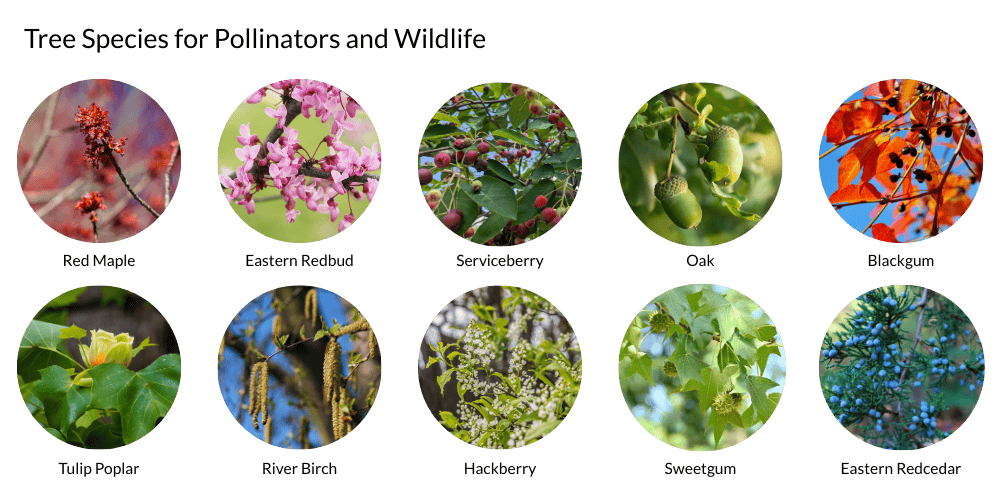
Looking Ahead
In addition to adding more trees and gardens, we’re teaming up with a coalition of environmental organizations to engage with the broader community. Through special events and outreach, partners such as Ward 8 Woods, Capital Nature, City Wildlife, and the DC Chapter of the Sierra Club will help us reach residents citywide and promote the importance of native plants and trees for protecting pollinators.
Stay tuned for more on how you can help turn Washington, DC, into a city where bees, butterflies, and the people who love them can thrive. If you aren’t already, sign up for our weekly email newsletter, the Leaflet, to learn about upcoming events and how you can get involved.
We’re grateful to the National Fish and Wildlife Foundation for making this work possible through the Chesapeake WILD Grant Program—and we can’t wait to get started.
The views and conclusions contained in this document are those of the authors and should not be interpreted as representing the opinions or policies of the U.S. Government or the National Fish and Wildlife Foundation and its funding sources. Mention of trade names or commercial products does not constitute their endorsement by the U.S. Government, or the National Fish and Wildlife Foundation or its funding sources.