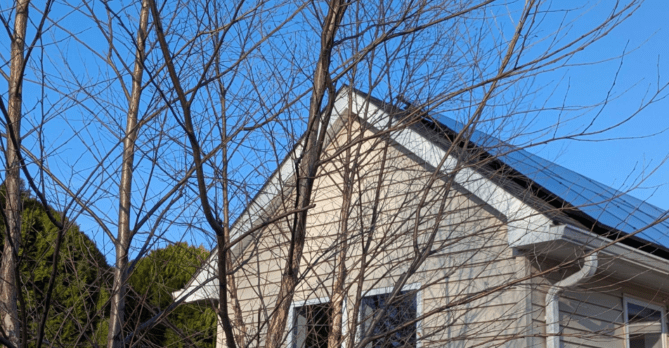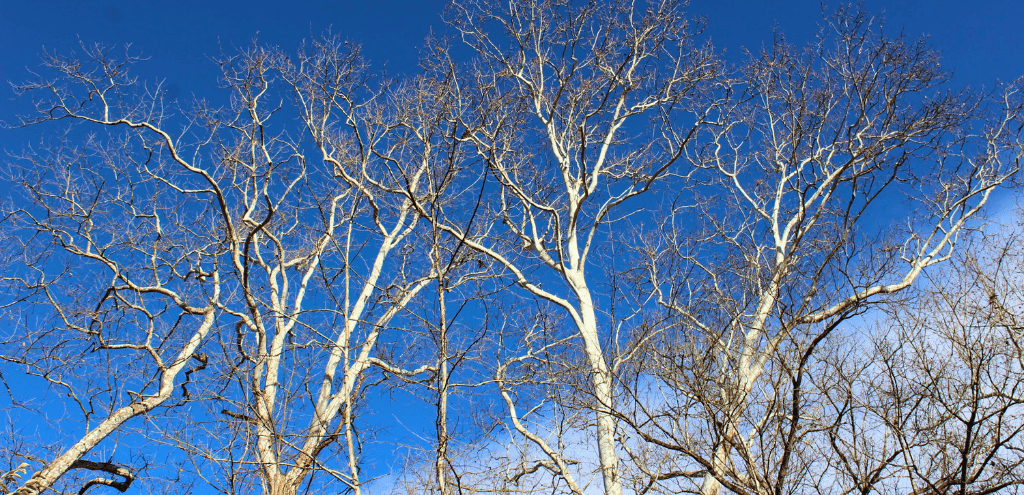
Trees began preparing for winter as soon as the warm days of late summer became consistently cooler and shorter, turning into fall. While squirrels gathered acorns for their winter food stores, deciduous trees transferred nutrients and sugars from their leaves to their root systems for storage. Unlike evergreen trees, which keep their leaves year-round, the thin leaves of deciduous trees can’t withstand winter temperatures, so they drop each fall and keep next year’s leaves stored safely inside buds until they open in spring.
So what is going on inside a tree during the cold winter months? Read on to learn more about the winter phenology of trees.
Slowing Down and Getting Cozy
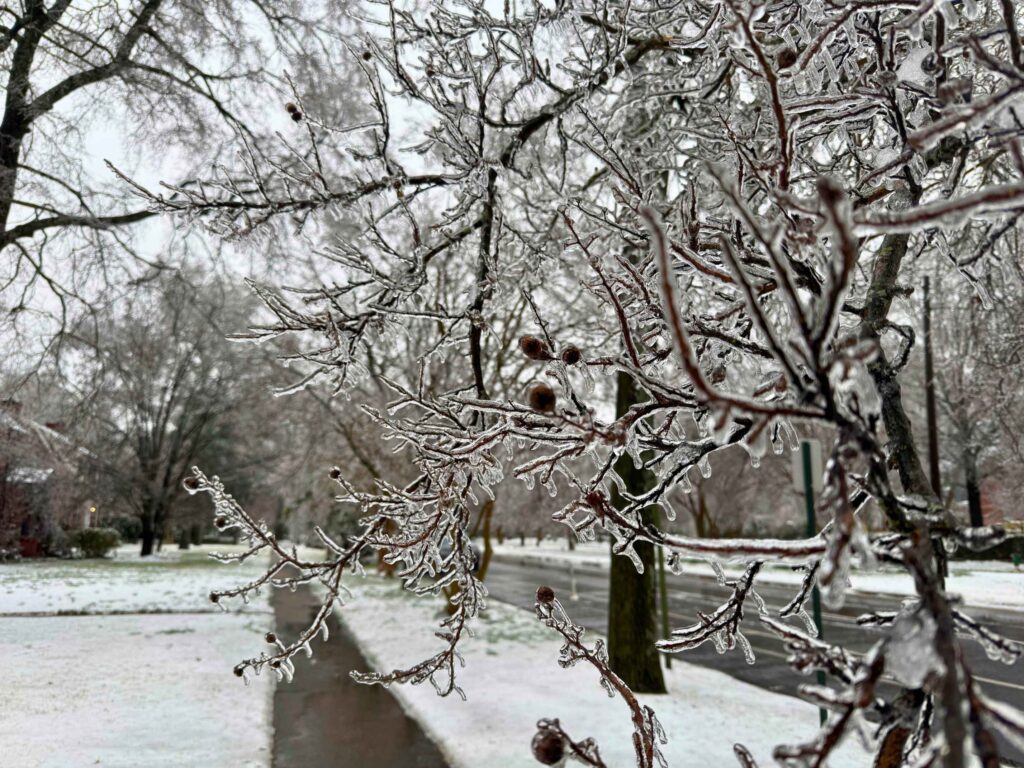
After their leaves drop and days continue to shorten, trees go dormant in order to conserve their energy and survive the winter. In this dormant state, growth has paused and physiological processes have significantly slowed above ground. Meanwhile, roots below ground continue to respire, or “breathe,” in a more active rest.
While trees are resting, they need to ensure they are protected for the season. Bark on tree stems acts to shield important layers of cells just beneath the surface from environmental conditions. During the growing season, these cells are what allow trees to grow and move water and nutrients. For an extra layer of insulation in the winter, trees can also increase the concentration of sugar and salt inside these cells, thereby lowering the freezing point of liquid inside the tree, to prevent freezing for the duration of dormancy.
Why Some Deciduous Trees Keep Their Leaves
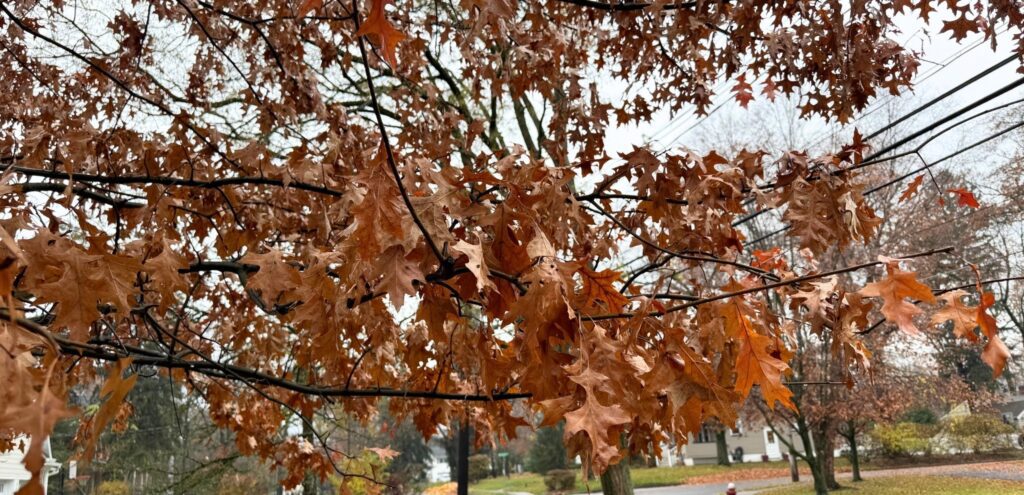
Some tree species, like beech and oak, will hold on to their brown leaves throughout the winter in a phenomenon called marcescence. The leaves will remain on the tree until a new leaf is ready to push through the bud in spring.
While we aren’t completely sure why trees exhibit this phenomenon, it is thought that this may help to prevent deer browsing on new growth, protect delicate buds on the ends of the branches, or provide a fresh layer of leaf mulch in early spring, boosting soil nutrients and moisture for new growth.
The Evergreen Strategy
Though evergreen trees also slow down in the winter, they continue to photosynthesize and grow. Unlike their deciduous counterparts, evergreen leaves remain on the tree for multiple years with special characteristics that help them conserve water during the winter, which is essential for continued photosynthesis.
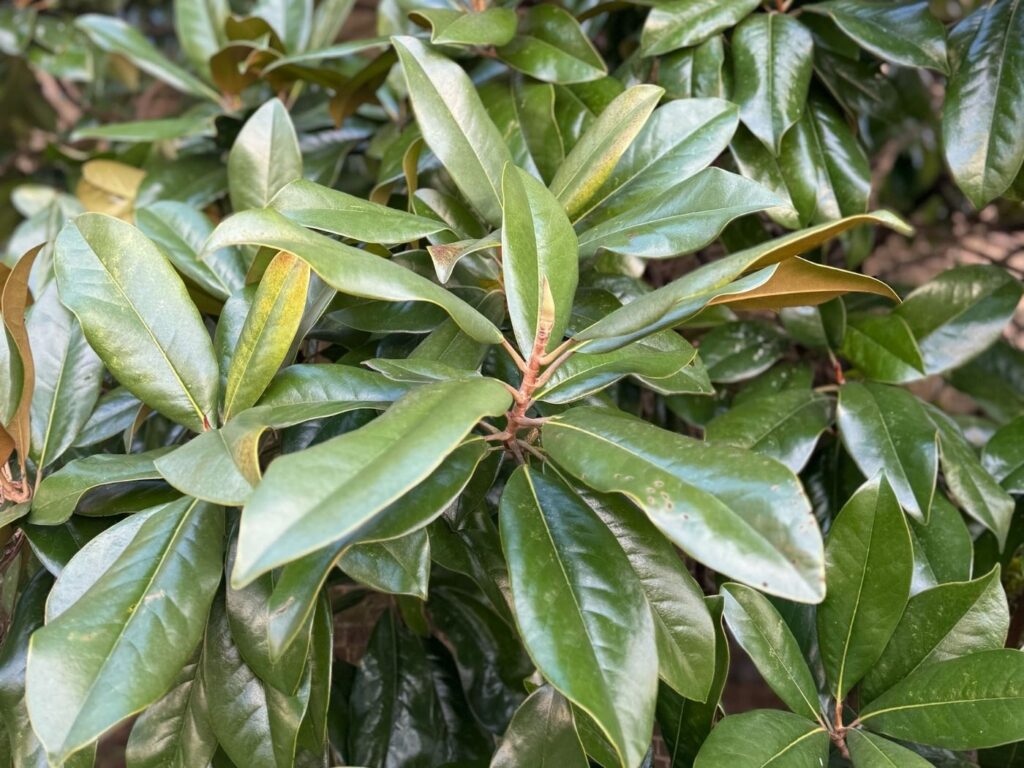
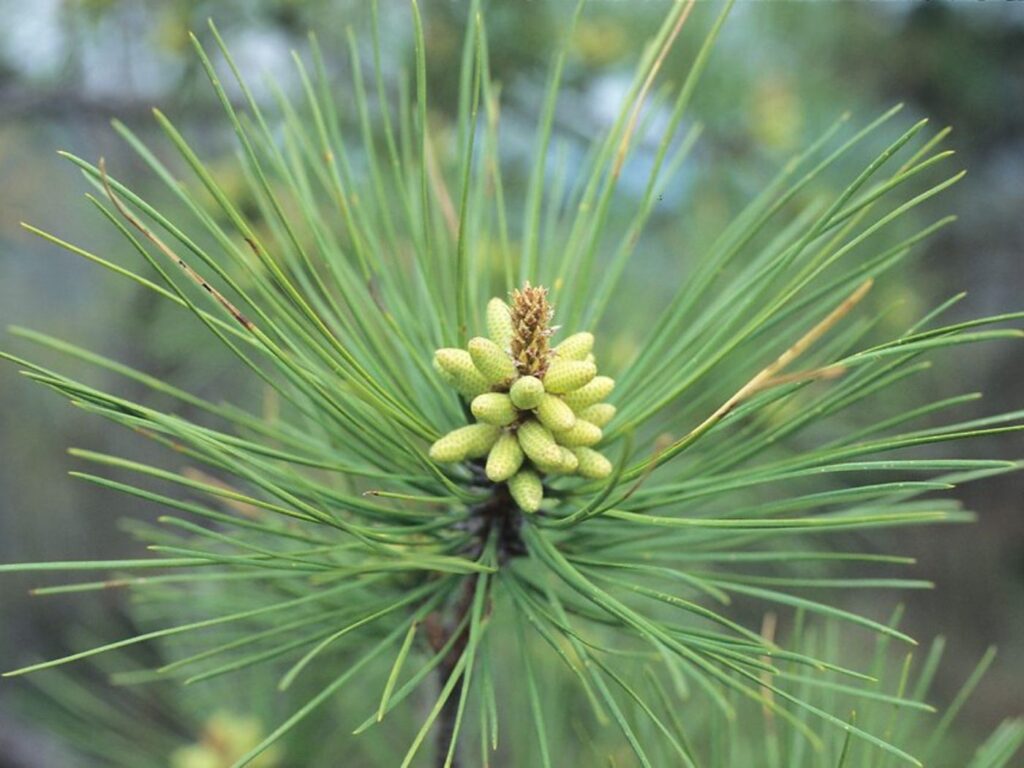
Broadleaf evergreens such as the Southern Magnolia have thick leaves with a waxy coating, called a cuticle, that helps them retain water. Conifers, like pine and juniper, have needle or scale-like leaves with a compact shape, preventing water loss and reducing accumulation of snow and ice.
Waking Up is Hard to Do
How does a tree know when it’s time to wake up?
Many tree species take cues from the longer daylight hours and early spring temperatures – consistently above 40 to 50 degrees fahrenheit – to open their leaf and flower buds.
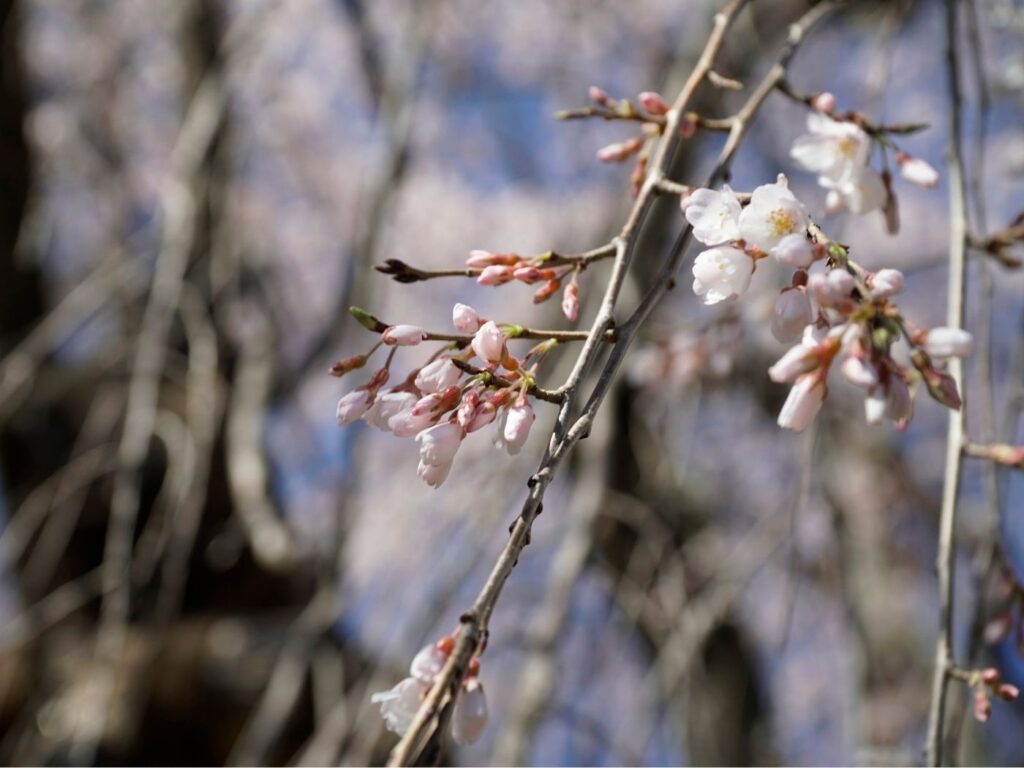
However, some tree species, like cherry and apple, are more reactive to brief environmental conditions and quickly respond to a warm winter day. In Washington, DC, cherry blossom trees have been blooming earlier on average according to National Park Service data, as the overall climate warms.
If a tree opens its buds too early, there is a risk of cold damage to these tender new leaves and flowers when the next dip in temperature occurs. Warmer temperatures and changing weather patterns have triggered earlier and more sporadic bloom seasons, essentially tricking trees into waking up too early. As our overall climate changes, the tree species that once thrived in our region’s environment are finding it more difficult to survive. That’s why the USDA has updated its Plant Hardiness Zone Map to help identify trees that can withstand our area’s new climate conditions.
While trees are experts at surviving winter on their own, a little help from us goes a long way, especially for young trees and those growing in urban environments. This winter, give your trees some extra support by mulching around their base to insulate roots, removing any invasive vines growing up the trunk, and pruning strategically. A little care now means healthier, stronger trees come spring. Check out our guide to winter tree care here.

Jessie Ward is a Research Technician with Bartlett Tree Research Laboratories and a research collaborator with Casey Trees. She is an ISA-certified Arborist and TRAQ certified. She holds a B.S. in Biology from James Madison University and M.S. in Forest Resources from Penn State, as well as field experience in production arboriculture, plant health care, and forest ecology.