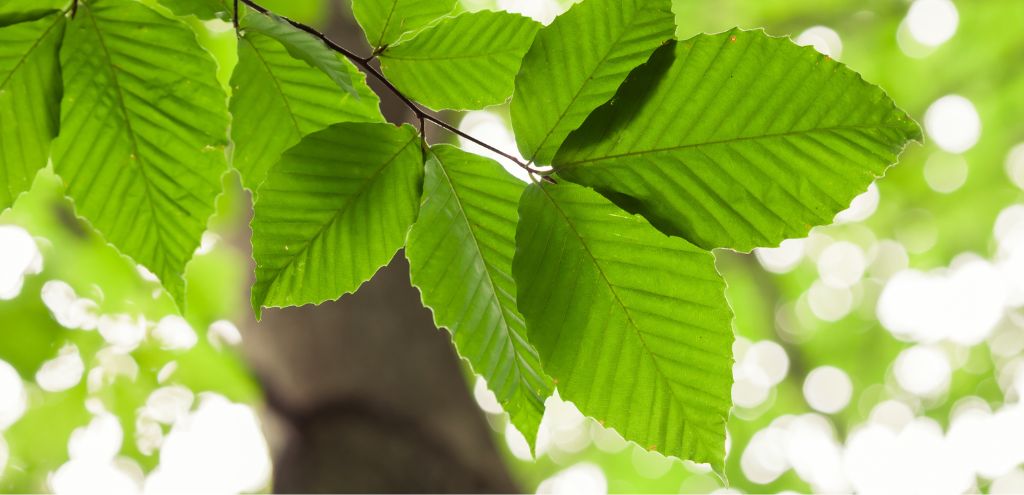
If you’ve walked through a forest in or around DC, you’ve encountered a beech tree—the iconic and sturdy shade tree native to North America, easily identified by its smooth, gray bark. American beech trees (Fagus grandifolia) make up a significant portion of the forests in the eastern United States, stretching from the Adirondacks to the Appalachians.
That’s why a relatively new but fatal disease affecting American beech trees, known as Beech Leaf Disease, threatens to change our forest floors and our ecosystems forever.

Within the District, American beech is the most common species of tree, comprising 16% of the two million trees in DC’s urban forest.
However, you won’t see them lining city streets (beech doesn’t thrive in small tree beds). Instead, beech trees are almost exclusively found in DC’s forested areas managed by the National Park Service, including Rock Creek Park and many of the forts southeast of the Anacostia River. In fact, beech constitutes less than 1% of trees in DC-owned parks and green spaces.
While some groundbreaking solutions have been discovered to help treat individual trees in arboretums or city parks, research is still rapidly underway to find a management solution to protect our forests’ canopy.
What is this disease?
Beech leaf disease (BLD) was first discovered in Ohio in 2012 and has since spread rapidly across the eastern United States. It was first discovered in the DC Metro area in 2021.
The word “disease” might make you think of a bacterial or fungal infection, but beech leaf disease is actually caused by an invasive nematode known as Litylenchus crenatae mccannii (Lcm)—a microscopic roundworm invisible to the naked eye that lives inside beech leaf buds and leaf tissue.
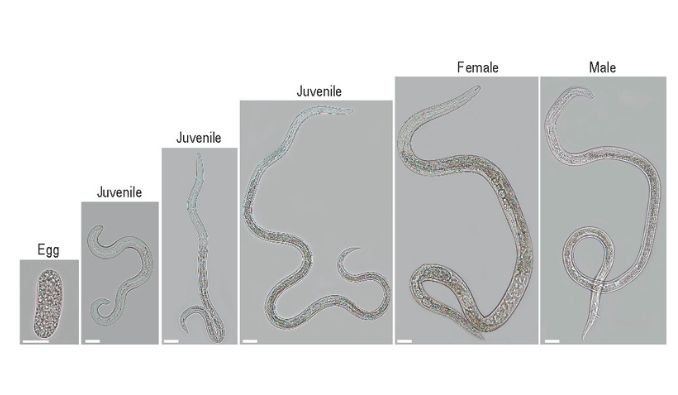
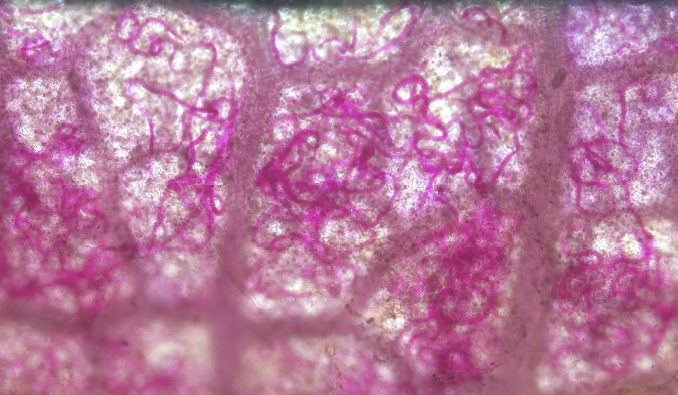
In the late summer and fall, these nematodes move from infected leaves into new buds, where they feed and interfere with the budding process. Over time, the disease causes malformed leaves. Eventually, leaves lose their functionality, or the tree stops producing new leaves altogether, and the tree dies. In other words, beech leaf disease kills the tree by robbing it of the ability to photosynthesize and create food.
You can spot BLD by the distinctive dark stripes or bands extending along the veins of the leaves. The infested banding in the leaves can also become thick, leather-like, hardened, and sometimes discolored or yellowed.
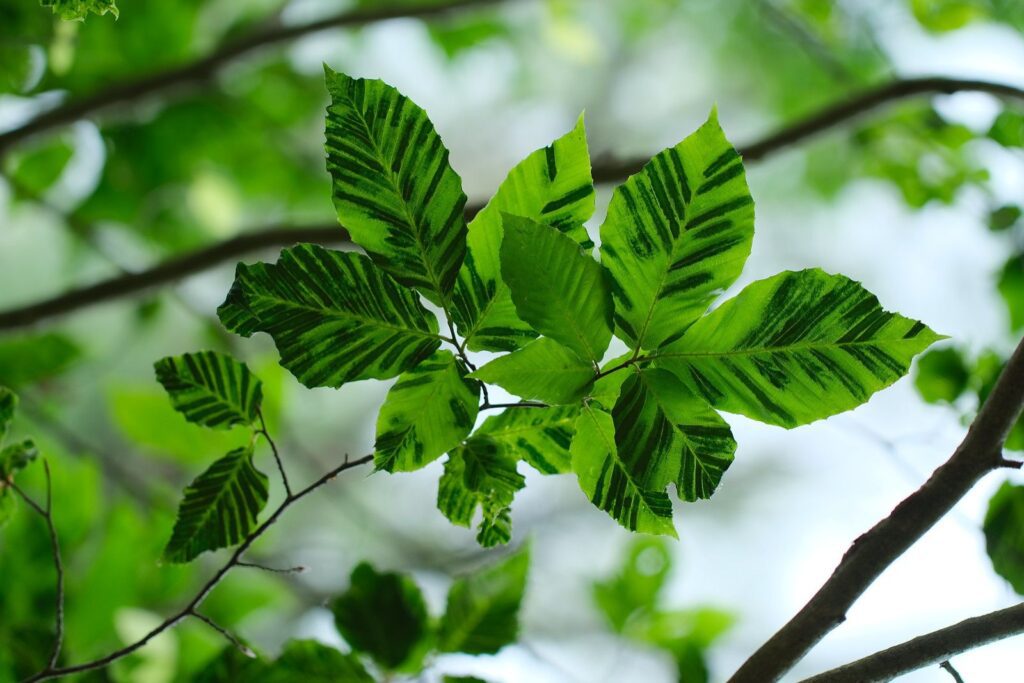
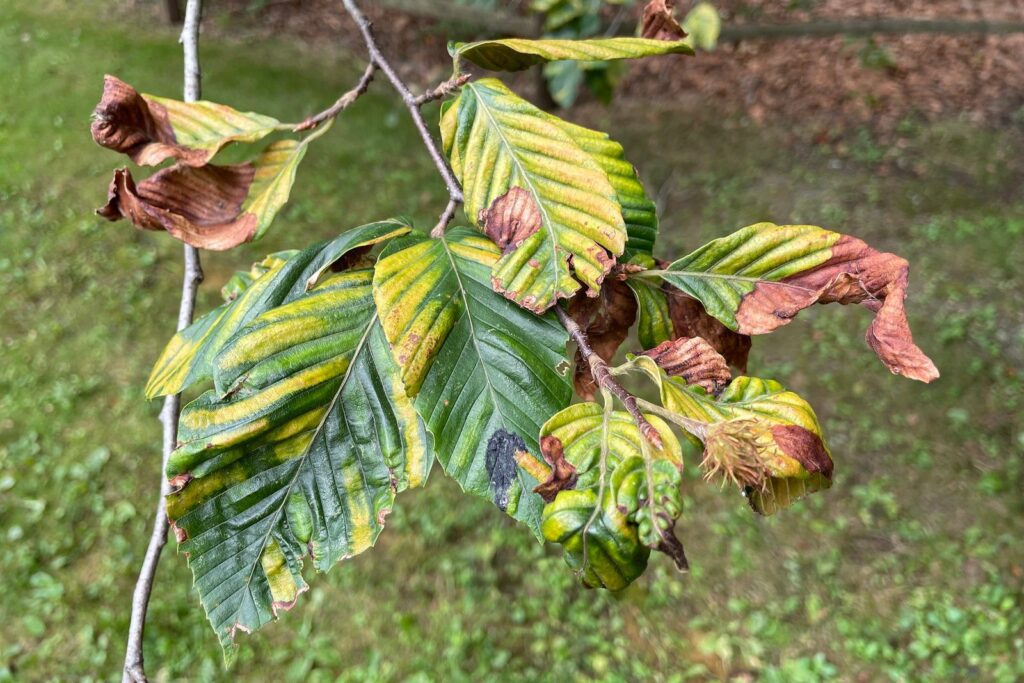
The disease has a very high mortality rate, especially in young trees. In other communities, mortality occurred within 1-2 years in small saplings and 6 to 10 years in larger mature trees.
For the DC area, however, experts say it’s still too early to know how quickly BLD will kill beech trees in our region.
But they emphasize that research is ongoing and progressing quickly.
How can it be treated?
While many researchers are fervently studying BLD, including how it spreads, its lifecycle, and its impact, our partners at Bartlett Tree Research Laboratories have focused on researching how the disease can be controlled and limited. Their work has already begun to pay off. The research team at Bartlett not only wrote the first three publications on managing BLD but also discovered two treatments that are already in use today by the arboriculture industry.
“We moved from experimental assays in the lab to field-testing numerous chemistries and tools that showed any amount of promise,” said Dr. Matthew Borden with Bartlett Tree Research Laboratories. “At this point, I’ve lost count of the number of field trials we’ve completed or are ongoing.”
Both of their treatments can be highly effective at turning around individual trees suffering from BLD, even with most of the canopy showing symptoms.
One treatment option, a thiabendazole-based root flare injection, has historic origins. As noted by Dr. Borden in Tree Care Industry Magazine, Thiabendazole was the key active ingredient in a go-to treatment for Dutch elm disease and sycamore anthracnose, but its uses go back even further. Thiabendazole was also once used as an anti-parasitic medicine for sheep, horses, and cattle. Now, it’s being used to help incapacitate the nematodes.
Bartlett also discovered a fluopyram-based foliar spray as a management tool for BLD. While it has a less colorful history than thiabendazole, fluopyram works as both a fungicide and a nematicide, swiftly depleting the nematode of energy.
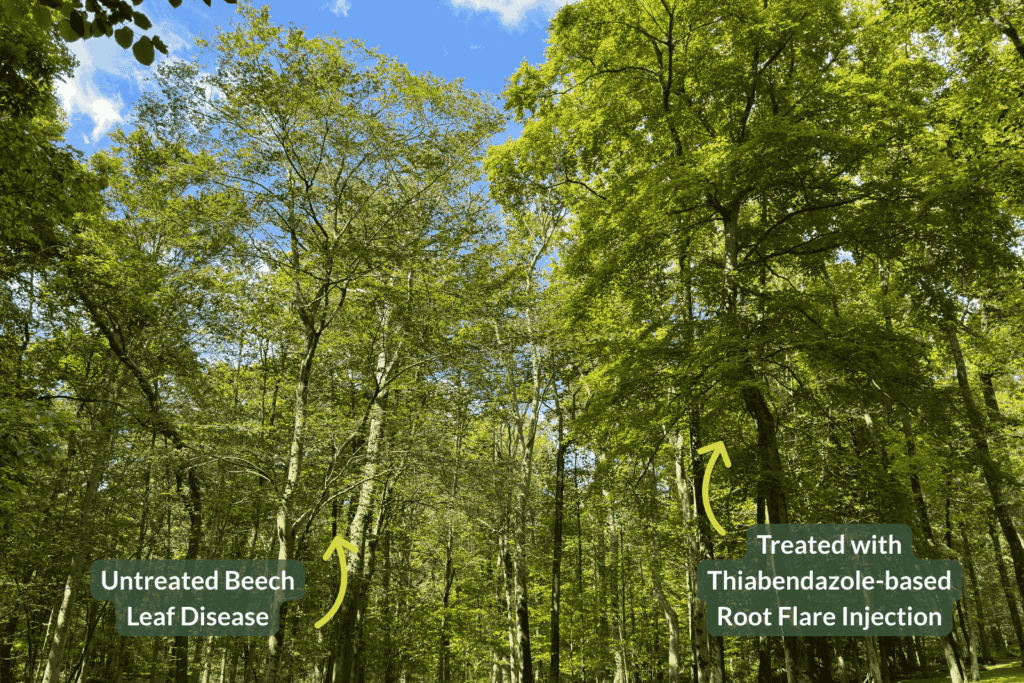
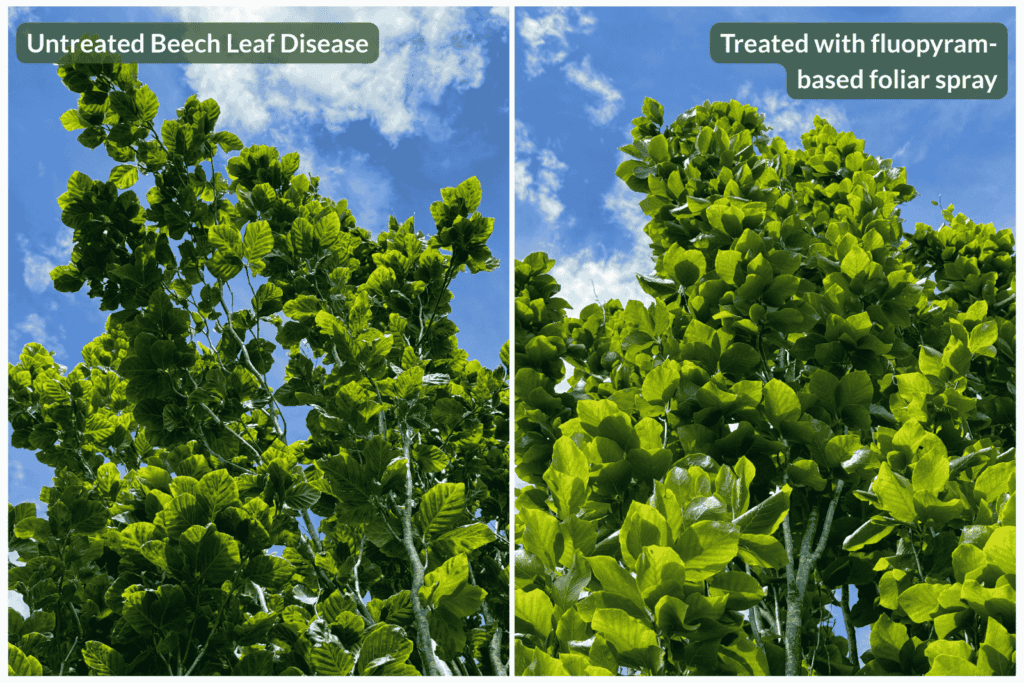
Though these products aren’t a solution to BLD at the forest level, Dr. Borden says that the Bartlett research team is still running ongoing trials to address the disease at a larger scale.
For instance, earlier this year, the team began a five-year experiment to study forest-level management in Pennsylvania and Rhode Island forests densely populated with beech.
The goal of this study isn’t to completely eradicate BLD, but rather, to find long-term solutions to slow its spread and help these trees become more resilient.
One strategy borrows from a traditional forestry practice called crown release, which involves giving priority trees greater access to resources, such as sunlight and nutrients, helping them grow stronger and more resilient to BLD. In tandem, select understory trees, which are susceptible to heavy infestation and severe disease, will be removed to reduce spread.
So, what does this mean?
Beech leaf disease will likely reshape our Eastern forests and food webs significantly.

But there is still hope.
While other high-profile pathogens, such as Dutch elm disease and Chestnut blight, attack the woody parts of the tree—the vascular system—BLD affects the leaves and buds. According to Dr. Borden, this means the disease can be treated more like a severe foliar pathogen, which is slower to stress and kill the tree.
Importantly, he notes that we shouldn’t panic: BLD does not warrant immediately chopping down an affected tree.
“Doing so won’t slow the spread in a meaningful way, and the disease has proven to be manageable with the right tools—at least on individual trees,” Dr. Borden says. “We’ve progressed to the point where we can calmy evaluate the situation and decide on the best course of action.”
So, the next time you’re out for a hike, you may see the canopy a little bit differently. Beech trees are an iconic part of our forest ecosystems. Their tall, wide canopy provides deep shade; wildlife depends on their small, edible nuts; and their dark green leaves turn a beautiful yellow in fall.
If you see symptoms of beech leaf disease in real life, ensure your location services are on, take a photo, and share it on iNaturalist to help researchers track its spread.
Otherwise, the next best thing you can do is plant a tree in your own front yard (for free if you live in DC), making a tangible contribution to our urban tree canopy.