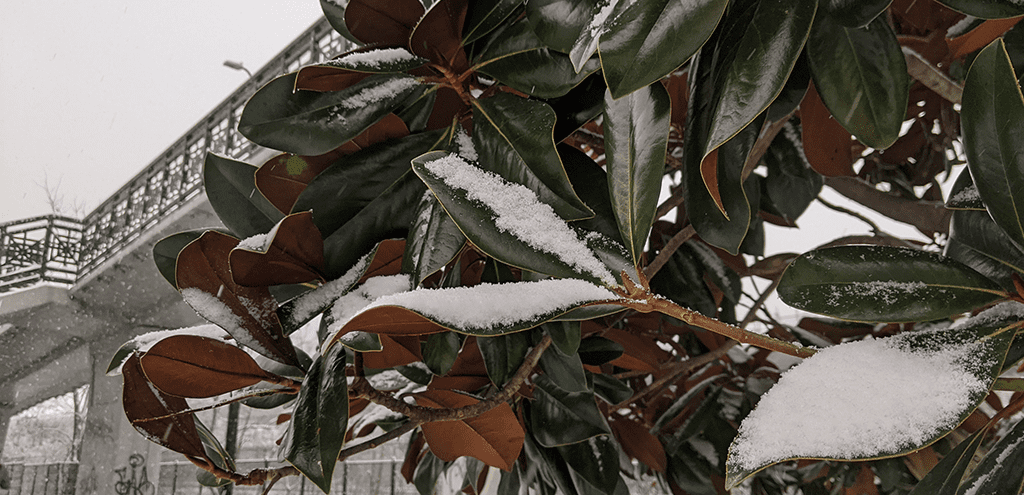
Trees might be resting through winter, but that doesn’t mean their care should go dormant! Cold weather, wind, and dry conditions can stress even healthy trees. Additionally, there are some easy tree care tasks you can complete to ensure your trees come back strong and ready for spring. Caring for trees during the colder months goes a long way toward protecting them and ensuring they thrive throughout the year.
Here’s how to keep your trees strong, healthy, and beautiful all winter long.
Remove Invasive Plants
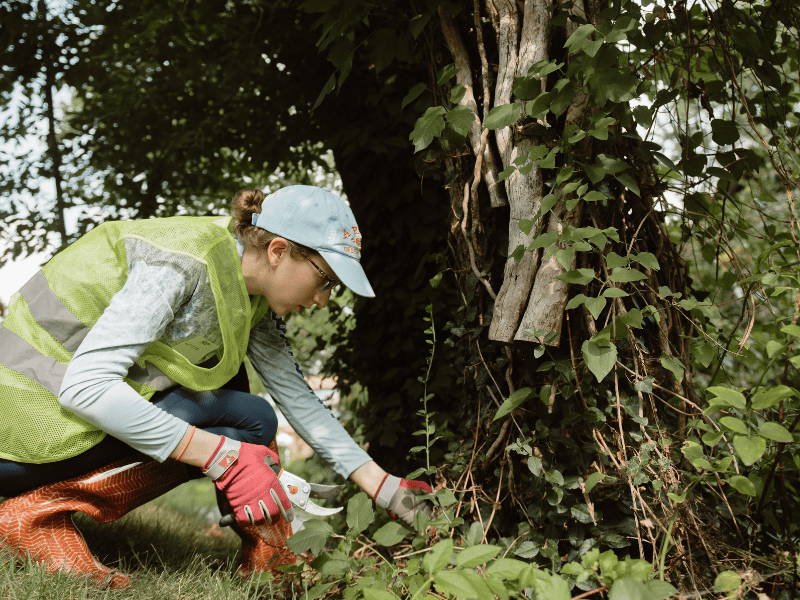
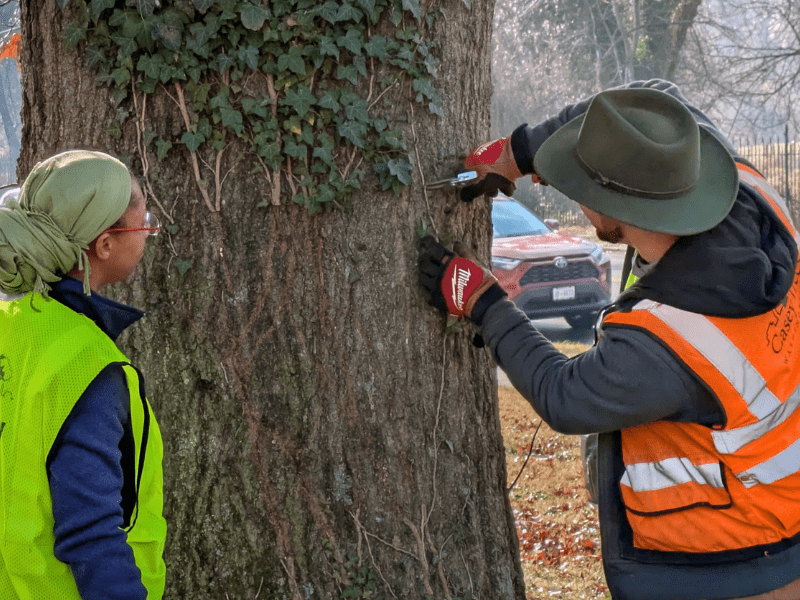
Winter is an ideal time to tackle invasive plants and vines that compete with your trees for sunlight, water, and nutrients. Because many invasives remain green while native plants go dormant, they’re easier to spot and remove now. Left unchecked, species like English ivy, wisteria, and porcelain berry can climb and smother branches, cutting off light and airflow. Over time, this weakens trees, increases disease risk, and can even cause them to topple under heavy snow or wind.
Pull invasives by hand whenever possible, making sure to remove roots and vines from the base of trees without pulling on bark. Use pruning shears to snip vines that cling too tightly, and always wear gloves and sturdy footwear for safety. Once removed, dispose of vines in the trash—not in compost—to prevent regrowth.

Need help identifying what you’re seeing? Our “Most Unwanted Invasive Species” blog series helps you to identify some of the most prolific invasive species in the DC area and includes photos for identification and removal tips for each species, including English Ivy, Porcelain Berry, Bamboo, Bush Honeysuckle, and Kudzu.
Want a hands-on way to help? Join us for our Martin Luther King Jr. Day of Service at Oxon Run Park on January 19, where we’ll train volunteers to safely remove invasive vines from trees and clean up this park and community space.
Mulch the Right Way
Mulch does more than make trees look tidy—it protects them from extreme temperatures, prevents soil compaction, adds nutrients to soil, and conserves moisture when conditions are dry. During freeze-thaw cycles, it also helps stabilize soil temperature, preventing root stress.
Apply organic mulch (such as shredded bark, wood chips, or leaf compost) in a wide circle around your tree, starting a few inches from the trunk and spreading outward to the dripline, if possible. When applying mulch, use the 3-3-3 rule: Apply 3 inches of mulch in a 3-foot ring around the tree, leaving a 3-inch space around the tree trunk. Piling mulch directly against the trunk traps moisture, leading to rot, decay, and pest problems. Think of the shape as a “mulch donut,” not a volcano.


Gently rake old mulch to break up compacted layers before adding fresh material. That way, oxygen and water can still penetrate to the roots. For more best practices, visit our young tree care page, which includes an instructional video on weeding, mulching, and other tasks related to caring for young trees.
Prune Strategically
Winter is the best time to prune because trees are dormant, meaning you can see their structure clearly and reduce the risk of disease transmission from insects or active growth wounds. Strategic pruning helps young trees develop strong branch frameworks and prevents future limb failures caused by snow, ice, or strong winds. It also channels the tree’s energy into healthy spring growth.
Start by inspecting your trees for dead, broken, or crossing branches. Use clean, sharp tools, and make cuts just outside the branch collar without leaving stubs. For mature trees or large limbs, hire a Certified Arborist to ensure the work is done safely and correctly—especially when dealing with heavy wood or high branches.
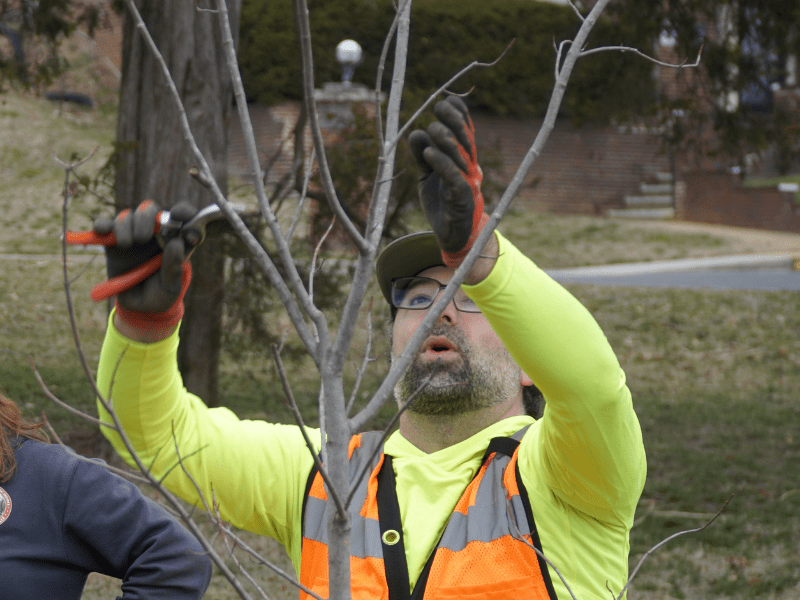
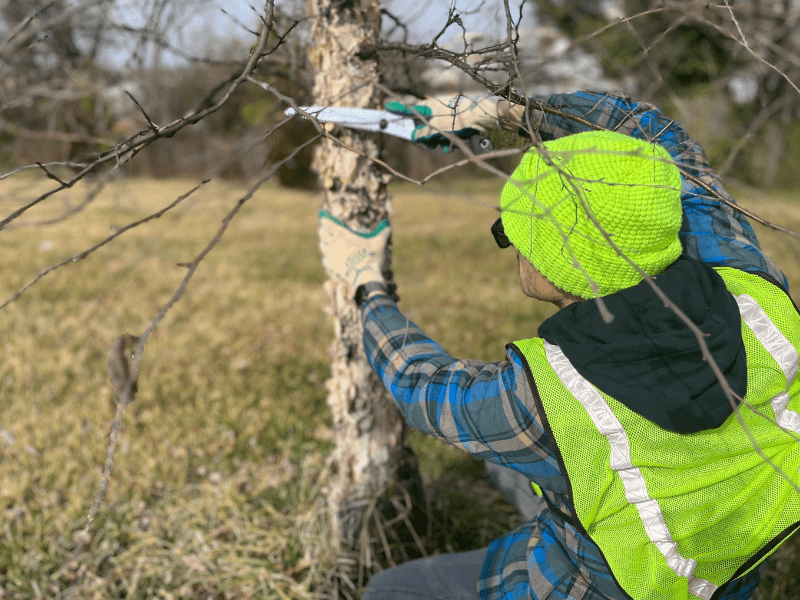
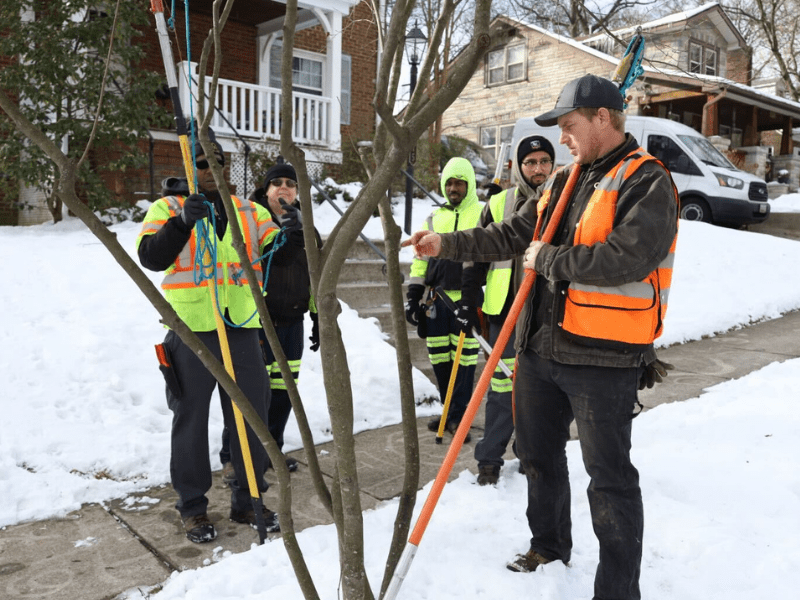
Want to learn the basics? Watch our how-to pruning videos for step-by-step demonstrations before grabbing your shears.
Water Wisely
In most cases, established trees do not need to be watered in winter. Trees that have dropped their leaves have gone dormant in anticipation of the winter months. Although evergreens keep their needles year-round, they also generally do not require regular winter watering.
However, trees planted in winter should be watered at planting to help settle the soil and establish roots. And even during dormancy, some trees—especially evergreens and newly planted trees with small root systems—can lose moisture through their branches and needles. During unusually dry periods, deep watering can help prevent winter drought stress.
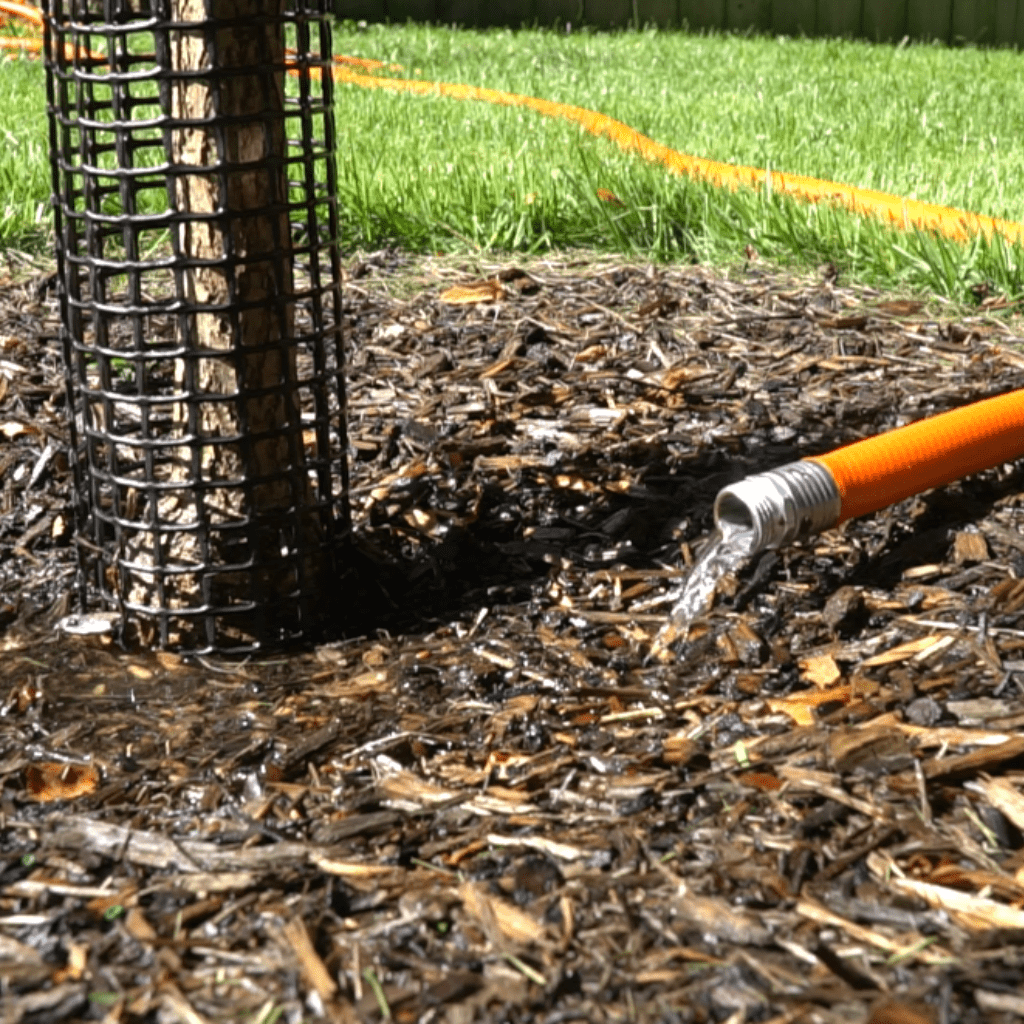

If you do water in winter, only do so when the soil is thawed and air temperatures are above 40 degrees. Water slowly and deeply, using a gentle trickle from a garden hose placed at the tree’s dripline so the moisture can soak into the root zone. Avoid overwatering or letting water pool and freeze around the trunk.
Resume your regular schedule once the ground thaws and temperatures are regularly above 50 degrees, watering at or just before new growth begins. For more information on watering, view our watering guide.
Appreciate Winter’s Beauty
Winter reveals trees in their purest form—their bark textures, branching patterns, and silhouettes against the sky. Bare limbs show the architecture of trees that often goes unnoticed in summer. Snow and frost highlight each branch’s character, turning backyards and parks into living sculptures.
As you care for your trees this season, take a moment to appreciate how they adapt and endure through the cold. By giving them some attention now, you’re setting them up for a strong, healthy, and beautiful year ahead!