Scarlet Oak
Introduction
Widely planted in Europe and North America, the scarlet oak is prized for its fall beauty and the generous amount of shade it provides. .
Common Name
Scarlet oak
Latin Name
Quercus coccinea
Leaf
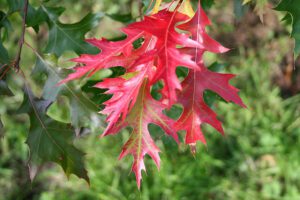
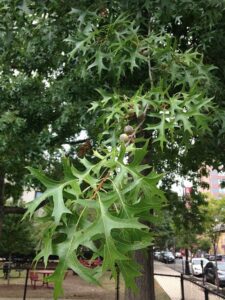
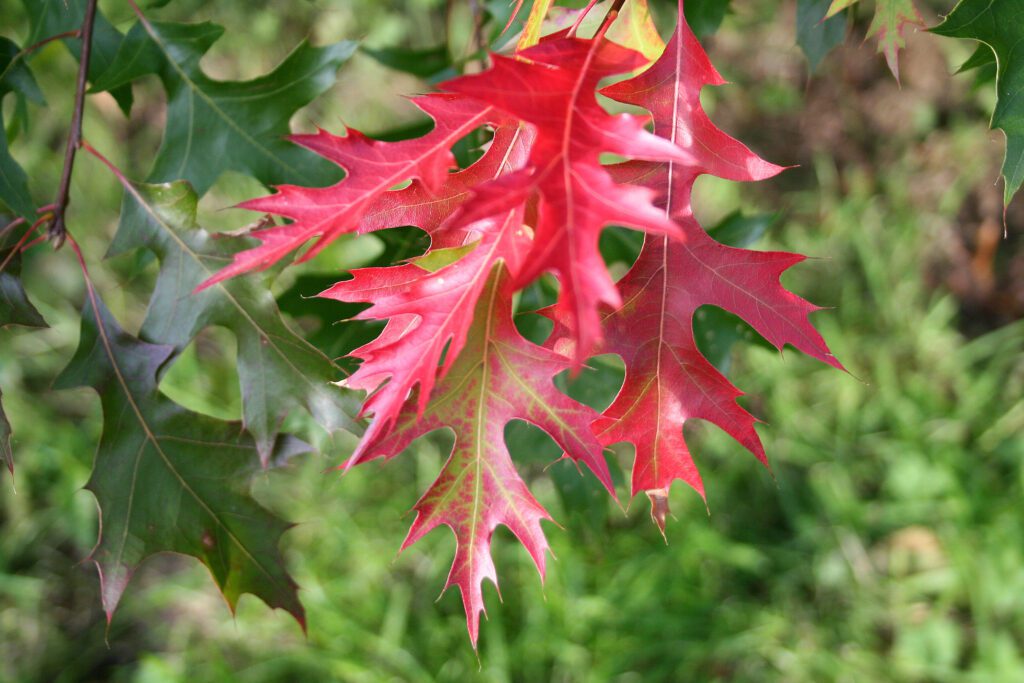
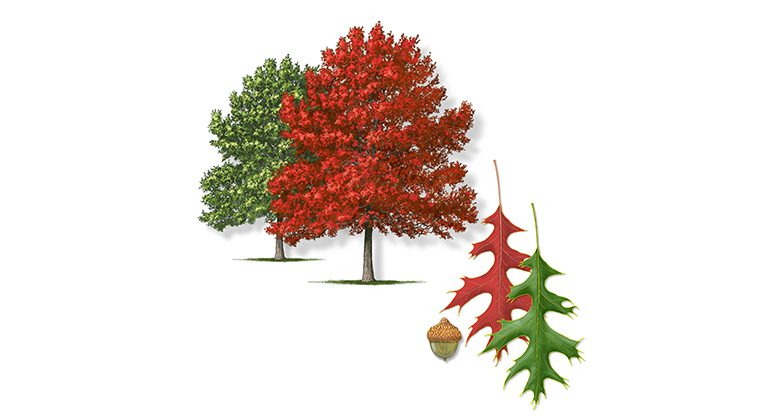
4 to 7 inches long with 7 to 9 narrow, bristle-tipped lobes separated by deep sinuses
Flower
Male flowers are borne on slender yellow-green catkins*; females are borne on very short axilliary spikes; both appear with the leaves in spring
Fruit/nut
Acorns are 1/2 to 1 inch long, with the cap covering half of the nut; cap scales are shiny; tip of acorn may have concentric rings or fine cracks
Twig/branches
Moderately stout, reddish brown with multiple terminal buds; buds reddish brown, plump, pointed, and slightly angled
Bark
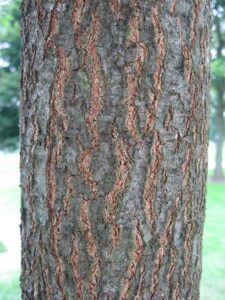
On young trees, grayish brown with smooth streaks; later, darker with irregular broad ridges and narrow furrows, especially near the base
Form
Generally poor form, irregular crown, and many dead branches. A butt-swell* is often noticeable and useful in identification.
Size
Usuallly grows 60 to 80 feet tall and 40 to 50 feet wide
Native Range
The native range for this species extends from Maine to Florida and west to Missouri
Type
Medium deciduous tree
Seasonal Colors
Green in summer with brilliant red or scarlet color in autumn
Soil
Adapted to a wide variety of soils
Light
Grows best in full sun, not very tolerant of shade
Similar Species
Pin oak, black oak, northern red oak, Shumard oak
Pests and Diseases
Scarlet oak is susceptible to oak wilt as well as heart rot, caused by Stereum gausapatum. Pests come primarily in the form of defoliators, but heavy infestations of the gouty oak gall wasp can cause the death of the tree
Rebate Eligibility
$100
Of Note
The wood is generally marketed as red oak, but is of inferior quality, being somewhat weaker and not forming as large a tree.
The acorns of this tree are a favorite food for gray squirrels, chipmunks, mice and birds, especially blue jays.
Photo Credits
Comments are closed.