Northern Red Oak
Introduction
A versatile, fast growing and long-lived tree, the northern red oak is known for its brilliant red fall colors and its acorns that feed local wildlife. .
Common Name
Northern red oak
Latin Name
Quercus rubra
Leaf
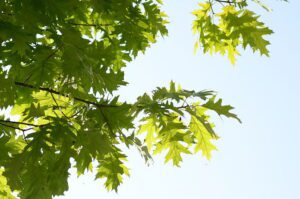
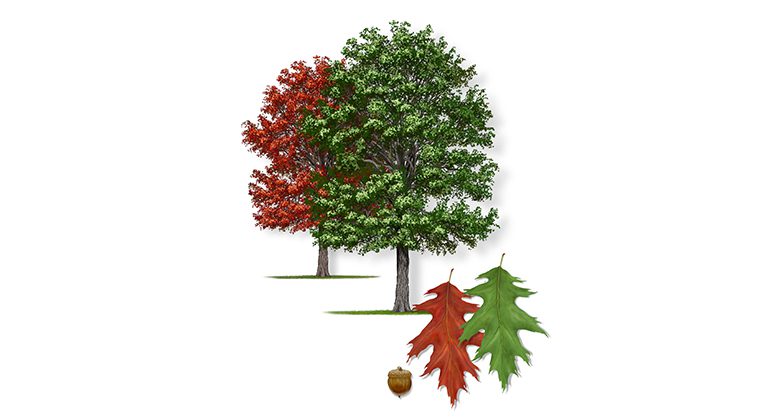
Alternate, seven to eleven lobes tapering gradually from broad bases that usually end with a pair of bristle-pointed teeth. Smooth and shiny on the upper surface; slightly hairy on the lower surface
Flower
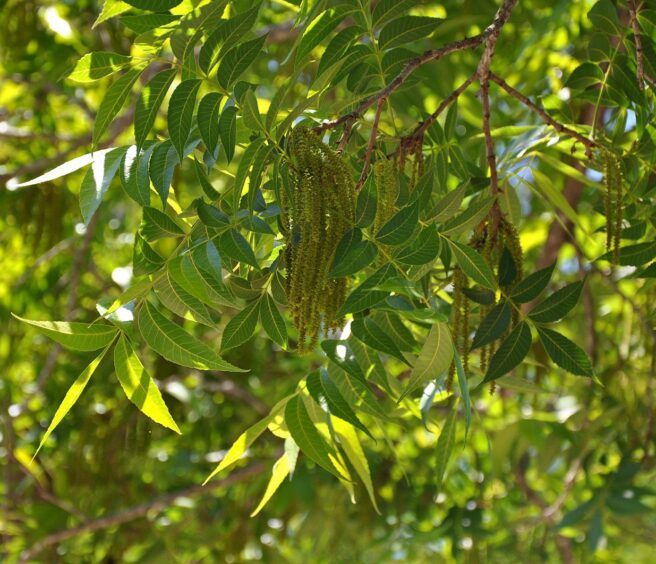
Small green-yellow globules hanging in clusters forming catkins*
Fruit/nut
Acorn: smooth ovular-shaped bottom half ending in a shallow point, upper body capped with a textured, scaly surface
Twig/branches
Quite stiff, steely gray with buds developing alternately or in clusters
Bark
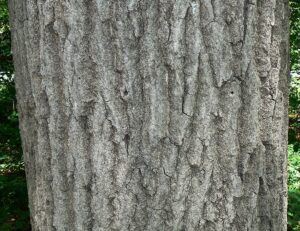
Dark reddish gray-brown, with broad, thin, rounded ridges, scaly
Form
Develops stout branches that form a narrow round-topped head
Size
Usually grows 65 to 100 feet tall, 45 feet wide, and 20 to 40 inches in trunk diameter
Native Range
Ranges from the north end of the Great Lakes, east to Nova Scotia, and south as far as Georgia
Type
Medium to large deciduous shade tree
Seasonal Colors
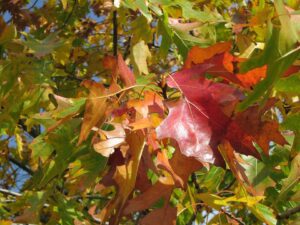
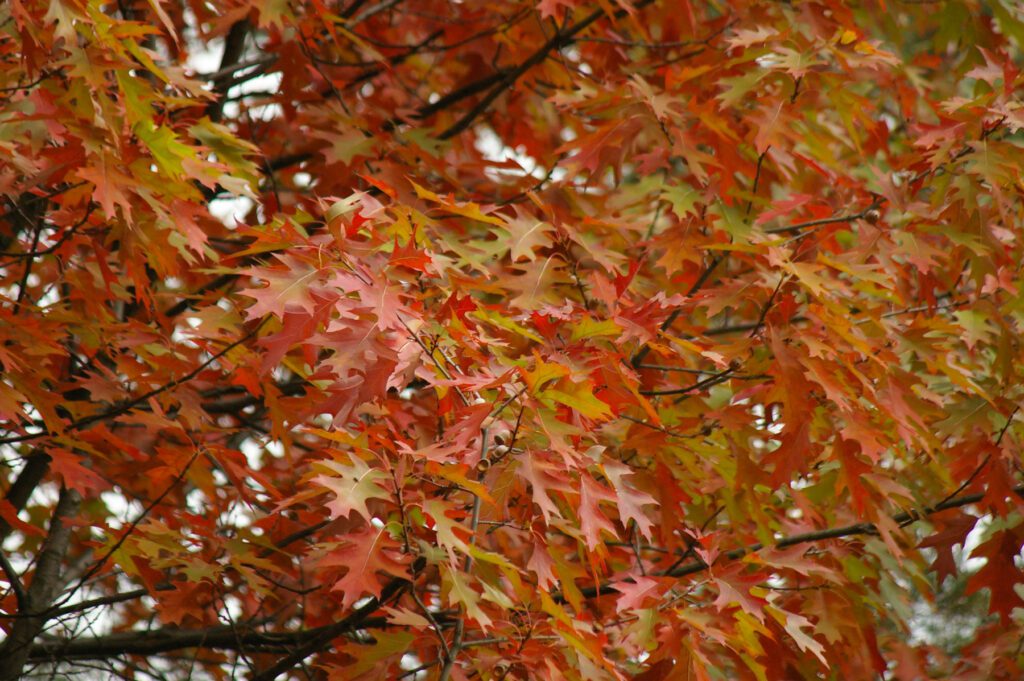
The leaves can turn a bright brick red in the fall
Soil
Prefers slightly acidic and well-drained soils
Light
Optimal growth with full sunlight; can tolerate medium levels of sunlight when mature, but it is unable to establish itself underneath a canopy
Similar Species
Red oak, pin oak, black oak, willow oak, southern red oak
Pests and Diseases
Northen red oak is vulnerable to oak wilt, a fungal disease that blocks water-carrying vessels and is spread easily by pruning or insects; most trees do not recover.
Rebate Eligibility
$100
Of Note
Under optimal conditions, northern red oak is fast growing, and a 10-year-old tree can be 15 to 20 feet tall.
The northern red oak is one of the most important oaks for timber production in North America.
The acorns of red oak (and other oak species) were an important food source for Native Americans. To remove bitter tannins, they were boiled, leeched with ashes, soaked for days in water, or buried over winter.
The northern red oak is the state tree of New Jersey.
Photo Credits
milesizz
maggie_and_her_camera
maggie_and_her_camera(2)
maggie_and_her_camera(3)
andreasbalzer
Gertrud K.
maggie_and_her_camera
maggie_and_her_camera(2)
maggie_and_her_camera(3)
andreasbalzer
Gertrud K.
Comments are closed.