Eastern Redbud
Introduction
The adaptable and sturdy redbud tree is highly prized for its vibrant and brilliant seasonal colors; from the showy pink and purple flowers in spring to the fall showcase of yellow and orange leaves, this tree is sure to impress and delight. .
Common Name
Eastern redbud
Latin Name
Cercis canadensis
Leaf
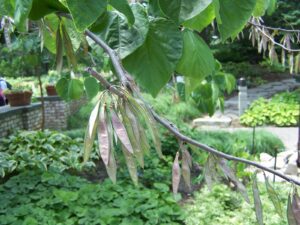
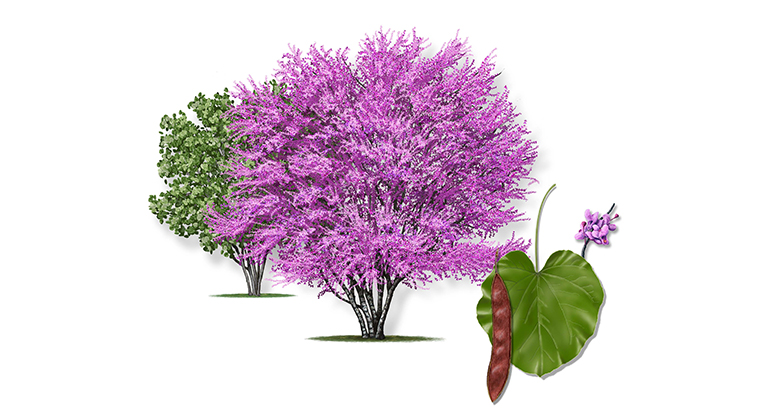
Alternate, simple, cordate, 3 to 5 inches long and wide, with an entire margin, thin and papery; green above and slightly paler below
Flower
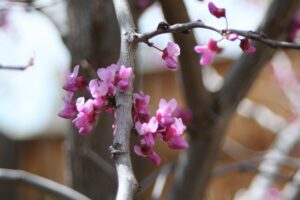
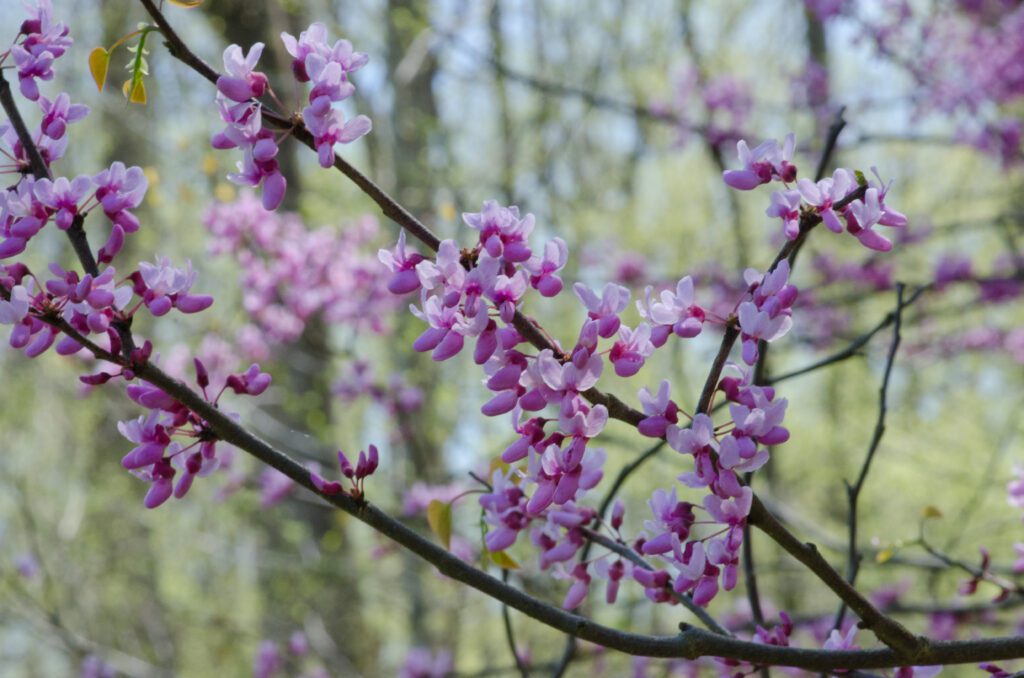
Very showy, pea-like, pink to light purple in color, 1/2 inch long, appearing in clusters all along even older stems in early spring before the leaves
Fruit/nut
Flattened, dry legumes, brown, 2 to 4 inches long that contain flat, elliptical, brown seeds 1/4 inch long, maturing in late summer
Twig/branches
Slender and zigzag, nearly black in color, spotted with lighter lenticels, leaf buds are tiny and dark red to chestnut in color; flowers buds are round and often numerous in large clusters on older woody stems
Bark
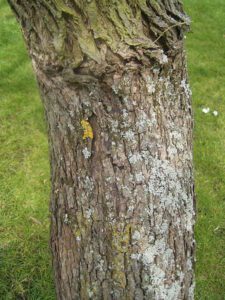
Initially smooth and brown; later ridged and furrowed to scaly and dark gray; may have some maroon patches evident and orange in the cracks
Form
Typically open and vaguely rounded, often with a twisted trunk and spreading branches
Size
Typically grows 20 to 30 feet high with a 25 to 35 foot spread
Native Range
Native to eastern North America from southern Ontario, south to northern Florida
Type
Small deciduous
Seasonal Colors
Bright pink or light purple flowers cover the tree in spring; teaves can turn a yellow to orange color in the fall
Soil
Grows better in moist soil and is adaptable to many types
Light
Prefers full sun and is tolerant of shade
Similar Species
Western redbud, Chinese redbud
Pests and Diseases
Canker is the most destructive disease that attacks redbud trees, and it is first seen as a tree’s leaves wilt and turn brown. Verticillium wilt is a very common disease that attacks a large number of trees as well. Spider mites and scale insects attack the tree but cause little more than leaf discoloration.
Rebate Eligibility
$50
Of Note
George Washington reported in his diary on many occasions about the beauty of the tree and spent many hours in his garden transplanting seedlings obtained from the nearby forest.
Native Americans consumed redbud flowers raw or boiled, and ate roasted seeds.
In some parts of southern Appalachia, green twigs from the eastern redbud are used as seasoning for wild game such as venison and opossum.
Comments are closed.