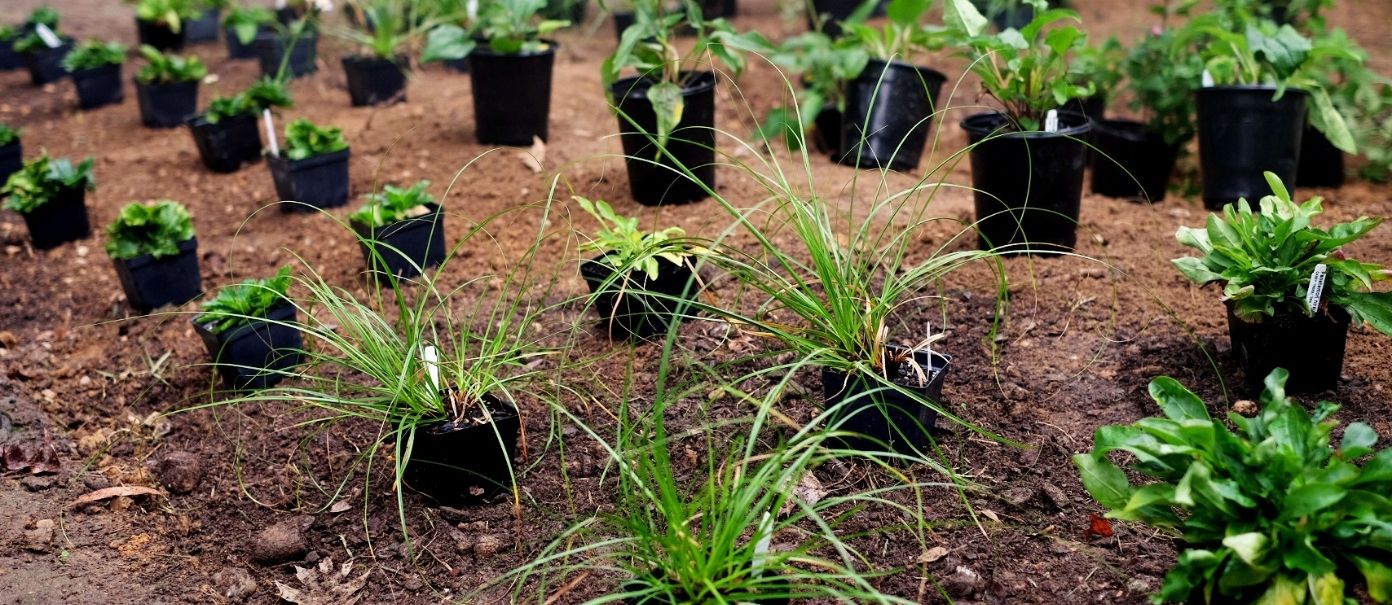
Spring is just around the corner! Pre-order your native garden kits by March 20, 2026, or while supplies last.
Kits will be ready for pick up on Saturday, April 18, at Casey Trees HQ!
Our native garden kits include everything you need to plant a roughly 35-square-foot area in your back, front, or side yard. Each kit has been curated by our horticulturist to feature a mix of plants that will thrive together under the conditions described.
As a nonprofit, these kits are our way of making native plants accessible and easy to plant for the benefit of our ecosystem. All proceeds support our mission to re-tree DC.
Plus, get a 10% discount on your order if you’ve had a Casey Trees tree planted on your property within the last three years! Email friends@caseytrees.org for the discount code.
Each $135 starter kit contains:
- 15 quart-sized container plants ($9/plant)
- A how-to guide for your new garden’s layout, planting, and maintenance tips (written by our horticulturist)
- Surprise Casey Trees sticker packs
How It Works
- Pre-order your kit! Orders will close on March 20, or when we’re sold out.
- Prepare your planting space. Clear any debris from the area, or remove other plants and grass. For tips on removing sod, check out this YouTube video.
- Pick up your kits! On Saturday, April 18, 2026, kits will be ready for pick up at Casey Trees headquarters (3015 12th Street NE, Washington, DC 20017). We’ll send an email with more details closer to the date!
- Plant! Use our horticulturist’s guide to lay out, plant, and care for your new native garden! With proper care and watering, plants will establish over 1-2 growing seasons.
- Then, watch your garden grow and enjoy its natural beauty throughout the seasons, while it contributes to our local ecosystem by supporting pollinators, feeding birds and other wildlife, and capturing stormwater.
Click the Latin names below to learn more about each plant species.
FULL SUN + DRY SOIL
6+ hours of sun per day, soil dry most of the year, including winter
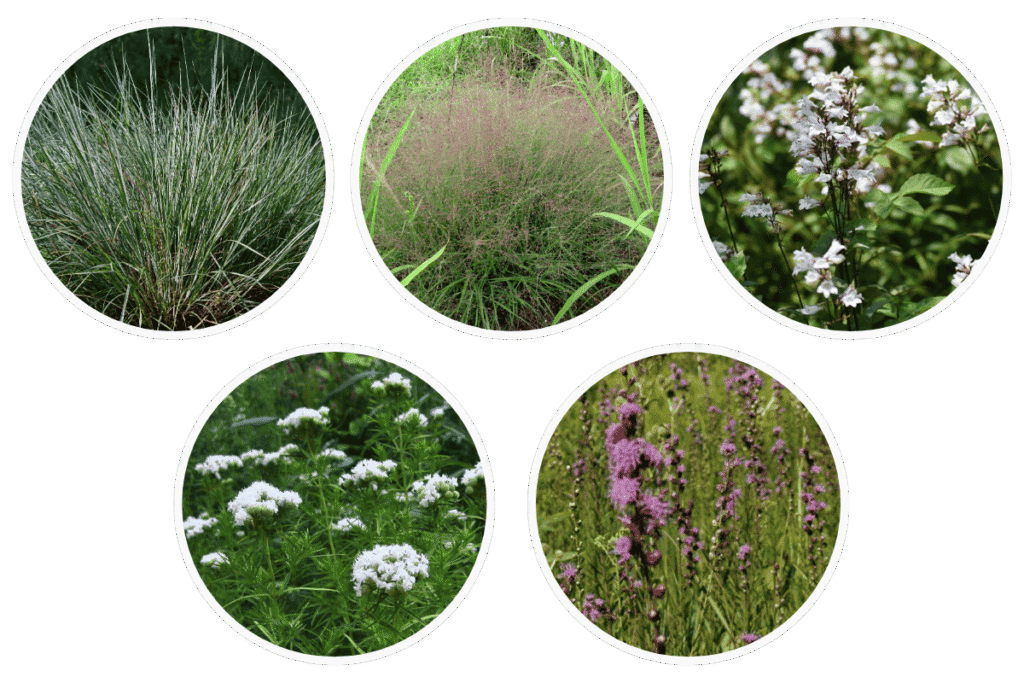
Little bluestem – Schizachyrium scoparium (5)
Purple lovegrass – Eragrostis spectabilis (3)
Pale beardtongue – Penstemon pallidus (3)
Slender mountain mint – Pycnanthemum tenuifolium (2)
Tall blazingstar – Liatris aspera (2)
FULL SUN + WET SOIL
6+ hours of sun per day, soil wet most of the year (ex. a low area)
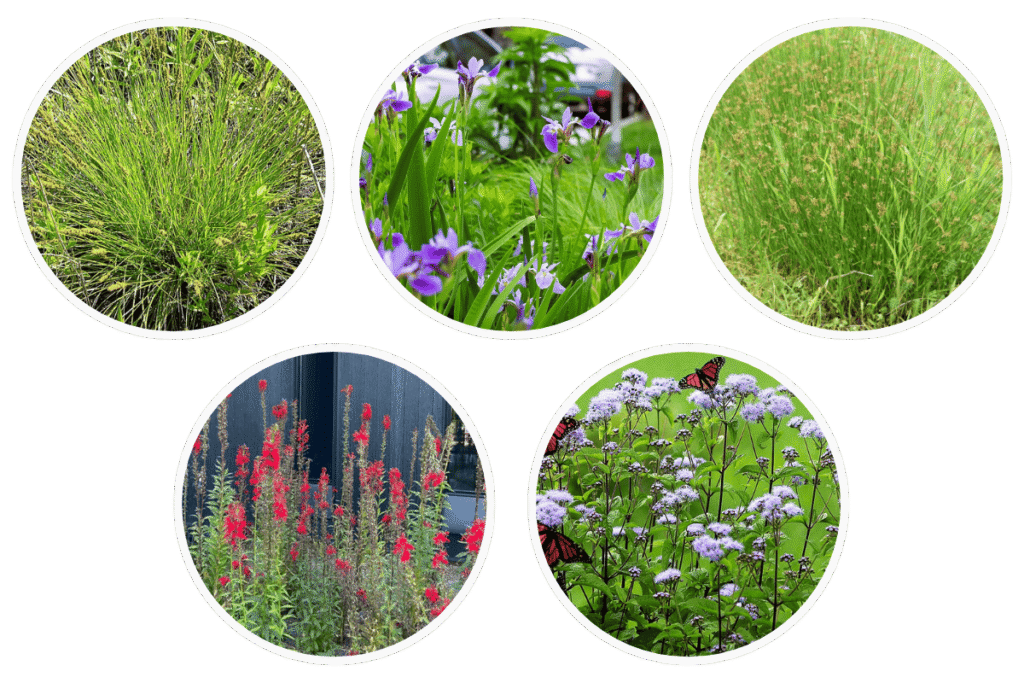
Fox sedge – Carex vulpinoidea (4)
Blue flag iris – Iris virginica (3)
Soft rush – Juncus effusus (2)
Cardinal flower – Lobelia cardinalis (3)
Blue mistflower – Conoclinium coelestinum (3)
PART SUN + MESIC SOIL
4-6 hours of sun per day, soil slightly moist most of the year
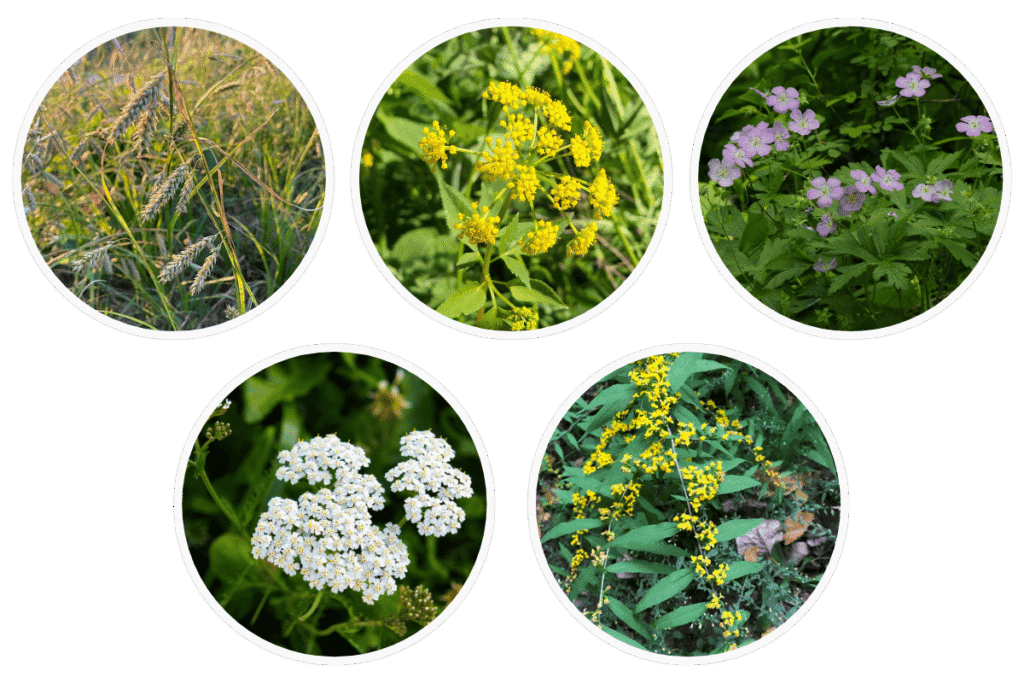
Cherokee sedge – Carex cherokeensis (7)
Golden alexander – Zizia aurea (2)
Wild geranium – Geranium maculatum (2)
Common yarrow – Achillea millefolium (2)
Wreath goldenrod – Solidago caesia (2)
RAIN GARDEN
4-6 hours of sun per day, soil sometimes flooded but often dry
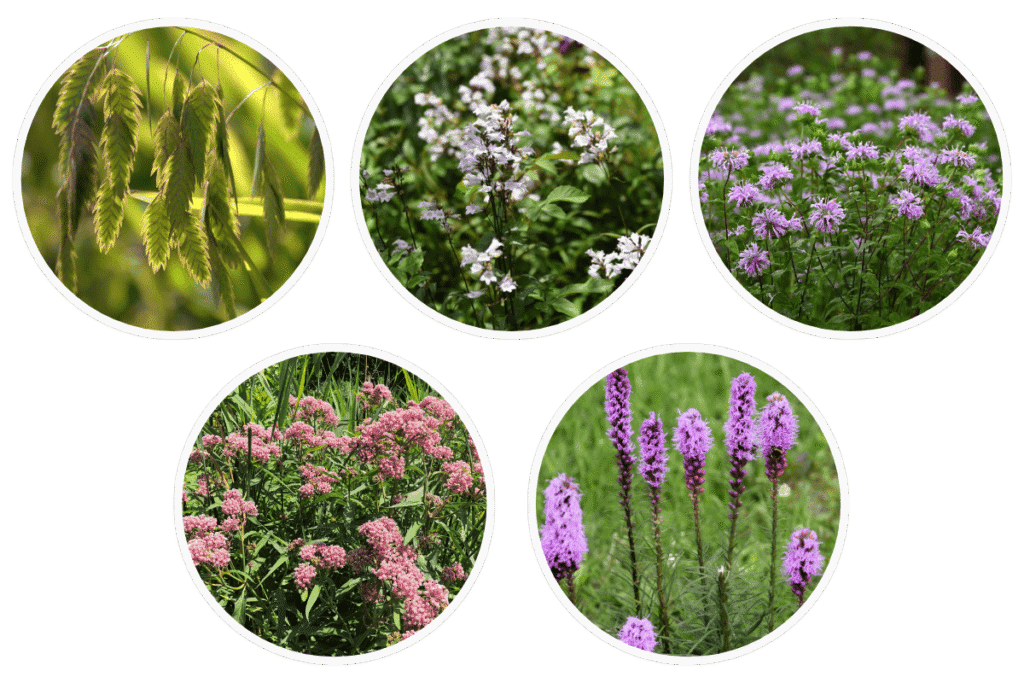
Northern sea oats – Chasmanthium latifolium (6)
Foxglove beardtongue – Penstemon digitalis (3)
Wild bergamot – Monarda fistulosa (2)
Swamp milkweed – Asclepias incarnata (2)
Dense blazingstar – Liatris spicata (2)
FULL SHADE + DRY SOIL
Less than 4 hours of sun per day, soil dry most of the year, including winter. (This is often the case under large, mature trees.)
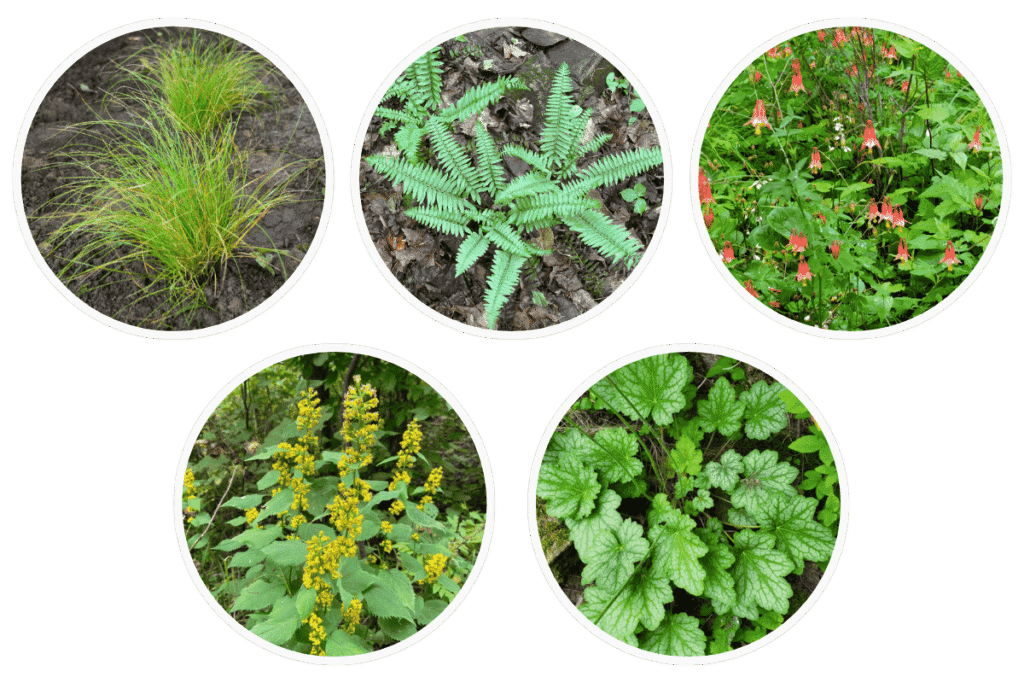
Appalachian sedge – Carex appalachica (6)
Christmas fern – Polystichum acrostichoides (3)
Red columbine – Aquilegia canadensis (2)
Zigzag goldenrod – Solidago flexicaulis (2)
American alumroot – Heuchera americana (2)
PART SHADE + WET SOIL
At least four hours of sun per day, soil wet most of the year (ex. a low area)
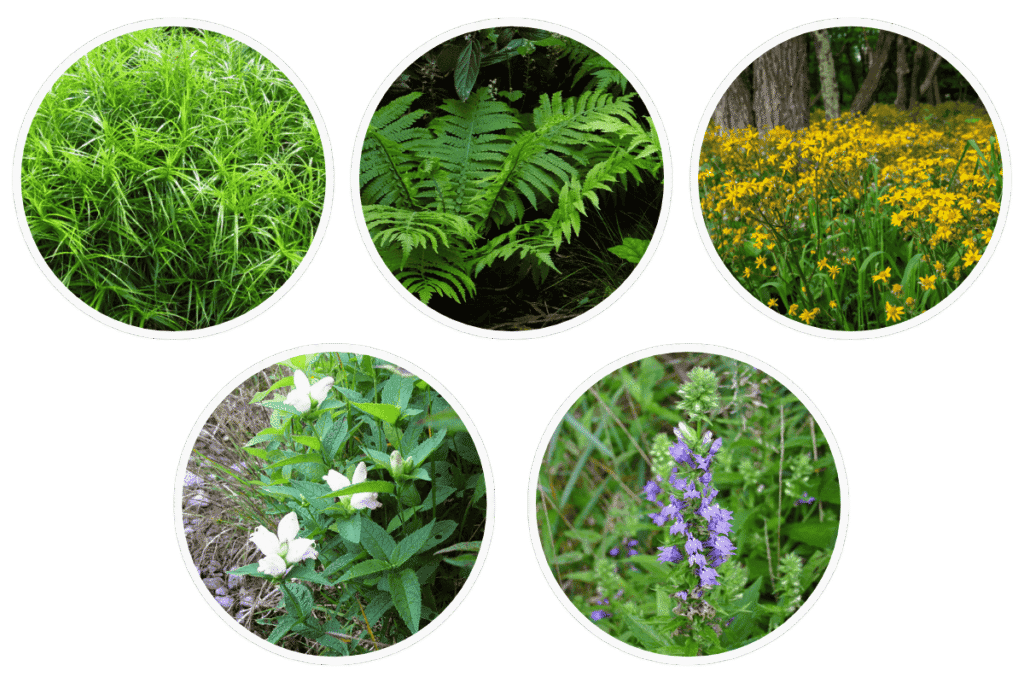
Palm sedge – Carex muskingumensis (5)
Ostrich fern – Matteuccia struthiopteris (3)
Golden ragwort – Packera aurea (3)
White turtlehead – Chelone glabra (2)
Great blue lobelia – Lobelia siphilitica (2)
POLLINATOR PLUS
Taller natives to add to existing plantings for more flower power
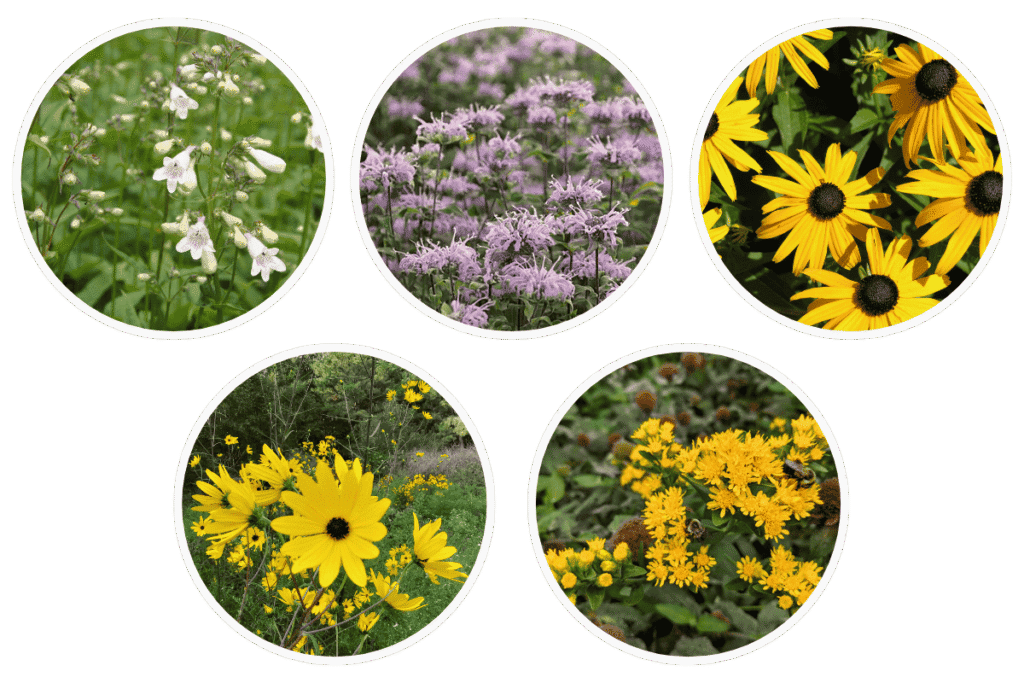
Foxglove beardtongue – Penstemon digitalis (3)
Wild bergamot – Monarda fistulosa (3)
Black eyed susan – Rudbeckia fulgida (3)
Swamp sunflower – Helianthus angustifolius (3)
Showy goldenrod – Solidago speciosa (3)
CONTAINER FRIENDLY
No garden? No problem. These drought-tolerant natives thrive in pots
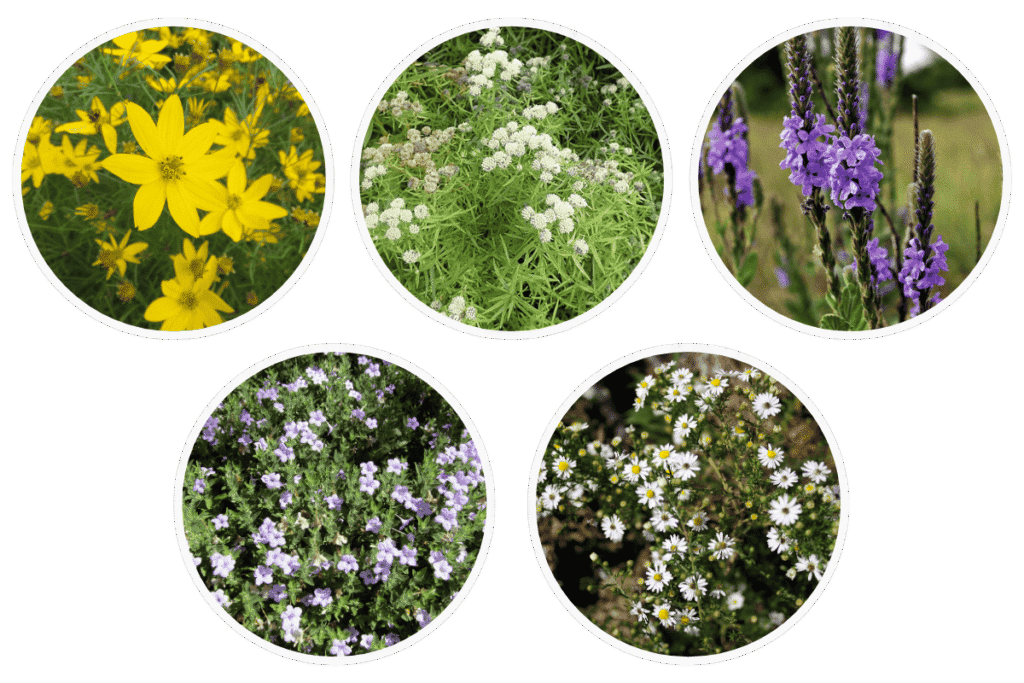
Threadleaf tickseed – Coreopsis verticillata (3)
Slender mountain mint – Pycnanthemum tenuifolium (3)
Hoary vervain – Verbena stricta (3)
Wild petunia – Ruellia humilis (3)
Heath aster – Aster ericoides ‘Snow Flurry’ (3)
*Please limit your order to three kits.
**Each species is subject to nursery availability and may be swapped with a similar species if needed.
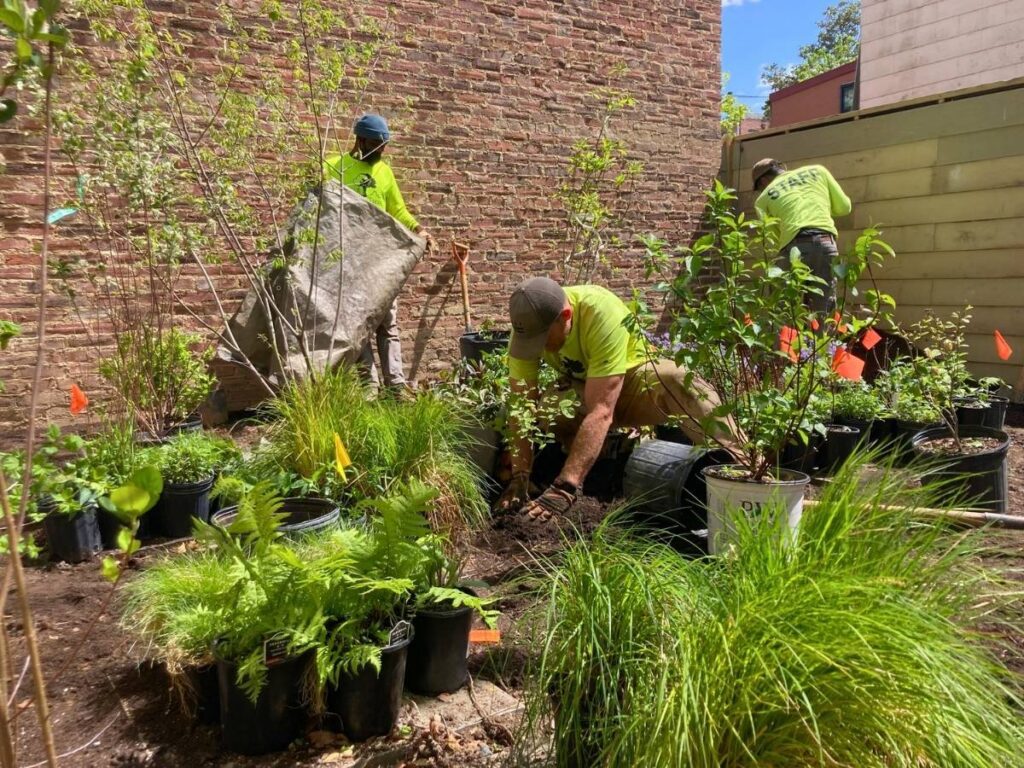
Want us to plant a garden for you?
Through our ecological garden program, Casey Trees designs and installs beautiful, functional gardens for homeowners that support pollinators and capture stormwater, while requiring less maintenance, less water, and less pruning than conventional landscaping and turf.
Contact us to schedule a free consultation.
Photo Credits
(Full Sun + Dry Soil): Little bluestem by McKinneMike via Canva; Pale beardtongue by Aflo Images via Canva; Purple lovegrass by Katja Schulz via Flickr; Slender mountain mint by Erutuon via Flickr; Tall blazingstar by Frank Mayfield via Flickr
(Full Sun + Wet Soil): Fox sedge by Jay Sturner via Wikimedia; Blue mistleflower by Dennis Taft via Wikimedia
(Part Sun + Mesic Soil): Cherokee sedge by hillcraddock via iNaturalist; Golden alexander by Aaron Volkening via Flickr; Wild geranium by Under the same moon via Flickr; Common yarrow by skymoon13 via Canva; Wreath goldenrod by Y. Liu via iNaturalist
(Rain Garden): Northern sea oats by NateAbbott via Canva; Wild bergamot by Aflo Images via Canva; Swamp milkweed by Aaron Volkening via Flickr; Dense blazingstar by kazakovmaksim via Canva
(Full Shade + Dry Soil): Appalachian sedge by The Plantography Project via Flickr; Christmas fern by Gilles Ayotte via Wikimedia
(Part Shade + Wet Soil): Palm sedge by Leonora Enking via Flickr; Golden ragwort by KellyvanDellen via Canva; White turtlehead by Gilles Ayotte via Wikimedia; Great blue lobelia by SB Johnny via Wikimedia
(Pollinator Plus): Foxglove beardtongue by Michael Wolf via Wikimedia; Wild bergamot by Eric Hunt via Wikimedia; Black eyed susan by Lukas Riebling via Wikimedia; Swamp sunflower by DoristheExplorist via Wikimedia; Showy goldenrod by Leonardo Dasilva via Flickr
(Container Friendly): Threadleaf tickseed by Syrio via Wikimedia; Slender mountain mint by Kenraiz Krzysztof Ziarnek via Wikimedia; Hoary vervain by Aaron Carlson via Flickr; Wild petunia by Leonora (Ellie) Enking via Wikimedia; Heath aster by Cody Hough via Wikimedia