The 2025 Tree Report Card
The State of DC's Trees
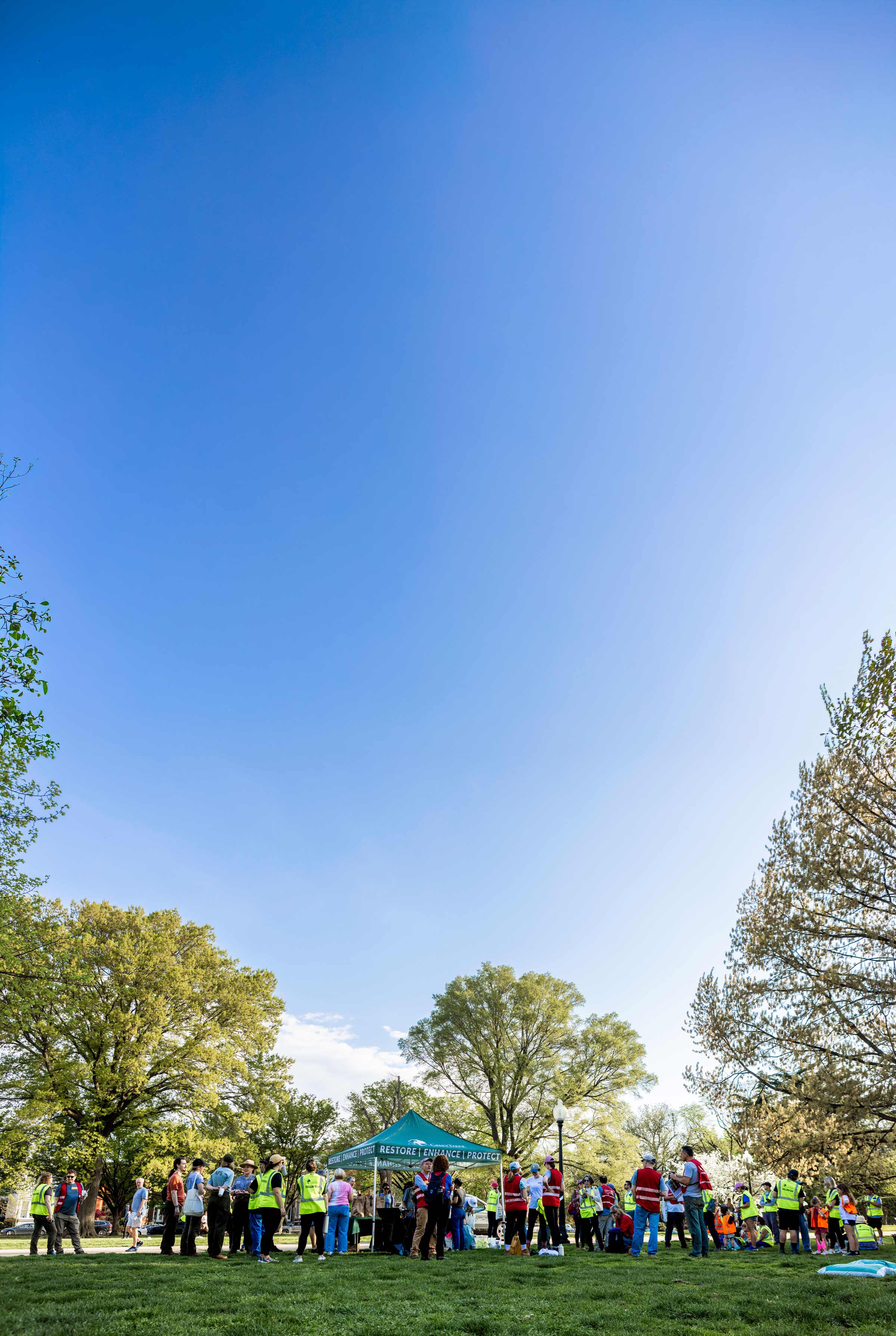
Casey Trees’ mission is to restore, enhance, and protect the tree canopy of our nation’s capital. We pursue that mission through tree planting, education, community action, and land conservation. To guide our work, each year we publish a Tree Report Card that measures progress toward achieving the District’s 40% tree canopy goal, and the extent and condition of the region’s trees.
Executive Statement
This year marks important anniversaries and milestones. As a nation we are celebrating our 250th anniversary and Casey Trees is celebrating our 25th anniversary since our founding. As we collectively hit these milestones one can’t help but reflect on the progress we’ve made, the challenges we’ve overcome, and the legacy we continue to build together.
In the last 25 years, the state of our city’s trees has been transformed. Washington, DC has exceeded its tree plantings targets for 12 consecutive years, strengthened protection measures for Special and Heritage Trees, and seen numerous partners invest in communities where trees and green space are needed most. Yet despite these accomplishments, we are ceding ground to achieving our 40% canopy goal. Due to the continued rapid development of our city, we are losing trees faster than we are planting them. This loss is felt most acutely in historically underserved communities in the east, deepening an already uneven distribution of tree access across the city. At Casey Trees, we have hope for the future but only if we work to seize the moment.
DC is a city built for and around trees. Our founders centered trees and an urban forest as main elements in our city’s planning — a vision that we still recognize and aspire to uphold today. As we honor the progress of the past, it’s more important than ever that we carry on with our work to build and sustain our urban trees and green spaces for future generations.
Every action, no matter how small, makes a difference. Water the trees near your home or coordinate with neighbors to care for street trees in your community. If you own property, consider planting a tree to help grow the city’s canopy. Advocate for policies that protect our shared investments in green infrastructure, and support efforts like Casey Trees — whether through volunteering or giving — to ensure every DC resident has access to the benefits of trees and green space.
As I complete my first year leading this organization, I’m grateful for the firm footing and trajectory that previous leaders have established for Casey Trees from a dedicated staff and Board of Directors, city leadership and dedicated public servants, tree champions and volunteers in communities, and each and every engaged citizen that wants to see a greener future.
For the city to be successful and to meet our 40% tree canopy goal it’s going to take each and every one of us — challenging assumptions, holding each other accountable, and working together — to be successful in the next 25 years. The data and stories in this Tree Report Card reflect our collective effort. When one metric advances, we all move forward. When one falls behind, it’s our shared responsibility to course-correct.
While the challenges ahead are real, so are the possibilities. There is no better time than now to plant and care for a tree. Choose the tree — and together we can ensure that the city’s canopy, and our collective commitment to it, are stronger than ever.

Andrew Schichtel
A City of Trees
When Pierre Charles L’Enfant first mapped out the capital in 1791, he made space for nature from the start, designing sweeping avenues, broad public squares, and green corridors that stitched greenery into every neighborhood.
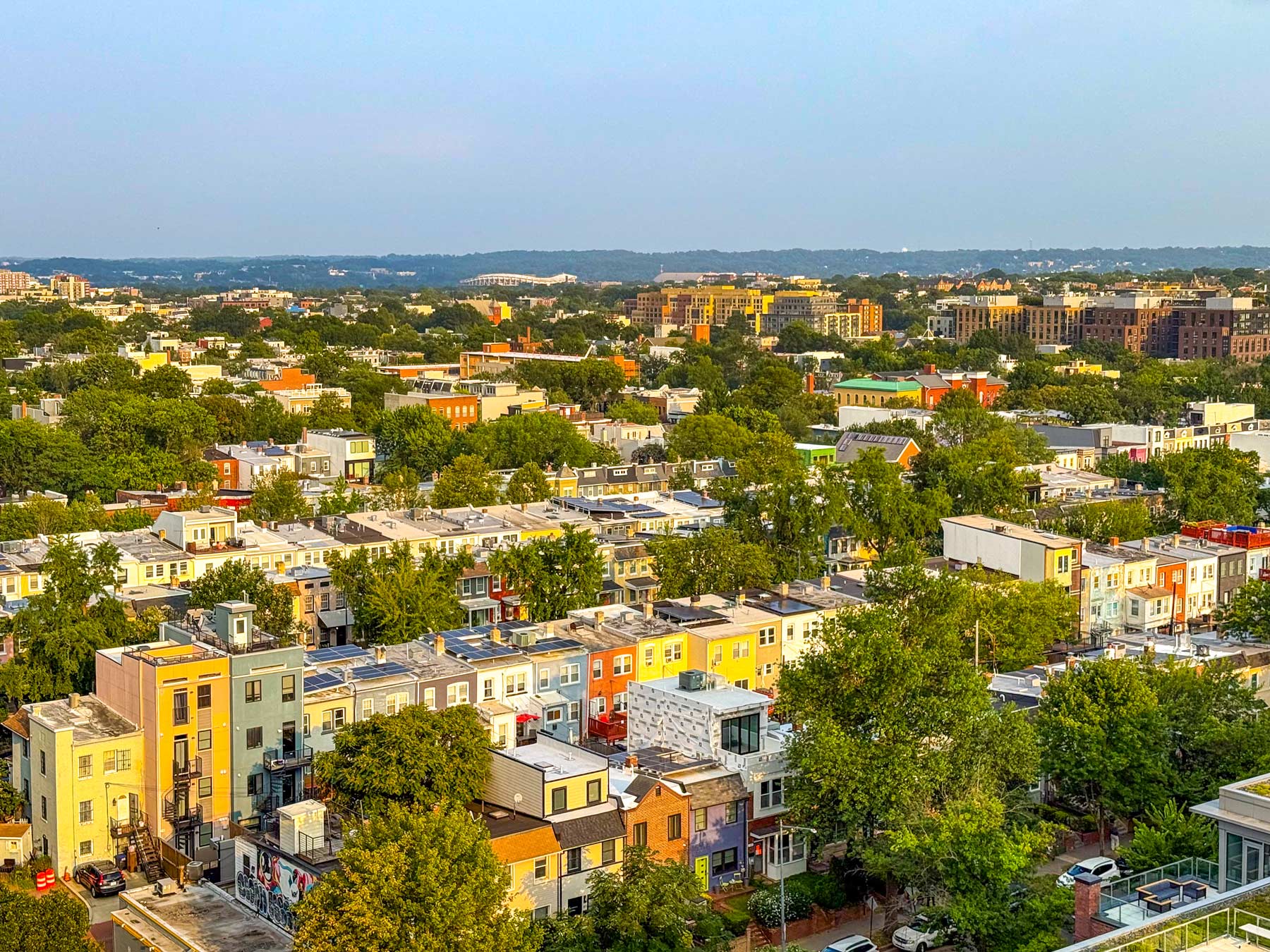
Congress reinforced that vision in 1870 with the Parking Act, reserving the land between streets and private property as public green space. Those “parkings” gave rise to the leafy streets and shaded blocks so familiar today. But DC’s trees don’t stop curbside — they extend through Rock Creek Park (America’s oldest urban park), across Fort Dupont and Kenilworth Aquatic Gardens, along the Anacostia River, over the National Mall, and into hundreds of local parks, community gardens, and resident backyards. Together, they form a continuous urban forest spread across the city, visible from above and felt wherever you walk.
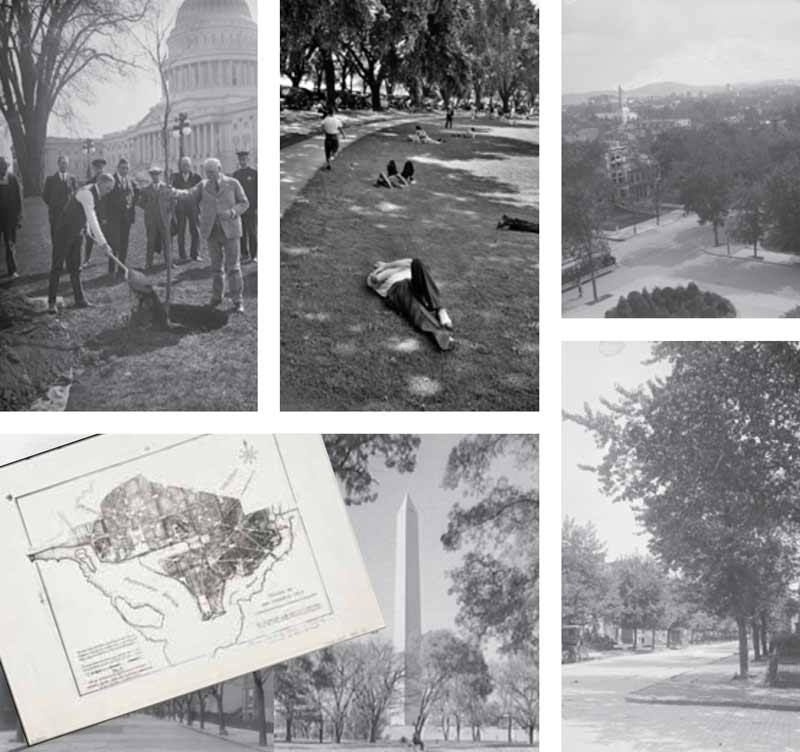
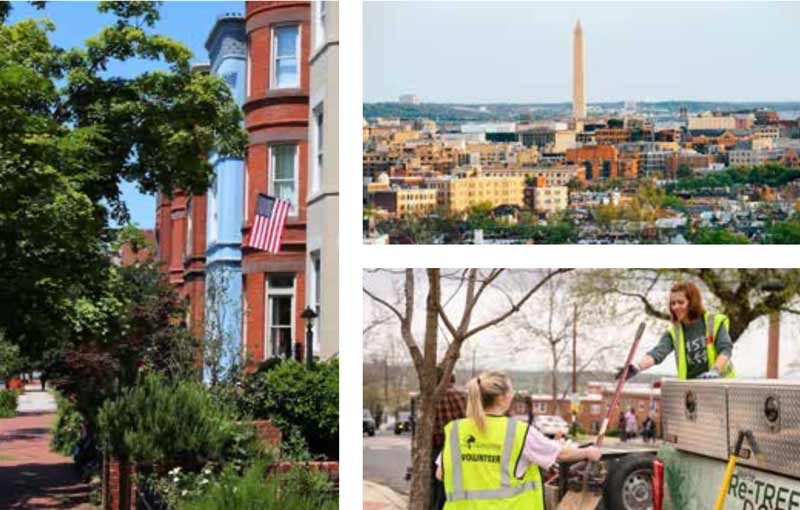
Today, Washington, DC remains one of the greenest cities in the nation. Its canopy — now covering more than a third of the District — cools neighborhoods, cleans the air, and strengthens residents’ bond with the natural world. Decades of care and collaboration have grown this inheritance, and communities citywide continue to nurture it: planting new trees, protecting mature ones, and restoring canopy where it’s been lost.
The city’s goal is bold but achievable: reaching 40% tree canopy by 2032. Each tree planted, protected, and cared for brings DC closer to a cooler, healthier, and more connected future.
A Look Back at the Last 25 Years
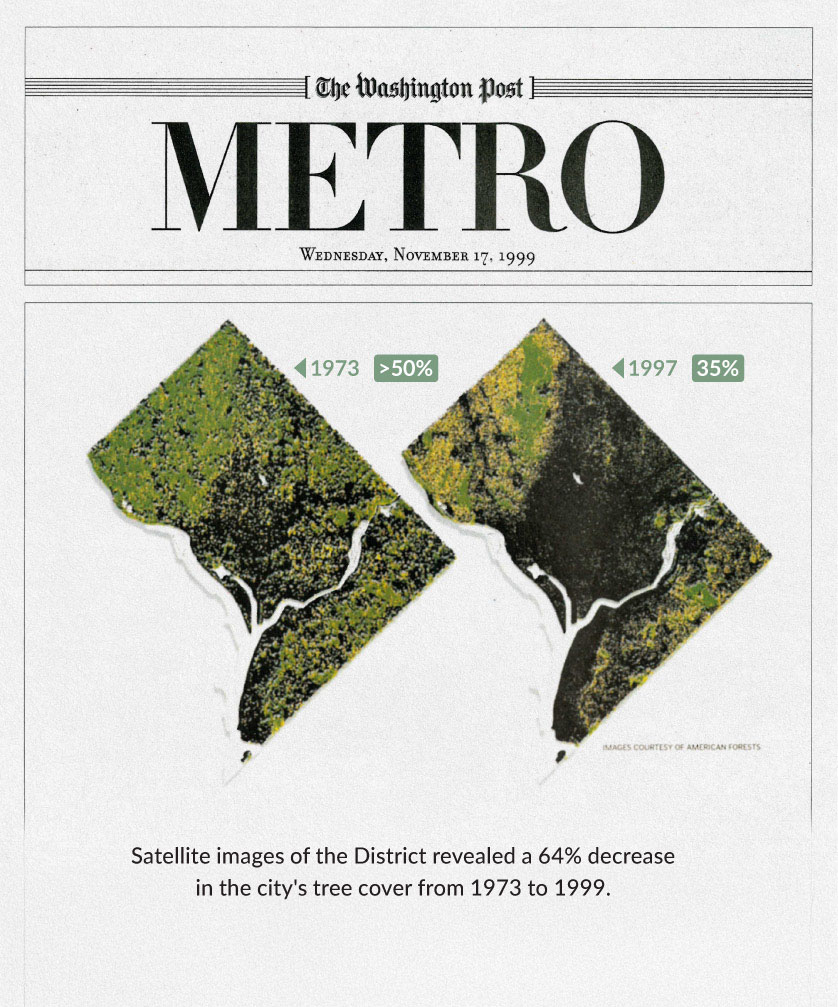
Casey Trees was founded in 2001, inspired by Betty Brown Casey’s response to a 1999 Washington Post article revealing that DC’s tree canopy had declined to 35%—down from more than 50% in the early 1970s.
City of Trees
Upon its founding, Casey Trees mobilized immediately to address a critical need: DC’s street trees were suffering from years of underinvestment, with thousands dead or dying and little data to guide decisions. Casey Trees partnered with 500 trained volunteers, DC Urban Forestry Administration staff, and professional arborists to conduct a comprehensive street tree inventory of 130,000 trees. The survey provided essential data on tree health, maintenance, and planting needs, informing city leaders and securing full funding for urban forest care. It also sparked the Citizen Forester program and laid the foundation for broader efforts in advocacy, environmental education, tree planting, and stewardship.
Over the past 25 years, these initiatives have delivered lasting impact: a District-wide goal of 40% tree canopy by 2032, landmark legislation protecting trees on public and private property, school planting and education programs, the establishment of the DC State Tree Nursery, and the city’s first Accredited Land Trust. To date, Casey Trees has planted over 65,000 trees throughout the national capital area. Today, with dedicated volunteers and District partners, DC plants more trees per capita annually than any comparable U.S. city.
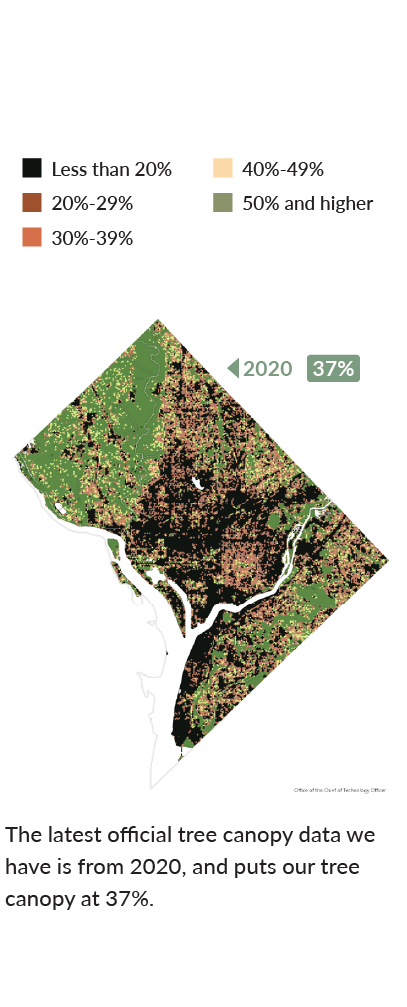
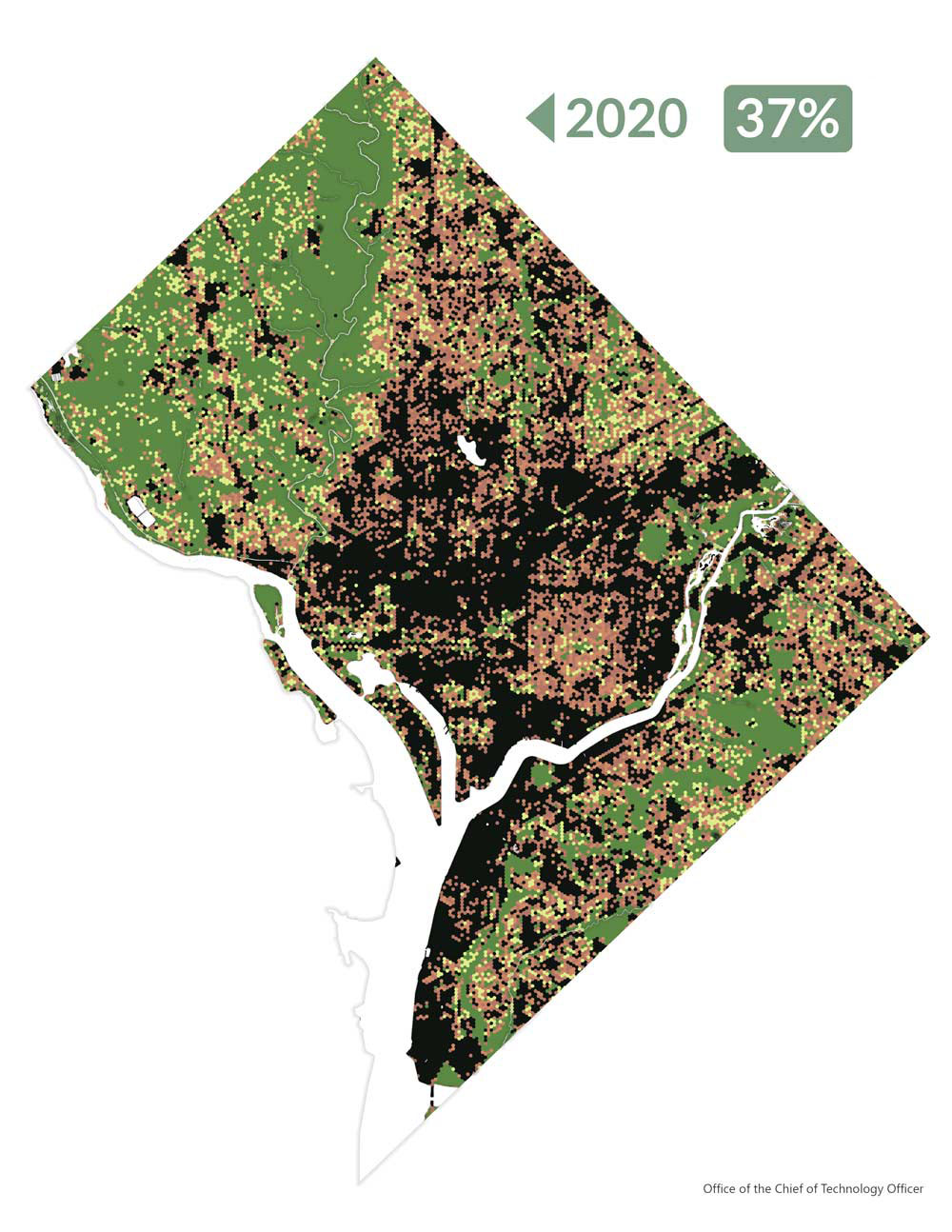
But planting is not enough. Currently, our tree canopy stands at 37%, marking a two percent rise in tree canopy over the past 25 years. That may not seem like a lot, but that is over 750 acres of trees, roughly twice the size of the entire National Mall. It’s taken a lot to raise the canopy this far, and it will take a lot more to meet DC’s 40% canopy goal in 2032 – just 6 years from now. To reach this goal will take enormous resolve in planting, caring for, and protecting the tree canopy we have, with an emphasis on protecting our most mature trees and saving our green spaces from further development.
Protecting Trees & Land
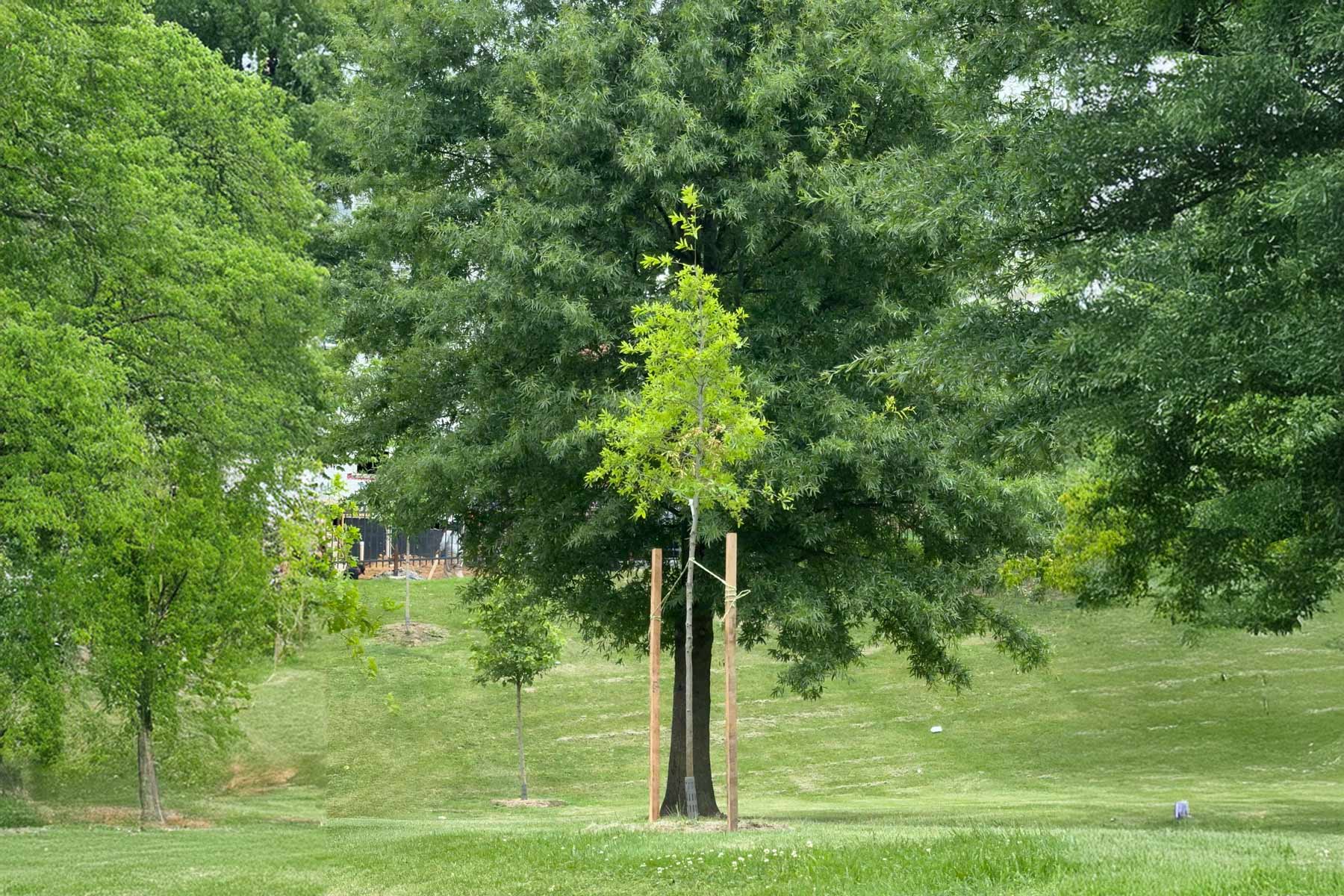
About a decade ago, Casey Trees recognized there was an opportunity to combat canopy loss beyond planting trees – to directly protect our existing mature tree canopy as a Land Trust. Our Land Conservation programs aim to restore fragmented patches of urban forest, enhance urban ecosystems and public health, and protect green space for trees to grow and neighbors to connect with nature.
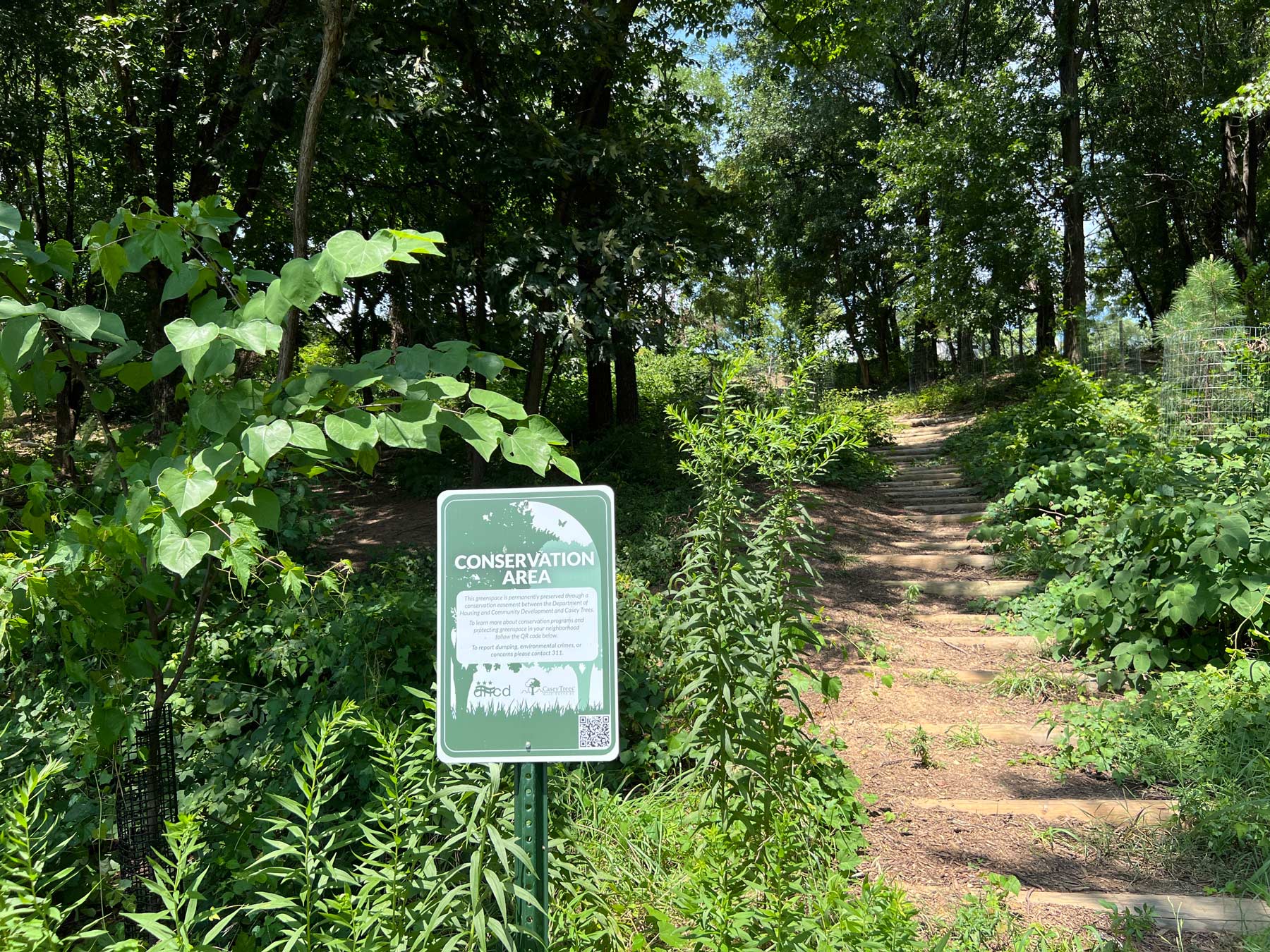
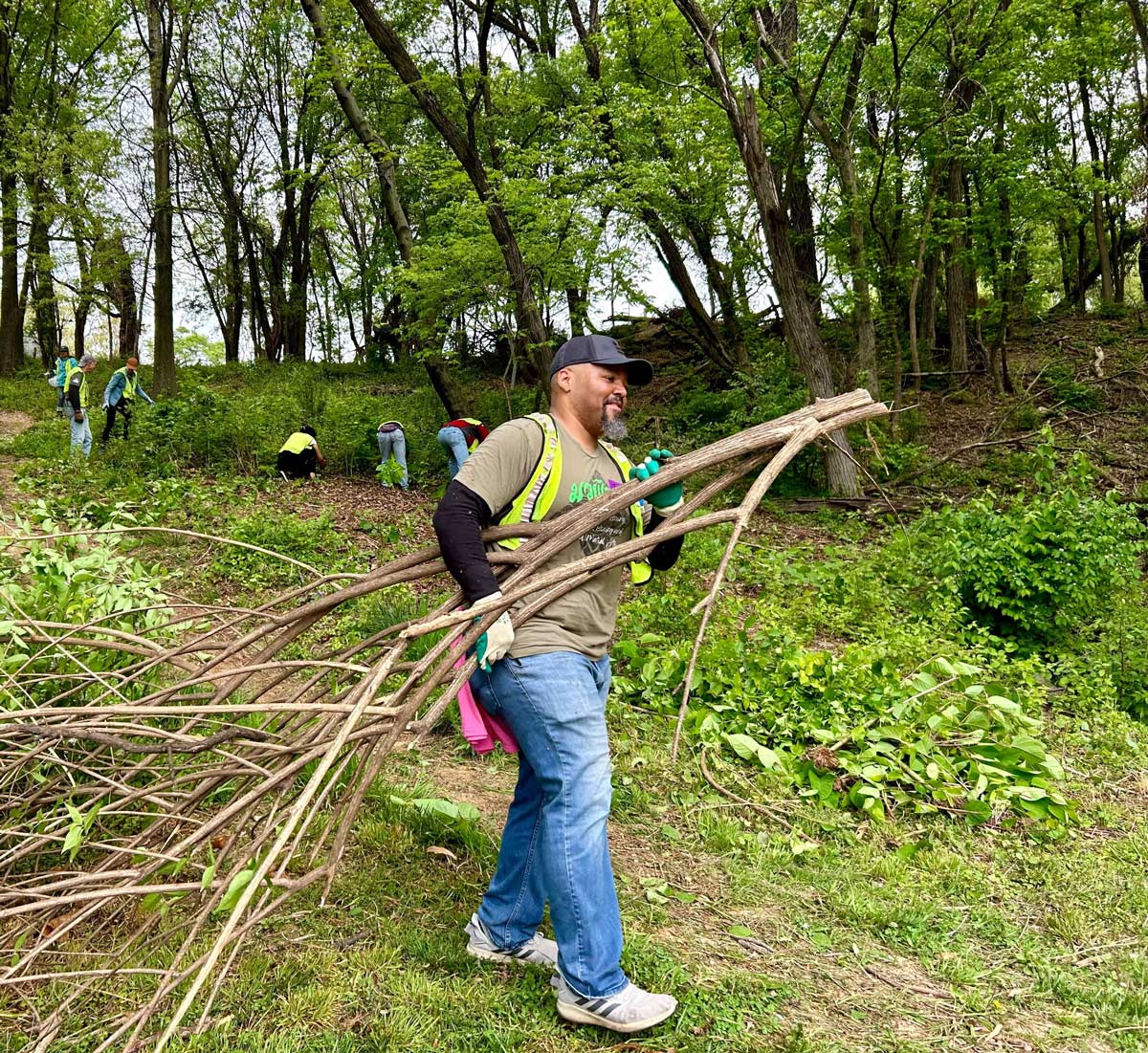
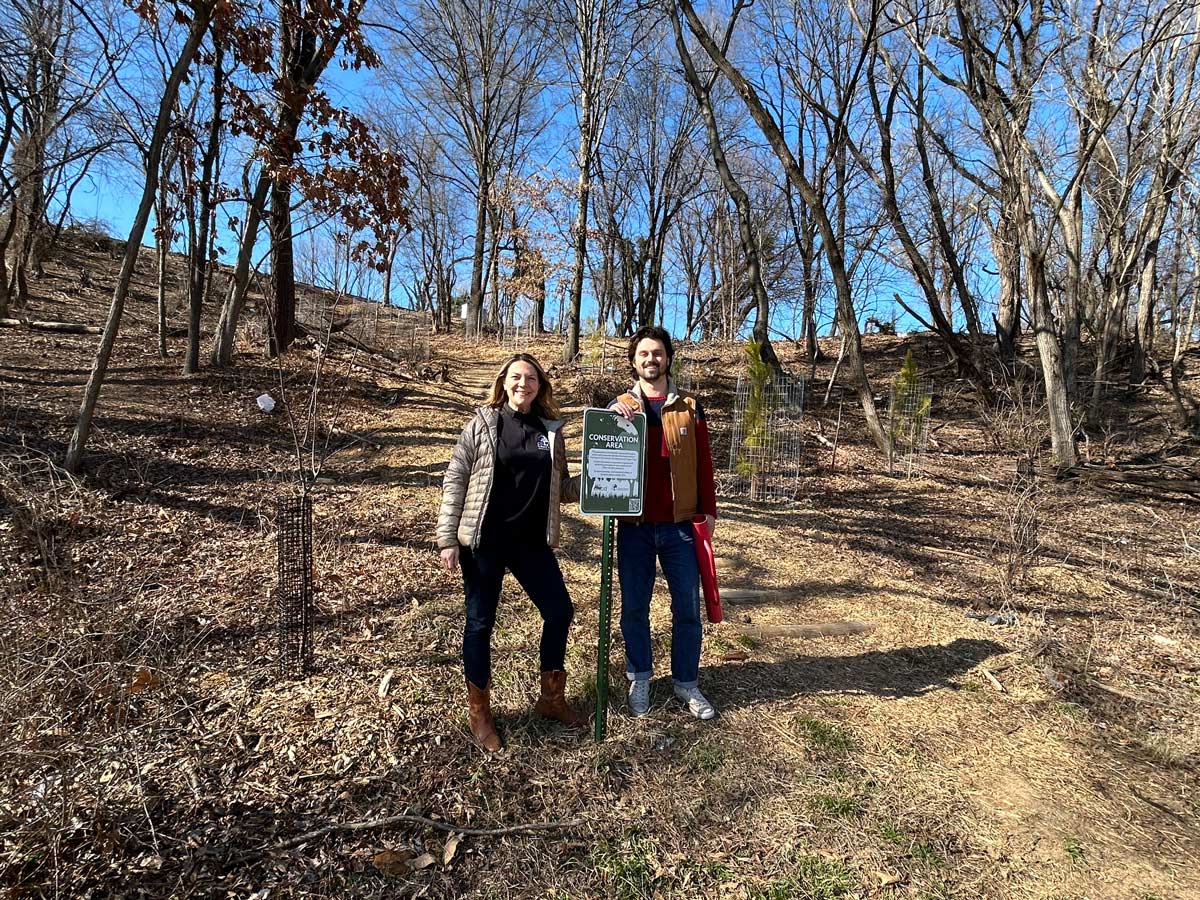
One such green space is affectionately known as "Hellbender Hill", named after the DC brewery that once stood nearby. This Casey Trees conservation easement site is located in the Lamond Riggs neighborhood of Northeast DC and is owned and managed by the Department of Housing and Community Development (DHCD). Over time, Casey Trees has protected and stewarded this stormwater infrastructure, removing invasive vines and plants, and creating a public access trail. Additionally, in collaboration with the DDOT Urban Forestry Division, planted over 50 ecologically appropriate trees and understory plants throughout the site. These enhancements help keep neighbors shaded and connect them to nature, while aiding in absorbing stormwater runoff and creating a healthier forest for wildlife. Ongoing stewardship of the site has provided ecological uplift and supports natural regeneration of the forest.
Caring for green spaces like Hellbender Hill works best when communities come together. When neighbors and communutities work together to plant, water, and protect trees, they nurture not only the environment but also a shared sense of connection and pride. Collective care keeps these forests healthy, resilient, and welcoming for all.
This Year's Grade
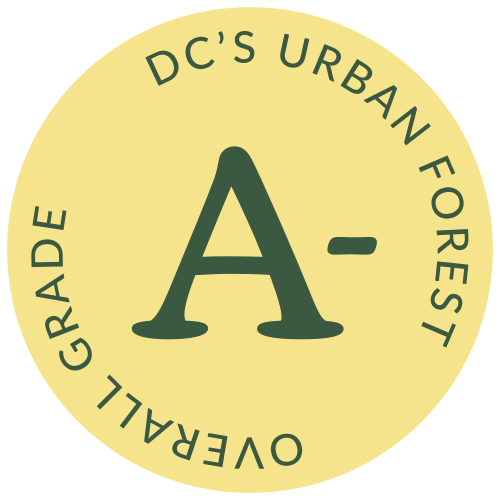
Casey Trees is pleased to announce that the District received an overall grade of A-. Though this is generally a high score for our tree canopy, there are still many areas for improvement, such as equal access to green space, and many metrics that need further study or are expected to be updated next year.

The Tree Report Card is Casey Trees’ annual evaluation of DC’s urban forest. It looks at where our successes have been over the past year and where we need to be in order to achieve our city’s tree canopy goals. This year, we are revising and expanding our metrics to better reflect the multiple ways our tree canopy impacts and benefits our city’s residents, and we will continue to collect and refine data to create meaningful metrics through next year.
This year’s Tree Report Card rates Washington, DC’s urban forest based on five metrics: Tree Coverage, Tree Health, Tree Planting, Tree Protection, and Tree Access. The overall grade is based upon the average of five categories that are graded individually and explained in detail below.

Tree Coverage

This metric measures the quantity of tree canopy covering District land. Aerial imagery – both satellite and fly-over images – are used to measure the City’s tree canopy from above and track progress toward DC’s 40 percent tree canopy goal. This data is updated by the city every 5 years. Data covering 2020-2025 is currently in process, so this grade is on hold until next year.
How can you help increase tree coverage?
Planting on private property presents the greatest opportunity to grow our city's tree canopy cover. DC residents, schools, houses of worship, businesses, and more, can plant trees for FREE. Start at home and plant a tree on your property!
Visit caseytrees.org/free.

Tree Health

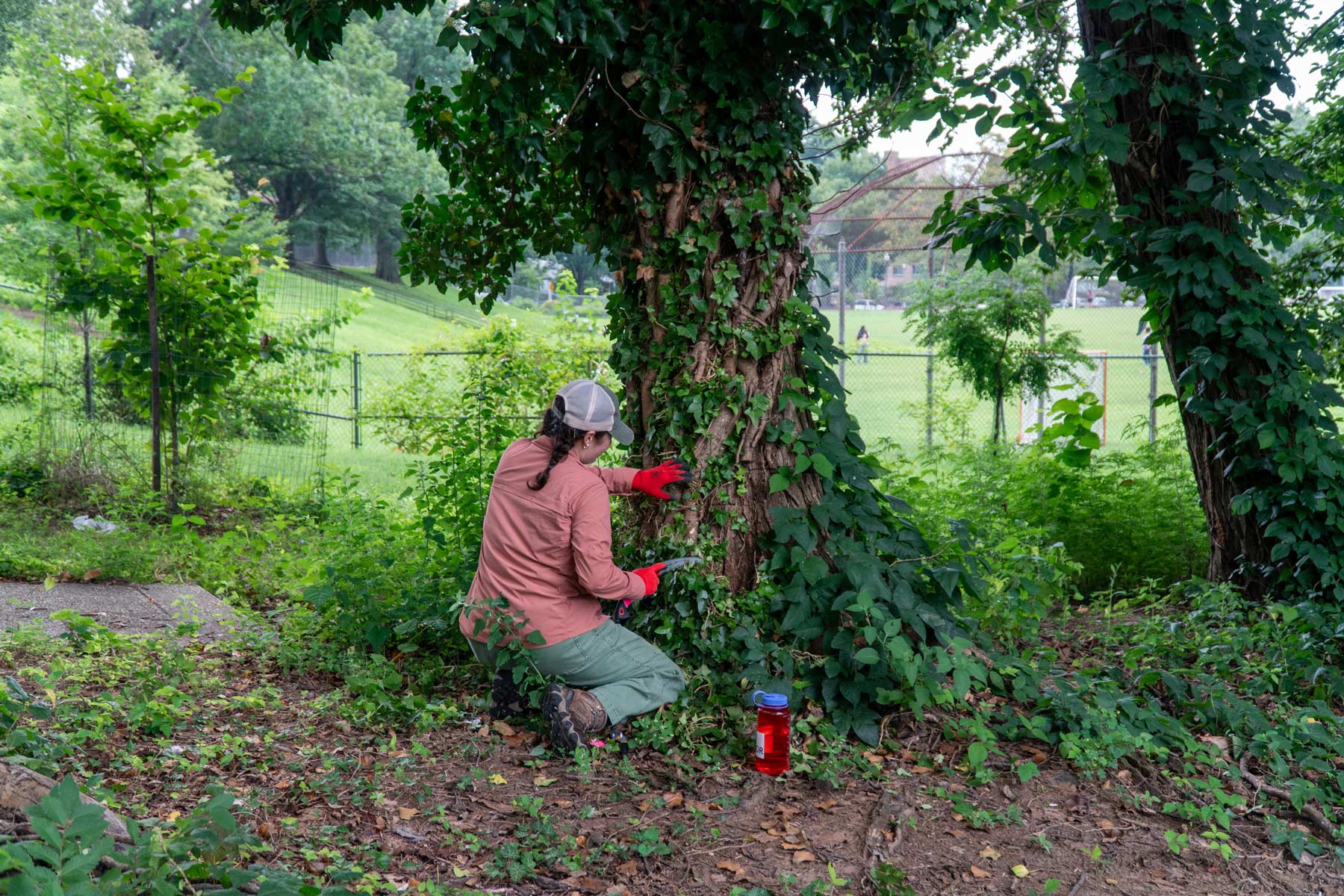
This metric evaluates the quality of tree health and condition across the District on all lands – private and public – both DC and federally-owned. The grade was taken from the results of the U.S.D.A. Forest Service’s (USFS) Forest Inventory and Analysis (FIA) most recent (2023) survey. FIA is a sampling method used by USFS research to assess forests across the United States.
From the FIA results, there are approximately 2 million trees within the District of Columbia. Of these 2 million trees, 89% fell into the condition class of either “excellent” or “good,” resulting in an overall tree health grade of B+.
How can you help our urban forest's health?
Contact your DC Councilmember and ask them to move forward the “Natural Areas Conservation Program Establishment Act of 2025.” This legislation would better protect and support management of our city’s forest patches and natural areas.

Tree Planting

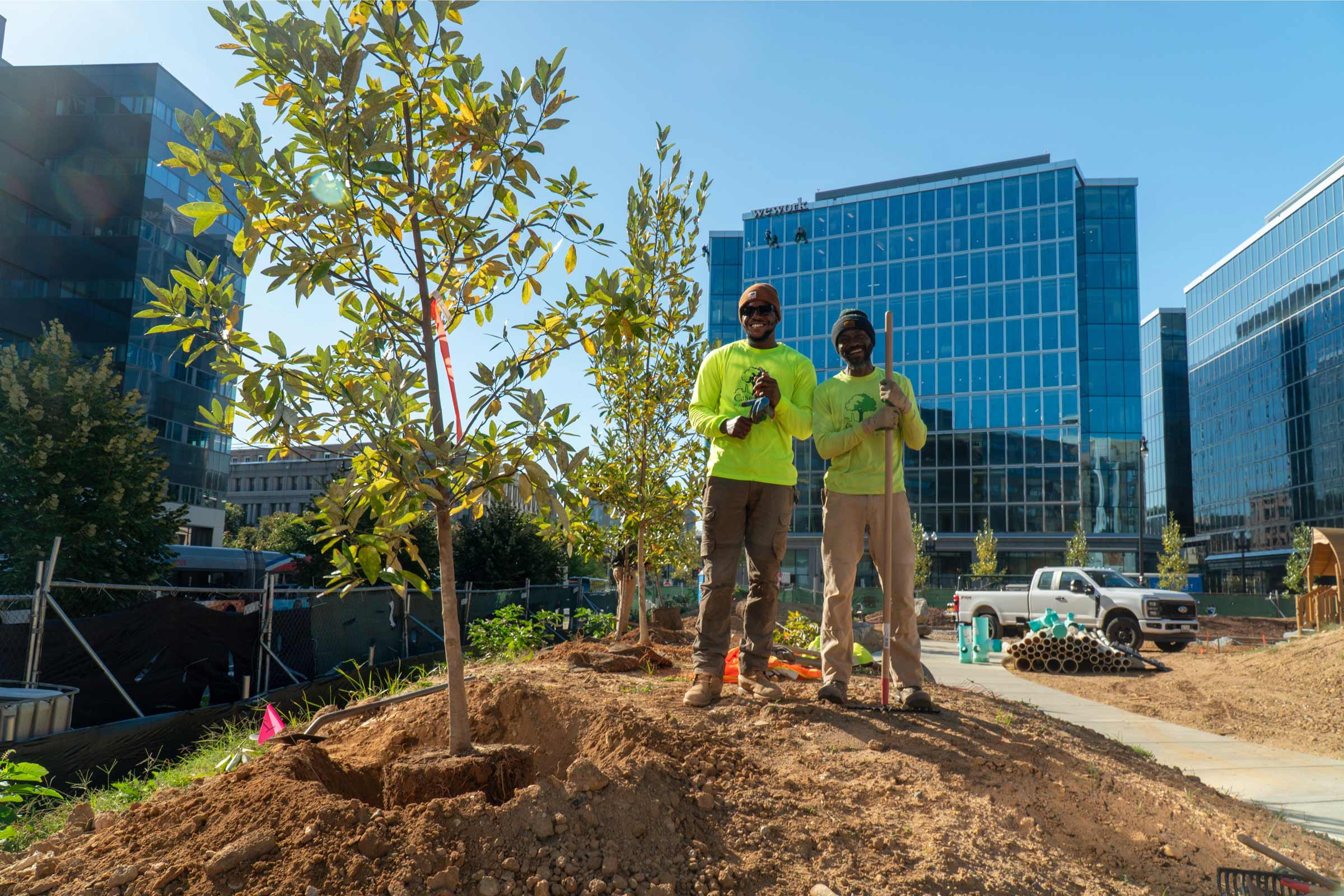
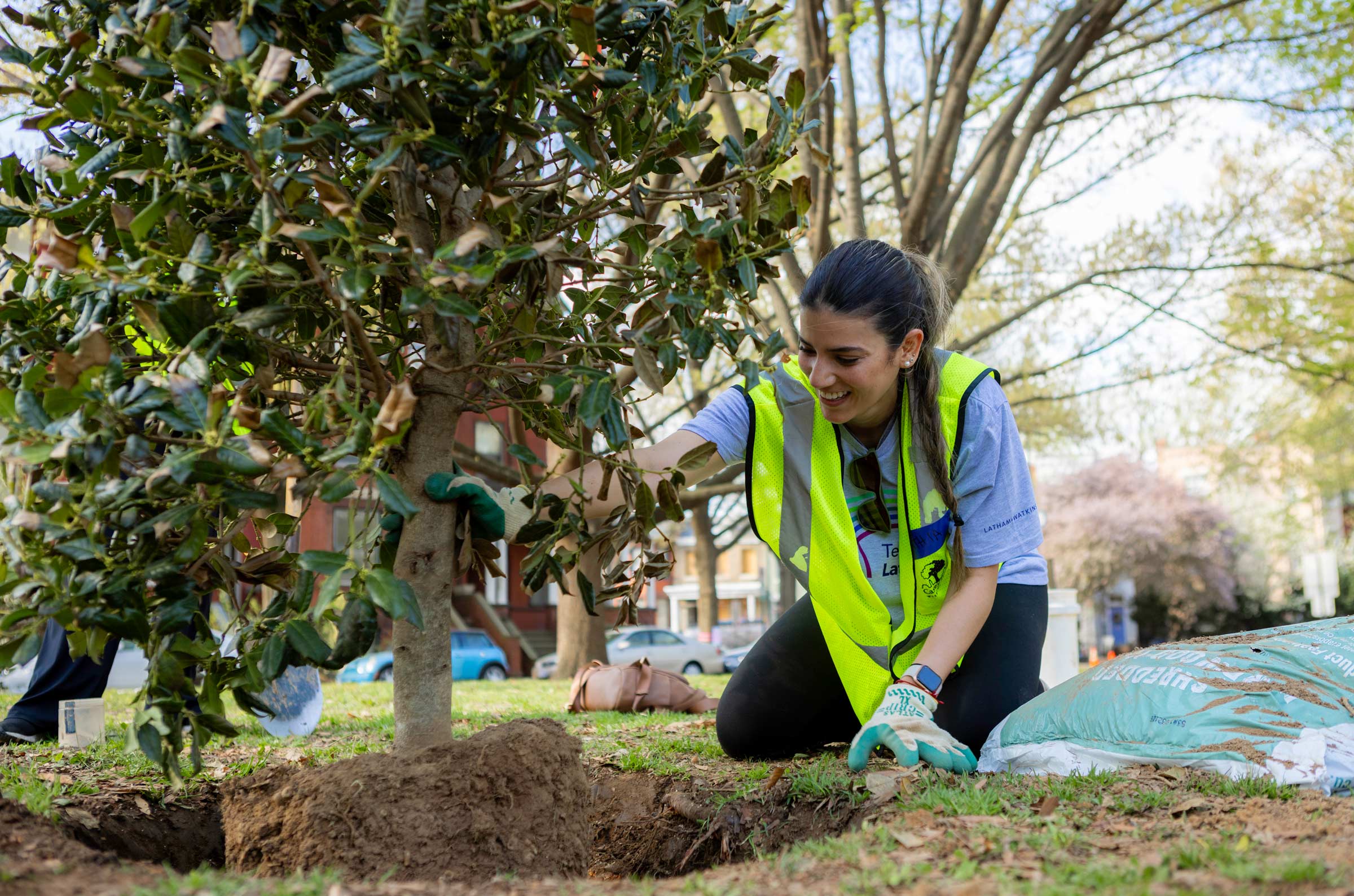
This metric compares the number of trees planted each year to the number required for the City to meet its 40% canopy goal. In total, 20,471 trees were planted by the City and its partners in 2025, including 9,000 trees planted by the District Department of Energy and Environment (DOEE) as part of the Kingman Island restoration effort. This exceeds the City’s annual planting target of 10,500 trees. The Tree Planting score for this year’s Tree Report Card therefore receives an A+.
This is the 12th year in a row the city continues to exceed tree planting goals. DC’s Urban Forestry Division has worked hard to ensure our city’s street tree boxes are fully stocked, which means we need more tree plantings on private property to reach our city’s 40% tree canopy goal. Learn how you can add to our city’s tree planting goals below.
How can you help with tree planting?
Planting on private property presents the greatest opportunity to grow our city's tree canopy cover. All DC residents can plant a tree on their property for FREE at caseytrees.org/free. Additionally, anyone can plant trees at our community tree planting events. Visit caseytrees.org/events.

Tree Preservation

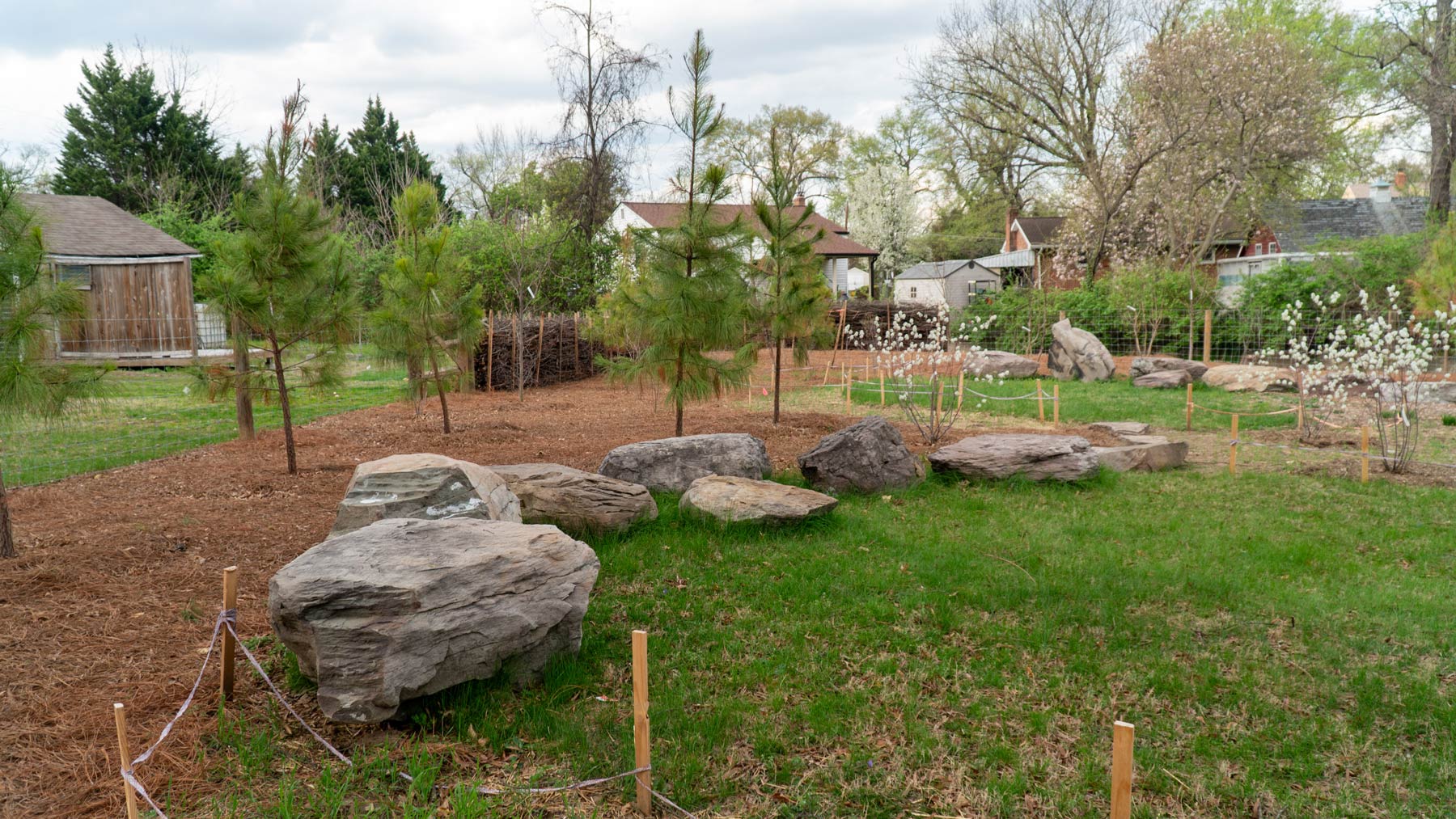
This metric measures how our city’s tree canopy is being preserved through regulation and policy. Tree preservation is critical to meeting our city’s canopy goal, with development the largest driver of canopy loss. DC’s tree laws protect approximately 15% of our city’s total tree canopy – 13% as Special Trees and 2% as Heritage Trees. However, 50% of those trees are located on federal lands, and therefore exempt from District law.
This past year, there were 6 illegal removals of Heritage Trees and 27 illegal removals of Special Trees with 11 Stop Work Orders issued in order to save trees from damage and destruction. While any illegal removal of a tree is cause for concern, this number has declined by over half from previous years, indicating our tree laws and enforcement are working.
This coming year, the city will be adding approximately 25,000 trees under Special Tree protections, through passage of the Tree Enhancement Amendment Act of 2025, expected to become law in May 2026. This legislative update to our city’s tree laws lowers the Special Tree threshold from 44” circumference to 40” circumference, protecting more of our young canopy and giving it time to mature. Therefore, this metric receives an A grade.
How can you advocate for trees?
The District is currently undergoing a 10-year Citywide Comprehensive Plan update, which will help guide development in the coming decades. Sign up for workshops and advocate for sustainable development that prioritizes trees and green spaces. Stay up to date at dc2050.dc.gov.
Tree Access
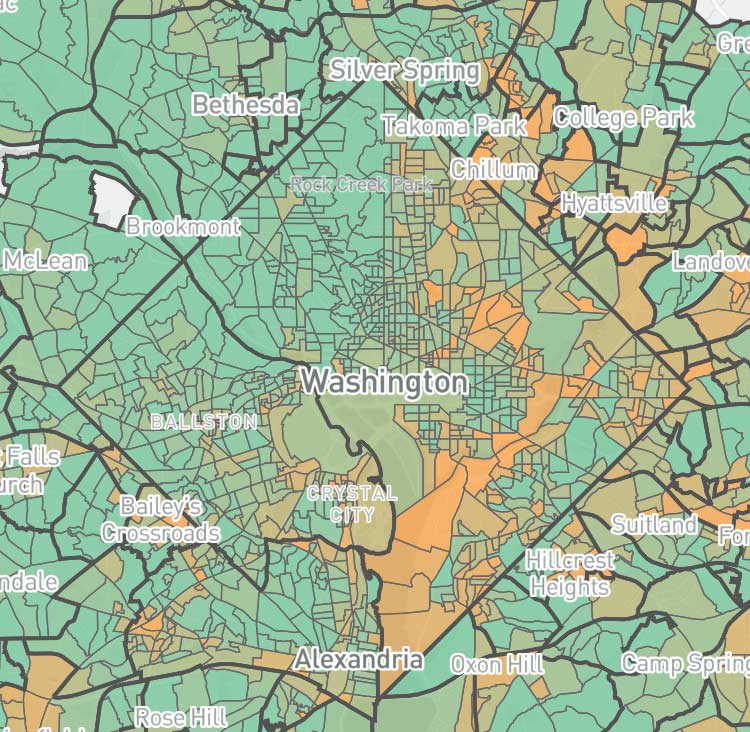
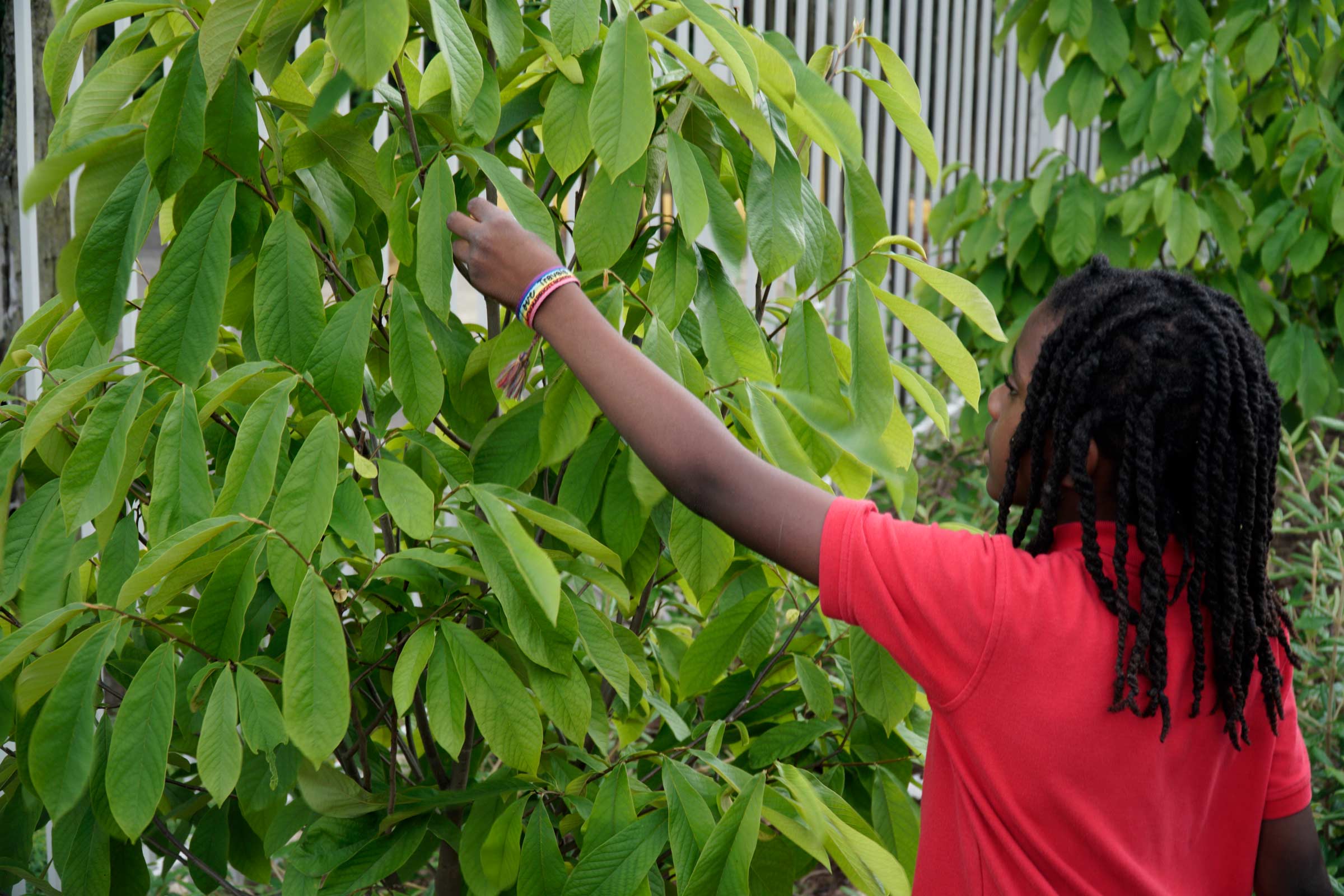
This metric is developed by American Forests and assesses whether there are enough trees in a neighborhood for everyone to experience the health, economic and climate benefits that trees provide. This metric is derived from American Forests’ Tree Equity Map and tree canopy, surface temperature, income, employment, race, age, language and health factors. Washington, DC received a tree equity score of 88, giving this metric a B+.
While the District’s overall grade outpaces many U.S. cities, tree canopy is not distributed equitably across neighborhoods. Areas with lower health burdens have, on average, 1.5 times more tree canopy than those facing higher health challenges. The disparity is even more pronounced when it comes to heat: cooler neighborhoods have three times the canopy coverage of those experiencing extreme heat.
How can you support DC's tree canopy?
Casey Trees prioritizes planting in areas of DC with less tree canopy where planting trees has the highest impact for the community. To support that work, anyone can make a gift to ensure all residents have access to nearby nature.
Visit give.caseytrees.org.
Ready to Get Involved?
Plant a Tree
Planting on private property presents the greatest opportunity to grow our city’s tree canopy cover. DC residents can plant trees for FREE. Start at home and plant a tree on your property! Visit caseytrees.org/free
Make a Gift for Trees
Every gift to Casey Trees grows DC’s canopy. Your support helps plant new trees, care for the ones we have, and build a healthier, more resilient city for everyone. From neighborhood streets to community spaces, your donation makes a visible, lasting impact—cleaner air, cooler blocks, and greener futures. Visit give.caseytrees.org
Learn About Our City of Trees
Discover why Washington, DC is known as the City of Trees. From leafy neighborhoods to historic parks, our urban canopy shapes the character and health of our city. Learn about the benefits of trees, how everyone can advocate for nearby nature, and how you can help protect trees for generations to come. Visit caseytrees.org/city-of-trees.
Acknowledgements
Casey Trees would like to thank the following partners for making trees a priority by planting, caring for, and protecting them as well as sharing information used in this report.
District of Columbia
Department of Energy and the Environment
Department of Parks and Recreation
Department of Transportation: Urban Forestry Division
District Department of General Services
Department of Housing and Community Development
Office of the Chief Technology Officer
Office of the Mayor
Office of Planning
Office of Zoning
DC Public Schools
Federal
USDA Forest Service
General Services Administration
National Park Service
Universities
American University
The Catholic University of America
Gallaudet University
Georgetown University
George Washington University
Howard University
University of the District of Columbia
Local & Regional
Accenture
Alice Ferguson Foundation
American Forests
American Institute of Architects
Anacostia Coordinating Council
Anacostia Parks and Community Collaborative
Anacostia Waterfront Trust
Anacostia Watershed Society
Arbor Day Foundation
Baltimore Tree Trust
Bartlett Tree Experts
Bartlett Tree Research Laboratories
Blandy Experimental Farm
Blue Drop
Building Bridges Across the River
Capital Nature
Catholic Cemeteries of the Archdioceses of Washington
Chesapeake Bay Trust
Chesapeake Climate Action Network
City of College Park, Maryland
City of Fairfax, Virginia
City of Hyattsville, Maryland
City of Mount Rainier, Maryland
City of Takoma Park, Maryland
Crimsonbridge Foundation
Clarke County Education Foundation
DC Environmental Network
DC Greens
DC Sustainable Energy Utility
DC Water
Edgewood Alley Green
ElectrifyDC
Fairfax County
Federal City Council
FH Faunteroy Community Enrichment Center
Forbright Bank
Forest Valley Tree & Turf
Friends of Anacostia Park
Friends of Kenilworth Aquatic Gardens
Friends of Lincoln Park
Friends of the National Arboretum
Friends of Oxon Run
The Garden Club of America
George Frederick Jewett Foundation East
Green Spaces for DC
Groundwater Anacostia
HDR
HITT
Interfaith Partners for the Chesapeake
Joe's Movement Emporium
Keep America Beautiful
The Kristina & William Catto Foundation
Land Trust Alliance
Langdon Forest Stewards
Latham & Watkins LLP
Laudato Trees
Living Classrooms
Maryland-National Capital Park and Planning Commission
Medstar Washington Hospital Center
Metropolitan Washington Council of Governments
Montgomery County, Maryland
Monumental Sports & Entertainment Foundation
Mount Olivet Cemetery
National Capital Planning Commission
National Cherry Blossom Festival
National Fish and Wildlife Foundation
NatureBridge
The Nature Conservancy
Nature Forward
Nature Sacred
Potomac Electric Power Company
Prince George’s County, Maryland
Providencia
Revive Stanton Park
Share Fund
Star Project
Sylvamo
TD Bank
T-Mobile
Trees for Capitol Hill
Trees for Georgetown
Truist Charitable Fund
Trust for Public Land
United Airlines
Urban Adventure Squad
Verizon
Ward 8 Woods
Washington Metropolitan Area Transit Authority
Washington Parks and People
Washington Wizards
Zenith Community Arts Foundation