Behind the Scenes: Tree Report Card, “Coverage”

With the spring ephemerals already past bloom and most trees in full leaf, it is hard to imagine walking down a street without any trees in sight. That’s why the findings of our recent Tree Report Card are so alarming, and why everyone needs to understand it’s impact. To help, we asked our Director of Technical Service and Research, Dr. Jessica Sanders, to give you some insights into how its made and what it means:

The tree coverage metric used each year for the Casey Trees Tree Report Card uses aerial photos to measure the tree canopy from above by examining each tree’s crown and canopy spread. That is where where most of the environmental services and benefits from trees come from, and thus is why we try to plant large shade trees: in order to maximize the ecological benefits of their canopy (and in turn, help us reach the 40% tree canopy goal set in the District). Also in order to receive these benefits, we need the trees to grow to a maximum size, which takes considerable time.

It is important to note that trees are not seen in aerial photos immediately when they are planted, but rather require some time to grow before young saplings are able to be seen via the satellite imagery (an obvious issue when attempting to discuss overall UTC (urban tree canopy). Also, if the tree is in a more dense area, like a forest, individual trees are not counted but rather the canopy of the entire forested area is counted collectively.

It’s important to remember as well that different tree species have different growth rates and canopy potential. For example, in the pictures below there are American elms planted along the street of this park that have grown immensely in canopy size in just a few short years. However the cherry trees, which are an ornamental on the interior of the park, planted at the same time, remain the same size from aerial shots and their canopy will not increase dramatically over time.

For more information about the Tree Report Card, follow our “Behind the Scenes” series right here on Tree Speak. We’ll be releasing a blog about each of the other metrics included in the report card in the coming weeks, going beyond the statistics and giving greater insight to the document’s impact, on you and  your community.

Casey Trees Hosts Donors and Friends for an Afternoon of Fun in the Shenandoah


What started out as a gloomy and overcast morning turned into a beautiful day for guests of “An Afternoon at the Farm”, the first event held at Casey Tree Farm in Berryville, Va.

On Saturday, May 11th, Casey Trees hosted 90 of its closest donors and supporters at the sprawling 730-acre Casey Tree Farm, nestled just inside the West Virginia border of the Shenandoah Valley.
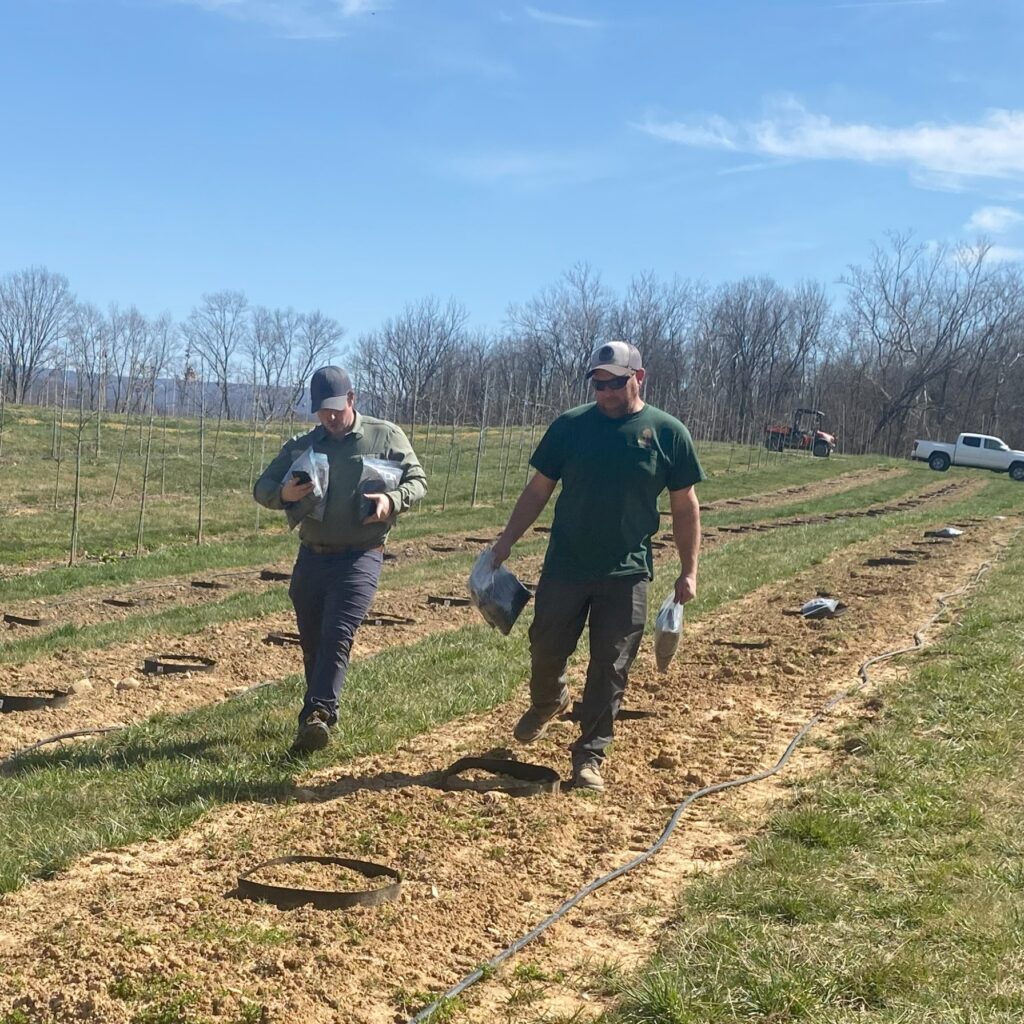
Guests were treated to guided tours of the nursery grounds and received a behind the scenes look at our cultivation and harvesting techniques, while enjoying some of the best of what Berryville and the surrounding area has to offer.Gifted to Casey Trees in 2008 as a way to enhance their work in the District, the Farm is now home to our 16-acre tree nursery. Just two years old, the nursery boasts more than 150 species, including native trees and difficult-to-source varieties such as sassafras and D.C.’s state tree, the scarlet oak. Over 11,000 trees are currently planted on the nursery grounds – most of which will be harvested and incorporated into future tree plantings in the District.

From Virginia ham biscuits to locally-sourced cheeses and honeys, attendees feasted on a spread that included truffled popcorn, hand-ground sliders and the overwhelmingly popular, candied bacon – all provided by local favorite, Rochelle Myers. Down to the beautiful flowers and live bluegrass tunes, the event served as a true reflection of the surrounding Shenandoah region.

In addition to all of this, donors and their guests also took part in an exclusive wine tasting provided by local vineyard, Boxwood Winery. Located nearby in Loudon County, Boxwood sampled three of their most popular blends for attendees to taste throughout the afternoon.

Even better, Mother Nature proved to be kind, as the beautiful blue skies turned grey just as the last guest left the Farm grounds late in the afternoon, making for a truly wonderful event for all.

“An Afternoon at the Farm” was an invite-only event, held exclusively for donors and contributors to Casey Trees and our tree planting and educational initiatives. If you’d like to be a part of events like these, consider making a donation today.

In addition to special invitations to events like these, you’ll also receive perks like advanced registration for our volunteer events and classes, complimentary tickets, and much more. We hope to see you there next time!


Casey Trees backs Power Line Undergrounding Task Force findings


This post is a response to the Washington Post’s most recent story on the issue of power lines and tree canopy protection, entitled “Plan to bury D.C.’s outage-prone power lines backed by task force“ by Mike DeBonis. Our Planning & Design Director Maisie Hughes speaks on behalf of Casey Trees and offers support for the task force’s findings:

Casey Trees congratulates Mayor Gray and Pepco for supporting underground power lines to address storm-related outages in D.C. The Power Line Undergrounding Task Force’s commitment to improving power delivery to District residents is exciting.

Burying power lines will improve the city’s street trees. District residents interact with street trees on a daily basis. These trees provide important aesthetic and environmental benefits, and are one of city’s greatest assets. Burying power lines in outage-prone areas will allow trees to grow larger and create healthier canopies. Overall, larger trees create greater environmental amenities by shading the sidewalk and roadways. As trees age, they provide more canopy benefits such as absorbing stormwater, lessening the heat island effect and combating air pollution. They need space to reach their full potential.  This contributes to a bikeable, pedestrian friendly city with happier residents.

The city’s commitment to undergrounding outage-prone power lines is the first big step to creating a healthy and sustainable District streetscape.

Maisie Hughes,
Planning & Design
Casey Trees


Flickr credit: cdsessums.

Treelines – Week of May 13, 2013

Because urban forestry issues span a wide range of topics and are constantly a source of local, national, and international news, we think it’s important to provide you with the most up-to-date information on everything tree-related: from local and national headlines to the latest in research and technologies, to simply feel-good stories.

Look for our reoccurring Treelines every week right here on Tree Speak + updates on our social channels, Facebook and Twitter.

This week in the Treelines…

  • Tree surgeon in England goes out of his way to save 20,000 bees
    by Stephen Messenger, treehugger

    An English arborist comes across a buzzing find when contacted about removing a dying tree, and makes the extra effort to find a unique way to keep the local ecosystem balanced. Read on for more information, and insight into how the problem was solved.

  • The Tree Hugger
    by The Hindu

    “Crops and trees must co-exist.” The wise words of R.Kannan, the man who for three decades has been teaching villagers and farmers across Tamil Nadu how to “hold the forests.” Read more about his incredible story, and his beliefs on forest preservation.

  • VIDEO: Washington, D.C. Canopy Timelapse, 1984-2012
    by Google Earth

    An insider’s look at the Google Earth aerial view of the District – note the changes in our city that are most obvious over the nearly four decades that have passed: the steady rise in impervious surfaces, and the decrease in green areas. 

  • Guest Voices: Tree Canopy in Urban Areas
    by Mark Buscaino, on the Smithsonian’s Earth Matters

    Mark B., our Executive Director, shares his thoughts on community and environmental action in the heart of D.C. “At Casey Trees we take the common sense view – count the trees in!”

  • A destructive beetle threatens trees — and people who live near them
    by Patterson Clark, Washington Post

    Scientists studying the devastating effects of the emerald ash borer (EAB) in the United States are given a unique opportunity to study the extensive loss of trees’ impact on human health – and find some scary results related to cardiovascular and lower respiratory illnesses.

  • A Dream of Trees Aglow at Night
    by Andrew Pollack, Washington Post

    Hoping to give new meaning to the term “natural light,” a small group of biotechnology hobbyists and entrepreneurs has started a project to develop plants that glow, potentially leading the way for trees that can replace electric streetlamps and potted flowers luminous enough to read by.

If you’re looking for the latest in D.C.’s news on trees and tree canopy, look no further than our 2012 Tree Report Card.

Don’t forget to check back next week for more Treelines! Any thoughts on these articles? Post your comments or questions below or via our social media channels - Facebook.. Twitter.. thanks!

Cicadas & Trees: The Full Story


These insights on the cicadas of Brood II have been shared by Jim Woodworth and Jessica Sanders, our Tree Planting Director and Technical Services & Research Director. 

If you haven’t heard a Cicada under a warm night sky, prepare yourself for the deafening sound of their monotonous buzzing and clicking, which at times are loud enough to drown out planes overhead. Cicadas live underground as nymphs for most of their lives, eventually exiting through a tunnel to the surface and emerging to molt on a nearby plant and mature into adults. The abandoned exoskeleton remains, clinging to whatever surface it can, typically the bark of trees. Cicada nymphs suck sap from the xylem of various tree species. Post-coitus, the female cicada cuts slits into the bark of a twig and deposits her eggs, repeating the process until she has laid several hundred eggs. When the eggs hatch, the nymphs drop to the ground and burrow. This year is Brood II, which has a 17-year life cycle that is soon coming to an end. These nymphs have spent nearly two decades feeding on roots, and will burst into a mating frenzy once the ground temperature reaches 64 degrees Fahrenheit. The red-eyed insect will outnumber people living from North Carolina to Connecticut by 600 to 1.

Although benign to humans (they do not bite or sting), cicadas have been known to mistake an arm for a tree or plant limb and attempt to feed. Adult cicadas have a long proboscis which they use to feed on sap from plant stems. Cicadas can cause damage to crops, shrubs, and trees typically in the form of scarring left on branches while the females lay their eggs deep in the branches. Large swarms can damage young trees by feeding and laying eggs, but most established trees usually escape without serious damage. On mature, healthy trees even an increase of cicada activity should not concern you, as the trees will withstand the loss of branch ends and recover from the onslaught. Young trees, particularly ornamental fruit trees require the most protection,  which can be done by draping netting (with openings less than ½ inch wide) over the canopy of young trees and securing it to the trunk. But in order for this to work, the netting must be placed before the cicadas emerge.

Although cicadas do cause damage to trees, they do have a benefit as well.  The decomposing bodies of the adult cicadas will trap nutrients close to tree roots and act as a fertilizer; however, at the same time, those nutrients will feed the new generation of cicadas developing underground (emerging in 2030) and that process can slow tree growth by up to 30%.  The tunnels created by the larvae will also act as a soil aerator.

One of the most interesting facts about cicadas is their defense mechanism against predators, known as predator satiation.  This means that since so many cicadas emerge at once, the overwhelming number of cicadas is greater than any predator could possibly consume, therefor all predators are full and the remaining cicadas can breed without fear.  One of my own personal laughs comes from watching my dogs attempt to stalk and eat the cicadas, only to be overwhelmed by the shear amount of them.

One way or another, the cicadas will continue to emerge like clockwork.  Enjoy nature’s nightmusic, kickback on the deck or patio and raise your glass of wine or beer to toast one of nature’s peculiar phenomenons.

Other resources: 

2013 Spring School CTP Recap


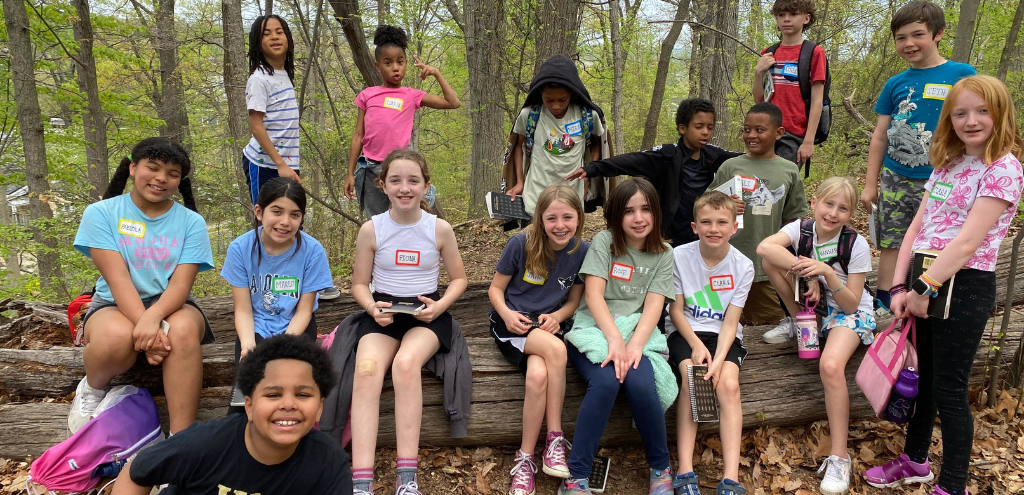
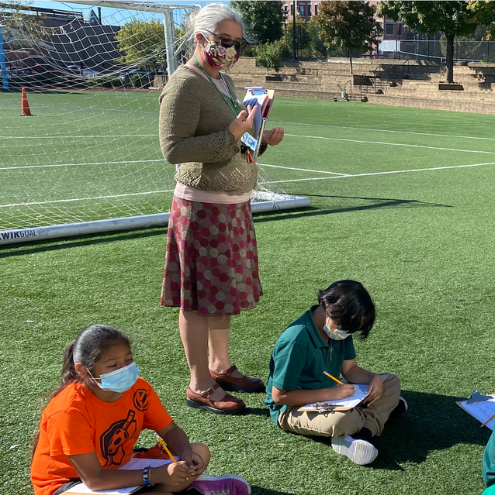
With the spring coming to a close, it’s time to reflect on the work done this planting season…by our youngest planters! The school community tree planting season has been a big success, and as you may remember from our update earlier this spring, our work has been driven by a singular goal – to expand our reach.

Our first efforts to do that involved extending a hand to schools and communities east of the river and helping them not only establish canopy but create gardens and green areas that the children can utilize year-round. The next step? Continuing to plant outside of the District! All in all, we were able to help 239 students across 11 schools plant 64 trees in playgrounds and school yards.

We started the season off with 24 11th and 12th graders from Anacostia High School, bringing our first installment of trees to the site along with some volunteers to help. The net number of trees planted there is now 23, many of which (from the most recent planting) were sourced directly from our Casey Tree Farm.

Next, we also joined to Jefferson Middle School for a first time with 5 trees, engaging in some funny and vibrant 4th, 5th, and 6th graders. Then came Capital City Public Charter School – we were very excited for the chance to add these trees because of their long-term purpose. We planted them with the middle school “Top Chef Class” so that they might be able to utilize the bountiful harvest from the fruit trees in the years to come!

Back to Kingsbury Center, we had a big crew of a wide array of ages – 22 elementary to high school students joined in the fun, planting 6 trees – some of which were bare root trees – and adding to the 8 already there. After that we planted 6 trees with 27 students from Drew Freeman Middle School, 5 trees with 21 1st-5th graders at Stoddert Elementary School, and 6 trees with another 21 1st-4th grade girls from Excel Public Charter School.

We ended the season on a high note, planting at Mary McLeod Bethune PCS, Montessori School of Northern VA, Grace Episcopal Day School (MD), and Melvin Berman Hebrew School (MD), amassing 27 trees and 77 students between the four schools.

Thank you to all those school teachers, administrators, parents, volunteers, students, and staff that made the spring 2013 school community tree planting season possible!

Would you like to submit an application for a future school planting? Learn how.

Tree Seekers: Matt Braun, Ward 6


When Matt Braun and his wife decided to purchase a tree for their front yard, they immediately considered Casey Trees. “We were going to get a tree either way, applying for the rebate was a no-brainer!” Utilizing the Tree Rebate program offered an affordable option for planting trees by supplying a rebate of up to $100.

Residents of Capitol Hill, Matt and his wife wanted a species that would add character to the small yard of their rowhouse. “Everyone loves flowering cherry trees, so it really came down to picking the right variety, and we decided the smaller mature size of the Kwanzan would fit best.” They hope that their tree will bring a hint of color to their neighborhood.

Matt is very proud of Capitol Hill’s strong tree canopy. “We’ve got a bunch of mature oaks on our street and a ton of new city-planted trees from the last couple of years in our tree boxes,” he comments. “There are very few empty tree boxes, and the neighbors seem mostly willing to care for the new trees in their fragile first couple years.”

Although he has run out of room in his yard, Matt is still very eager to plant more trees in the future. “Unfortunately our tiny yard is now officially full; so more trees will have to wait on a future house with more space.”

Casey Trees doesn’t encourage planting during the summer months but, Tree Rebates are accepted year round. Participation is simple.

  •  Submit a completed Tree Rebate form. There is no maximum number of rebates allowed per property.
  • Include purchase receipt for each tree listed.
  • Rebate requests are subject to approval by Casey Trees.

Also, be sure to utilize the resources available on our website. From video tutorials, to our Tree Species Library and maps of the District’s urban forest, the Casey Trees website is your one stop shop for planning, education and advocacy.

Treelines – Week of April 29, 2013

Because urban forestry issues span a wide range of topics and are constantly a source of local, national, and international news, we think it’s important to provide you with the most up-to-date information on everything tree-related: from local and national headlines to the latest in research and technologies, to simply feel-good stories.

Look for our reoccurring Treelines every week right here on Tree Speak + updates on our social channels, Facebook and Twitter.

This week in the Treelines…

  • Trees Make Sounds When They’re Running Out Of Water, Experiments Suggest
    Elizabeth Howell, Huffington Post

    Like a person gasping for air when it’s in short supply, living trees make noises when they are running out of water, and a team of French scientists from Grenoble University is a step closer to pinpointing the noises.

  • UPDATE: NASCAR tree planting initiative hits six figures
    by staff of Yahoo Sports

    An update to a previous Treelines post: NASCAR “Race to Green,” a month-long initiative that galvanized teams, tracks, drivers, official NASCAR partners and most importantly fans, resulted in more than 150,000 trees being planted across the country, including in areas affected by natural disasters. 

  • New York: A Concrete Jungle And ‘City Of Trees,’ Too
    by Margot Adler, NPR.

    Another city, another incredible canopy. Did you know that there are some amazing trees, not just in Central or Prospect Park, but throughout the outer boroughs? Explore them with New York’s version of Melane Choukas-Bradley, Benjamin Swett.

  • Photographer documents tree damage following Superstorm Sandy
    by Chris Tackett, treehugger

    Photographer Brett Essler put together a photo essay documenting the extensive damage to trees in New York City after Superstorm Sandy, noting the balance between humans and trees and the importance of each in the urban ecosystem.

  • Bug gets a Tree
    by Pandabolt Farms

    This is the story of a young family in the Brookland, D.C. neighborhood that chose to plant a tree to honor their newborn. Read about their experience – we’re incredibly grateful to call this wonderful story a success in our eyes, for them and the canopy.

If you’re looking for the latest in D.C.’s news on trees and tree canopy, look no further than our 2012 Tree Report Card.

Don’t forget to check back next week for more Treelines! Any thoughts on these articles? Post your comments or questions below or via our social media channels - Facebook.. Twitter.. thanks!